


💛 A quick favor, if you've got a second.
We're really happy that you chose to read one of our stories and sincerely hope you'll stick around to read more. We took our paywall down — for now — but that won't last forever, and when the gate goes back up, we'd love for you to already be on the inside.
It's free. So please enter your email here and don't forget to like and follow us on all of your favorite Social Media platforms!
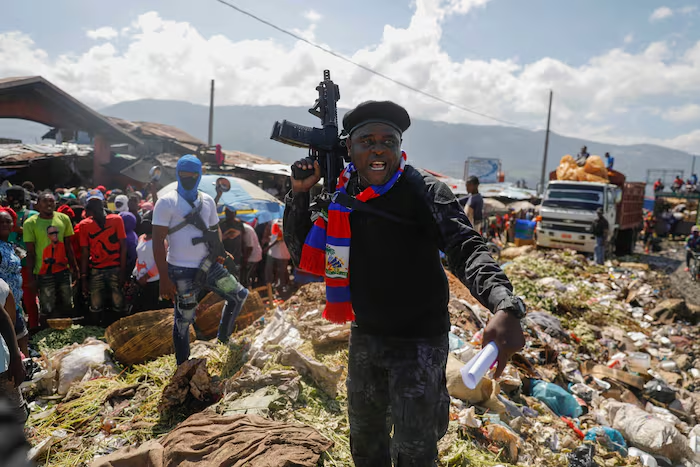
U.S. Ambassador to the United Nations Michael Waltz delivered a stark assessment Monday of the deteriorating security situation in Haiti’s capital, describing Port-au-Prince as a “kill zone” controlled by criminal organizations. Speaking before the U.N. Security Council, Waltz, a former Army Special Forces officer, outlined how gang networks have seized operational control of the nation’s primary port facility and expanded their criminal operations regionally.
Gang leaders are leveraging social media platforms including TikTok, Facebook, and Instagram to promote their activities and recruit new members, particularly children, Waltz told the council. He characterized their online presence as especially troubling, noting they frame themselves as revolutionary figures while distributing firearms, narcotics, and perpetuating violence throughout the region and beyond.
The United States has committed to counteracting gang monetization of social media content in the near term, Waltz announced. He issued a direct warning to Haiti’s criminal leadership, declaring through a post on X that consequences would follow their actions, referencing the work of a U.N.-backed multinational gang suppression operation led by Mongolian Maj. Gen. Erdenebat Batsuuri.
Jimmy “Barbecue” Chérizier, a former police elite unit member sought by the FBI, leads the “Viv Ansanm” gang confederation operating in Port-au-Prince. According to U.N. data, gang activity has internally displaced approximately 1.5 million Haitian residents, creating a humanitarian crisis affecting the entire nation.

More Stories
Federal voting arrest in New Jersey adds new pressure point in Sherrill-Trump standoff
Colombia backs Trump security push while limiting U.S. role in anti-gang operations
Packers Running Back Josh Jacobs Placed on NFL Commissioner’s Exempt List Following Domestic Arrest