
💛 A quick favor, if you've got a second.
We're really happy that you chose to read one of our stories and sincerely hope you'll stick around to read more. We took our paywall down — for now — but that won't last forever, and when the gate goes back up, we'd love for you to already be on the inside.
It's free. So please enter your email here and don't forget to like and follow us on all of your favorite Social Media platforms!
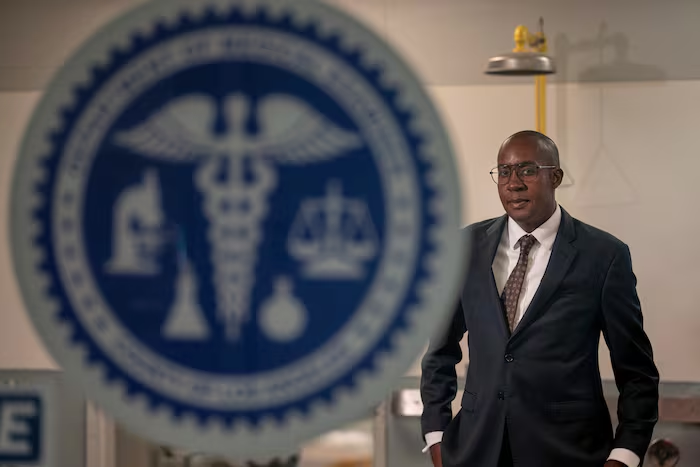
The Los Angeles County Medical Examiner’s Office has investigated some of the nation’s most scrutinized deaths, including the 2023 passing of “Friends” actor Matthew Perry and the case of 14-year-old Celeste Rivas Hernandez. Dr. Odey Ukpo, who leads the office as chief medical examiner, recently discussed with The Associated Press how his team conducts autopsies and arrives at determinations that often capture national attention.
Perry was discovered unresponsive in a hot tub at his Los Angeles residence in October 2023, prompting initial speculation about drowning. However, Ukpo’s office ultimately concluded two months later that acute ketamine toxicity was the primary cause of death, with drowning listed as a contributing factor. This determination generated pushback from some ketamine advocates, who argued drowning should have been designated as the main cause.
Ukpo explained that his team examined the circumstances and determined Perry would have been capable of exiting the tub had he not been incapacitated by the drug. “But for the ketamine, would he have been out of it and unable to rescue himself?” Ukpo stated. “That’s why ketamine is the cause of death primarily, and then the drowning contributed.”
Medical examiners deliberately avoid labeling deaths as “overdoses” on official certificates, Ukpo emphasized. Rather than declaring “methamphetamine overdose,” the office documents the specific substance involved, since any quantity of certain drugs can prove fatal. The term overdose implies an excessive but otherwise tolerable amount, a notion Ukpo’s office rejects in its determinations.
Toxicology results frequently require months to return, even as autopsies are completed and preliminary findings released within days. Ukpo attributed the extended timeline to the technical challenges of analyzing blood specimens from deceased individuals, which behave differently than samples from living patients. Hospital tests can return results within hours because treatment protocols remain effective even if results prove incorrect, but death determinations demand absolute certainty.
In the Rivas Hernandez investigation, toxicology served primarily as verification despite clear evidence of fatal stab wounds evident from clothing defects and bodily injuries. Testing revealed alcohol in her system, but Ukpo noted the substance was produced postmortem by bacterial activity rather than consumed before death. Such findings underscore why his office conducts confirmation testing to distinguish genuine drug presence from laboratory artifacts.

More Stories
Federal voting arrest in New Jersey adds new pressure point in Sherrill-Trump standoff
Packers Running Back Josh Jacobs Placed on NFL Commissioner’s Exempt List Following Domestic Arrest
Federal Prosecutors Convene Special Grand Jury to Investigate D.C. Schools’ Attendance and Graduation Practices