


💛 A quick favor, if you've got a second.
We're really happy that you chose to read one of our stories and sincerely hope you'll stick around to read more. We took our paywall down — for now — but that won't last forever, and when the gate goes back up, we'd love for you to already be on the inside.
It's free. So please enter your email here and don't forget to like and follow us on all of your favorite Social Media platforms!
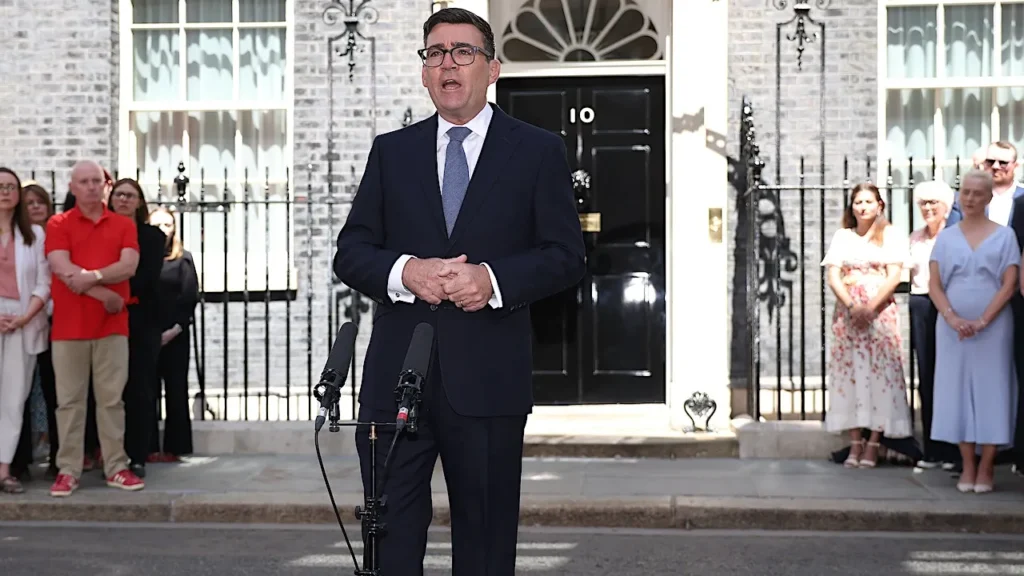
Andy Burnham officially took the helm as British prime minister Monday, presenting an agenda centered on redistributing governmental authority away from Westminster and overhauling the nation’s political framework. The 56-year-old Labour leader met with King Charles III at Buckingham Palace before his formal installation, receiving the monarch’s request to establish a new government.
Speaking from outside 10 Downing Street, Burnham emphasized collaborative governance and problem-solving over partisan conflict. He committed to moving power into communities across Britain, framing his approach as a break from decades of centralized decision-making that he said began with wrong policy directions in the 1980s.
Burnham becomes the seventh prime minister since 2016, a turnover he characterized as evidence that Britain requires fundamental political repair. His appointment concludes the tenure of Keir Starmer, who announced his resignation and publicly backed his successor during remarks outside the prime minister’s residence.
The new government faces immediate foreign-policy complications, particularly regarding U.S. relations. Burnham has previously voiced criticism of Donald Trump, drawing comparisons between current American political instability and the chaos surrounding Liz Truss’s brief premiership, though he reaffirmed commitment to NATO, nuclear deterrence, and Ukrainian support.
Burnham’s economic vision centers on what he terms “Manchesterism”—granting regional authorities expanded control over transportation, housing and development—coupled with “business-friendly socialism” that maintains public ownership of essential services while fostering government-industry cooperation. He rose to national prominence after nine years as mayor of Greater Manchester, earning the sobriquet “King of the North.”
Reform UK has challenged Burnham’s legitimacy, contending he should call a general election rather than assume power without a competitive Labour leadership race or nationwide vote. Under Britain’s parliamentary system, the governing party may change leaders between elections, with the next required vote not scheduled until 2029.

More Stories
Federal voting arrest in New Jersey adds new pressure point in Sherrill-Trump standoff
Colombia backs Trump security push while limiting U.S. role in anti-gang operations
Former NFL cheerleader and ex-aide face off in close Rhode Island GOP primary