


💛 A quick favor, if you've got a second.
We're really happy that you chose to read one of our stories and sincerely hope you'll stick around to read more. We took our paywall down — for now — but that won't last forever, and when the gate goes back up, we'd love for you to already be on the inside.
It's free. So please enter your email here and don't forget to like and follow us on all of your favorite Social Media platforms!
A German soccer fan named Sebastian arrived in the United States with considerable anxiety, his concerns shaped by years of international news coverage depicting America as fractured and dangerous. After attending Germany’s World Cup match against Paraguay in Boston, Sebastian found himself without transportation to his hotel—until a stranger named Bob offered assistance without hesitation. The encounter left Sebastian emotionally moved, and his subsequent video testimony has garnered millions of views online.
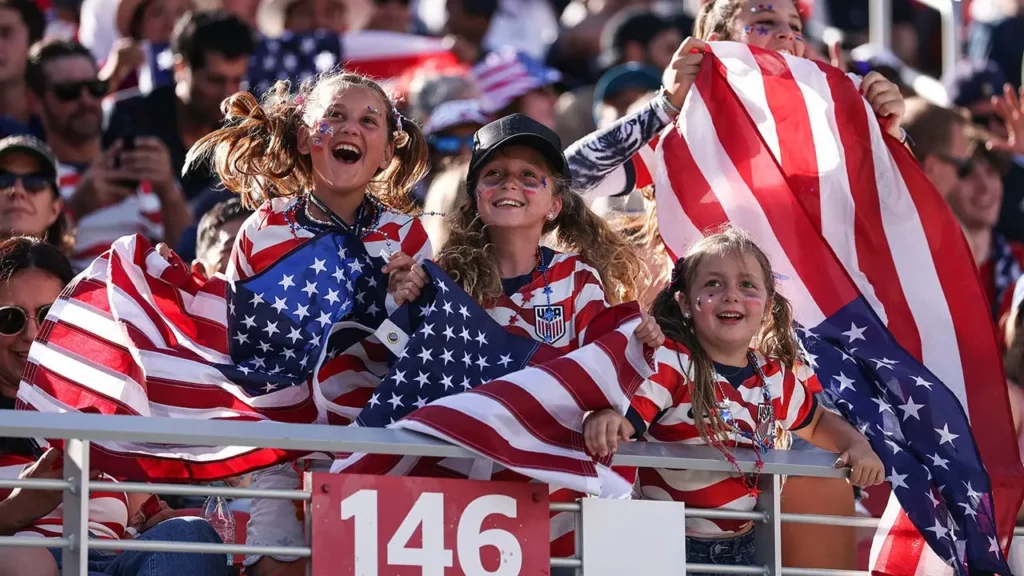
Following Sebastian’s story, social media platforms have filled with accounts from international World Cup visitors documenting their American experiences with admiration and surprise. These visitors have praised the hospitality of ordinary citizens, expressed wonder at natural attractions like the Grand Canyon, sampled regional barbecue traditions, and discovered welcoming communities in cities they had been warned to avoid. Many have joined spontaneous celebrations with local residents, singing and dancing with thousands of strangers alongside them.
The disconnect between these firsthand accounts and the prevailing media narrative raises a significant question: why do foreigners often recognize America’s merits more readily than its own citizens? The relentless focus on crisis narratives—crime, political division, institutional failure—has created a distorted public perception disconnected from how most Americans actually live their daily lives. Content emphasizing outrage and conflict generates engagement in ways that positive news simply does not.
Educational institutions have contributed to this pessimistic framing by emphasizing historical injustices while minimizing accomplishments. While teaching about slavery, segregation, and Japanese internment remains essential, a complete historical education must also acknowledge America’s abolition of slavery, defeat of fascism, space exploration achievements, and economic innovation. Millions of immigrants willingly relocated across the globe specifically to pursue the American dream, a reality that demands explanation.
Sports events uniquely transcend the divisive messaging that permeates other aspects of American discourse. During athletic competitions, identity markers become irrelevant as diverse crowds unite around shared purpose and celebration. Stadiums across America demonstrate weekly that unity among strangers remains entirely achievable—a fact contradicting claims that deep division defines the nation.
The World Cup experience has not fundamentally altered American kindness; rather, it has simply provided international visitors an opportunity to encounter the authentic America that exists beyond sensationalized headlines. Citizens would benefit from remembering that direct experience consistently proves more reliable than secondhand narratives in forming accurate understanding of their own country.

More Stories
Christa Pike Survives Botched Double Execution Attempt; Tennessee Halts Remaining 2026 Executions
Tennessee’s Lone Death Row Female is Scheduled for Execution Wednesday for 1995 Torture/Murder
Indiana coach Curt Cignetti tells restless Hoosiers fans not to gripe over 38-0 win