


💛 A quick favor, if you've got a second.
We're really happy that you chose to read one of our stories and sincerely hope you'll stick around to read more. We took our paywall down — for now — but that won't last forever, and when the gate goes back up, we'd love for you to already be on the inside.
It's free. So please enter your email here and don't forget to like and follow us on all of your favorite Social Media platforms!
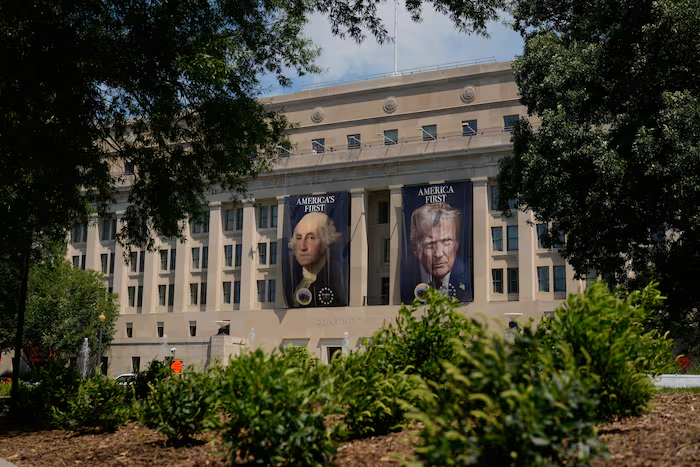
The Interior Department under the Trump administration on Friday eliminated a decades-old regulation that automatically shielded threatened plant and animal species upon designation. The shift marks another phase in the administration’s overhaul of how the Endangered Species Act operates, prioritizing commercial interests over blanket conservation measures.
Threatened species will now require custom protection strategies tailored case-by-case rather than receiving immediate safeguards when listed as threatened. This individualized approach threatens to delay timelines significantly and create openings for industries to request exemptions from restrictions on drilling, mining and other development activities in sensitive habitats.
Conservation groups warned the policy change would undermine protection of species like monarch butterflies and alligator snapping turtles currently awaiting threatened designations. Noah Greenwald of the Center for Biological Diversity contended that exempting industries responsible for habitat destruction would eliminate defenses against the primary drivers of species decline.
Interior Secretary Doug Burgum justified the overhaul by arguing the Endangered Species Act had evolved into an instrument “to stop almost any new project in America, driving up costs for families, weakening our competitiveness, and undermining our national security.” Burgum asserted that law effectiveness should be measured by species recovery and removal from protected status, not additions.
An accompanying mandate requires federal agencies to assess economic consequences when designating critical habitat essential for species survival. Environmental advocates assert this requirement grants industries substantial power to influence conservation policy decisions in their commercial favor.
The administration has pursued these modifications before. Similar rollbacks occurred during Trump’s first presidency but were rescinded under President Biden. Threatened species received automatic protection beginning in 1975 for animals and 1977 for plants.
Since Trump’s second term began, no species have received endangered or threatened designations. His first administration added over 20 species while Biden’s tenure resulted in approximately 60 new listings. Roughly three dozen species currently await proposed threatened status determinations.
Recent months have seen expanded action on species policy beyond Trump’s first term efforts. In March, the administration granted Gulf of Mexico oil and gas platforms exemptions from the Endangered Species Act using national security justifications articulated by Defense Secretary Pete Hegseth. Last week, officials narrowed the legal definition of species harm, permitting development in critical areas if individual animals face no immediate mortal risk.
This week the administration substantially reduced designated critical habitat protections for Canada lynx threatened by climate change and environmental degradation. Burgum also announced the Fish and Wildlife Service would transfer greater grizzly bear management authority to individual states, fulfilling a longstanding Republican objective in Wyoming, Idaho and Montana.
The Endangered Species Act historically proved instrumental in rescuing bald eagles and American alligators from extinction. Burgum noted that 97 percent of currently protected species maintain their designations, a statistic concerning Republican lawmakers advocating for expedited removal of recovered species from protection.

More Stories
Trump Threatens FCC Action Against NBC’s Welker Over Endorsement Coverage
University of Pennsylvania Climate Scientist Demands Supreme Court Packing Pledge From Democratic Candidates
Trump Backs Christian-Led Initiative for Expedited U.S. Entry for Canadian Jews Facing Antisemitism