


💛 A quick favor, if you've got a second.
We're really happy that you chose to read one of our stories and sincerely hope you'll stick around to read more. We took our paywall down — for now — but that won't last forever, and when the gate goes back up, we'd love for you to already be on the inside.
It's free. So please enter your email here and don't forget to like and follow us on all of your favorite Social Media platforms!
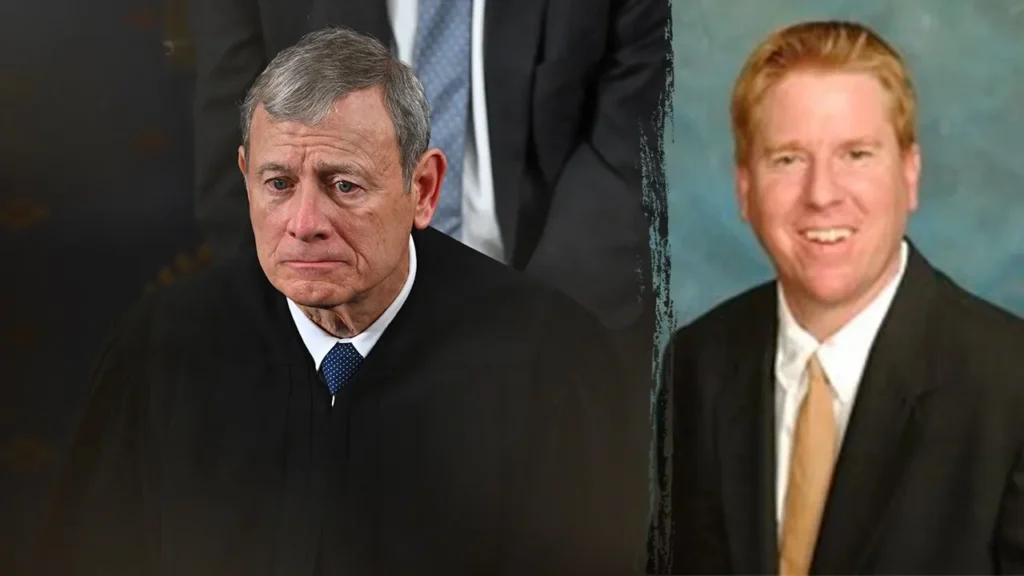
Hawaii Supreme Court Justice Todd Eddins issued a stinging rebuke of the nation’s highest court’s conservative justices in a Wednesday ruling that vacated a kidnapping conviction from 1990. The 91-page majority opinion in State v. Granillo devoted roughly eight pages to contending that Hawaii’s judicial system should forge its own constitutional path, separate from federal Supreme Court interpretations of constitutional protections.
The case centered on a Maui resident convicted of kidnapping and sexual assault whose conviction was overturned after the court found that hair and fiber evidence presented by an FBI expert relied on forensic techniques now deemed scientifically unreliable. Eddins used the opportunity to mount a sweeping critique of the U.S. Supreme Court’s direction on constitutional matters.
According to Eddins, state constitutions must function as a final safeguard when the Supreme Court’s six conservative justices fail to protect individual rights. He wrote that state courts stepping in to fill that role represents “the design” of federalism, not insubordination against federal authority.
The justice asserted that Hawaii’s constitution provides safeguards that exceed those currently available under the federal Constitution as interpreted by the Roberts Court majority. He maintained that the justices have retreated from civil rights protections established over preceding decades.
Eddins drew historical comparisons between the Roberts Court’s interpretive methods and those used in Dred Scott v. Sandford from 1857 and Plessy v. Ferguson from 1896, both now widely condemned decisions. He contrasted these with Brown v. Board of Education from 1954, which struck down school segregation, to illustrate how interpretive approaches shape constitutional outcomes.
The justice assailed the originalist methodology employed by conservative justices, arguing it mirrors the same interpretive techniques that produced Dred Scott and Plessy. “Today’s hubristic originalists use the same method to control modern life,” Eddins wrote, characterizing the approach as fundamentally unchanged across centuries.
Eddins cited several recent Supreme Court decisions as examples of eroding constitutional protections, including Dobbs v. Jackson Women’s Health Organization eliminating federal abortion rights, Citizens United v. FEC on campaign spending, Rucho v. Common Cause on electoral districts, Trump v. United States on presidential immunity, and New York State Rifle & Pistol Association v. Bruen on gun rights.
The justice criticized the Court’s Equal Protection doctrine for adopting a “colorblind” stance that ignores the amendment’s original protective intent. “The Roberts Court sees only white,” Eddins stated, arguing it “refuses to acknowledge who the Equal Protection Clause was written to protect.”
Eddins concluded that the Supreme Court’s recent rulings have systematically empowered government and corporate interests while weakening individual constitutional safeguards. He declared the federal high court “does not chart the course for the Hawaiʻi Constitution.”
Legal observers swiftly condemned the opinion’s extensive criticism of the U.S. Supreme Court as inappropriate for a state judicial ruling. Iowa Solicitor General Eric Wessan called it “an unhinged attack on the legitimacy of the Supreme Court,” claiming he had never encountered similar language in judicial opinions.
George Washington University law professor Jonathan Turley described the decision as “devoid of judicial restraint and decorum,” accusing the Hawaii court of unleashing “a torrent of rage and recrimination” and suggesting justices were being characterized as “de facto racists.”
Eddins’ critique came shortly after Hawaii’s defeat in Wolford v. Lopez, a case decided weeks earlier in which the Supreme Court’s 6-3 majority struck down Hawaii’s requirement that gun owners obtain property owner permission before carrying firearms into public-facing private businesses.
Eddins joined the Hawaii Supreme Court in 2020 following his appointment by then-Governor David Ige, a Democrat.

More Stories
Federal voting arrest in New Jersey adds new pressure point in Sherrill-Trump standoff
Colombia backs Trump security push while limiting U.S. role in anti-gang operations
Former NFL cheerleader and ex-aide face off in close Rhode Island GOP primary