


💛 A quick favor, if you've got a second.
We're really happy that you chose to read one of our stories and sincerely hope you'll stick around to read more. We took our paywall down — for now — but that won't last forever, and when the gate goes back up, we'd love for you to already be on the inside.
It's free. So please enter your email here and don't forget to like and follow us on all of your favorite Social Media platforms!
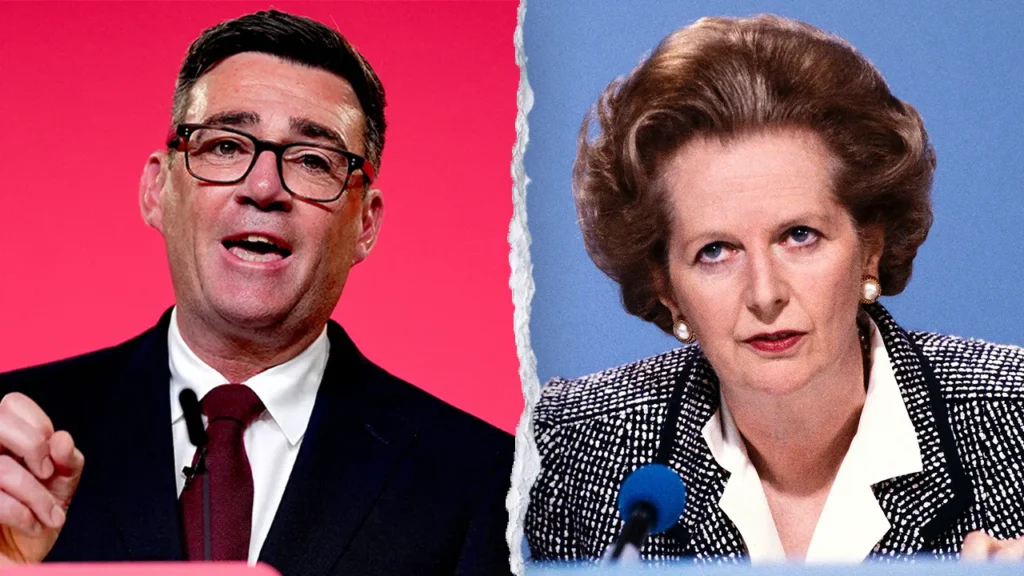
Andy Burnham assumed the Labour Party leadership Friday with a forceful speech rejecting four decades of free-market economics championed by Margaret Thatcher during the 1980s. The incoming prime minister, set to take office Monday, signaled his administration would substantially expand government involvement across housing, water, energy and transportation sectors. Burnham, who secured the party leadership with support from 379 Members of Parliament and ran without opposition, framed his election as Britain’s most significant political realignment in 40 years.
In remarks delivered July 17 in London, Burnham argued that privatization of essential services had harmed working-class communities historically aligned with Labour. “The country surrendered control of the essentials — housing, water, energy, transport — and left people exposed to higher costs,” he stated in prepared remarks released by his office. The new leader outlined plans to increase state ownership, expand council housing, strengthen regional governments and deepen public sector involvement in critical infrastructure.
Burnham’s approach represents a notable departure from the more cautious economic strategy pursued by outgoing Prime Minister Keir Starmer. The incoming prime minister distinguished Labour’s positioning from other political movements, declaring: “We won’t try to out-Green the Greens or out-Reform Reform.” Despite advocating expanded state control, Burnham characterized himself as a “pro-business leader” seeking private sector cooperation on infrastructure development.
Conservative-aligned think tanks mounted immediate pushback against Burnham’s critique of Thatcher-era policies. The Adam Smith Institute released data showing income tax rates fell from 83 percent to 40 percent under Thatcher, while corporate taxes dropped from 52 percent to 35 percent. The institute also documented inflation declining from 21.9 percent in 1980 to 2.4 percent by 1986 and homeownership rising from 55 percent to 67 percent of the population.
Alan Mendoza, director of the Henry Jackson Society think tank, criticized the speech for lacking substantive policy implementation details. Emma Schubart, a research analyst at the same organization, characterized Burnham’s attack on Thatcher reforms as “strange and needless” and questioned the internal contradictions between renewal messaging and proposals to reverse previous reforms. Schubart told Fox News Digital that Burnham’s positions reflected fundamental misunderstandings about taxation and economic incentives.
Mendoza warned that Burnham’s leftward repositioning could strain relations with the Trump administration, particularly given the incoming prime minister’s target voter base includes individuals skeptical of American foreign policy. This dynamic creates potential tension between domestic political objectives and Britain’s security alliance with the United States. Burnham is scheduled for formal swearing-in as prime minister Monday by King Charles III.

More Stories
Federal voting arrest in New Jersey adds new pressure point in Sherrill-Trump standoff
Colombia backs Trump security push while limiting U.S. role in anti-gang operations
Former NFL cheerleader and ex-aide face off in close Rhode Island GOP primary