



💛 A quick favor, if you've got a second.
We're really happy that you chose to read one of our stories and sincerely hope you'll stick around to read more. We took our paywall down — for now — but that won't last forever, and when the gate goes back up, we'd love for you to already be on the inside.
It's free. So please enter your email here and don't forget to like and follow us on all of your favorite Social Media platforms!
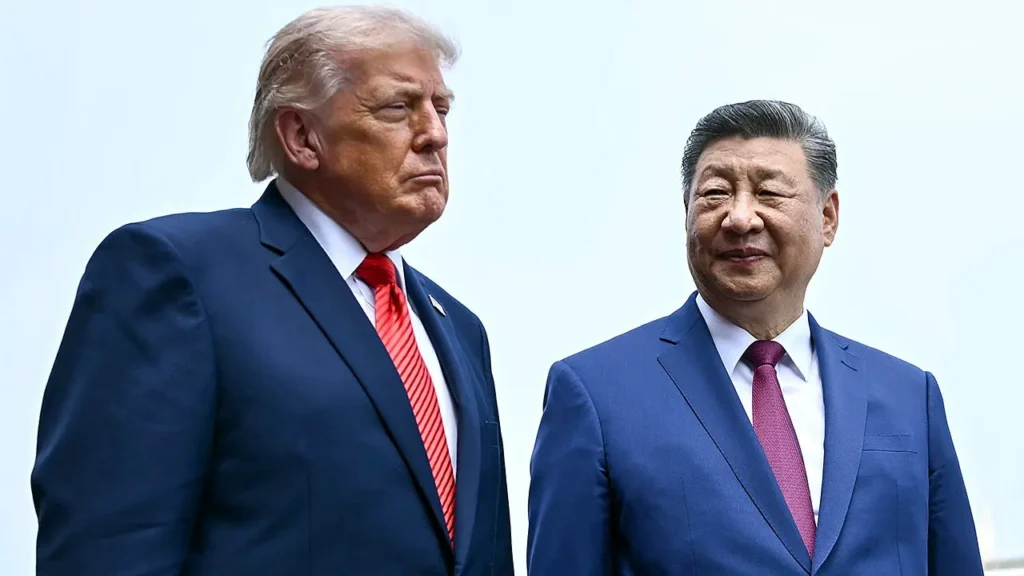
President Donald Trump has shifted toward a more conciliatory tone with Beijing just days after publicly accusing China of orchestrating “sinister election meddling” against the United States. The apparent contradiction has drawn scrutiny from foreign policy experts who question whether the administration’s approach to China aligns with its stated national security concerns. On July 16, Trump delivered a televised address detailing allegations that the Chinese Communist Party interfered in the 2020 election to weaken his presidency. Five days later, on July 21, Trump suggested that “China is maybe a little bit different today,” signaling a markedly softer diplomatic posture.
Michael Sobolik, a senior fellow at the Hudson Institute specializing in U.S.-China relations, told Fox News Digital that the president’s rhetorical shift raises serious questions about consistency. “President Trump just told the nation that China tried to influence the 2020 election and weaken his presidency. During that same year, the intelligence community identified TikTok as a primary vector of CCP influence in the United States,” Sobolik stated. He emphasized that ByteDance, the Chinese parent company, still maintains control of TikTok’s algorithm, meaning the underlying security threats the president outlined continue to exist.
The administration has moved to preserve TikTok’s operations in the United States despite Trump’s earlier efforts in his first term to ban the app over national security risks. Trump has since joined the platform, as have several top Cabinet members. White House spokesperson Olivia Wales defended the decision, stating that “President Trump has saved TikTok for its millions of American users — yet another promise made, promise kept” and that the app now operates under U.S. investor control with data protections in place.
TikTok’s ownership restructure, finalized at the start of this year, granted majority control to American investors while allowing ByteDance to retain a 19.9% stake—just below the legal threshold. However, Sobolik contended that the arrangement does not resolve fundamental concerns about Beijing’s influence. The company continues to license and control the algorithm through which content reaches American users, and there is no public mechanism preventing Beijing from manipulating the platform’s operations.
When discussing China’s past election interference, Trump downplayed the severity, suggesting both nations engage in similar tactics and pivoting the conversation toward future negotiations. “It took place a long time ago. I think China is maybe a little bit different today than it was then,” Trump said, adding that the U.S. also conducts comparable activities and that both countries should engage in dialogue. Sobolik cautioned that such rhetoric could embolden Beijing to continue interference attempts without fear of meaningful consequences.
Trump’s hardline stance on China during his first term relied heavily on tariffs, trade restrictions, and national security arguments to position Beijing as a chief American adversary. His current approach emphasizes commercial deals and diplomatic engagement, a significant departure that Sobolik attributed to the president’s focus on securing trade agreements. Trump visited China in May for a summit with President Xi Jinping to address trade, Taiwan, artificial intelligence, and human rights, though no major breakthroughs were publicly announced.
Sobolik argued that Trump’s narrow focus on trade deals misses the broader strategic competition between Washington and Beijing, which he characterized as a “new cold war.” The expert warned that overemphasizing commercial arrangements while neglecting other dimensions of U.S.-China competition could disadvantage American interests. “Xi will have the advantage,” Sobolik concluded, suggesting that the president should adopt a more comprehensive strategy than economic negotiations alone.
Xi Jinping is scheduled to visit the United States on September 24, with artificial intelligence expected to feature prominently in their discussions. The timing and agenda of the visit underscore the administration’s emphasis on high-level engagement with China, even as intelligence officials and national security specialists continue to flag Beijing’s threats to American democratic institutions.


More Stories
Former NFL cheerleader and ex-aide face off in close Rhode Island GOP primary
Trump Threatens FCC Action Against NBC’s Welker Over Endorsement Coverage
University of Pennsylvania Climate Scientist Demands Supreme Court Packing Pledge From Democratic Candidates