


💛 A quick favor, if you've got a second.
We're really happy that you chose to read one of our stories and sincerely hope you'll stick around to read more. We took our paywall down — for now — but that won't last forever, and when the gate goes back up, we'd love for you to already be on the inside.
It's free. So please enter your email here and don't forget to like and follow us on all of your favorite Social Media platforms!
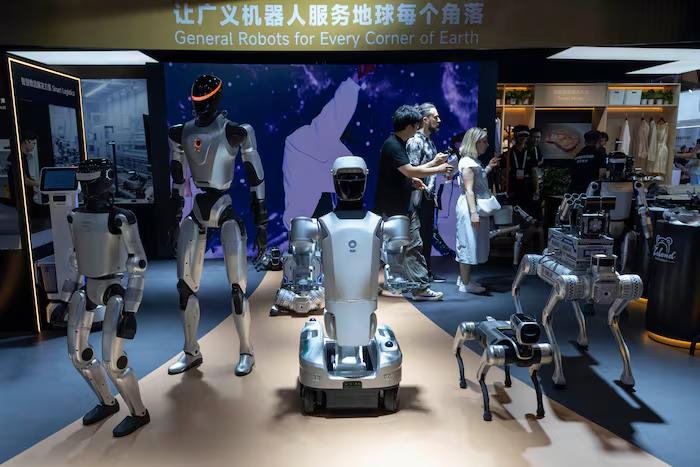
The Federal Communications Commission announced Tuesday that it would prohibit the importation of foreign-manufactured humanoid robots, a decision explicitly targeting China’s dominance in the sector. The agency characterized these machines as posing significant threats to American national security and supply chain integrity. This regulatory action extends to quadruped robots and foreign-made power inverters as well.
China currently manufactures substantially more humanoid robots than the United States and its other competitors combined, controlling approximately 85% of the global market. The FCC’s statement indicated that robots produced abroad create cybersecurity vulnerabilities and compromise critical infrastructure protection. Brendan Carr, the FCC’s chairperson, framed the restriction as essential to “secure America’s critical supply chains.”
The ban represents the latest in a series of American measures designed to limit Chinese technological access to U.S. markets, following earlier prohibitions on drone imports and ongoing reviews of Chinese artificial intelligence systems. The move could intensify tensions between the nations as they prepare for a summit between President Donald Trump and Chinese leader Xi Jinping scheduled for September, following their May meeting in Beijing.
Chinese firms Unitree and AGIBOT each shipped more than 5,000 humanoid robots globally in 2025, dwarfing American competitors Tesla and Figure AI, which each delivered several hundred units or fewer, according to technology research firm Omdia. Morgan Stanley projects China’s humanoid robot market could reach $15 billion by 2030, supported by aggressive state backing and manufacturing efficiencies that have reduced production costs faster than international rivals.
Analysts suggest the import restriction may disrupt collaborations between American and Chinese technology companies, noting that Nvidia released a humanoid robot design in June using a chassis from Chinese manufacturer Unitree. The Pentagon recently designated Unitree alongside other major Chinese technology firms as having connections to or supporting the Chinese military, allegations Beijing has denied.


More Stories
Former NFL cheerleader and ex-aide face off in close Rhode Island GOP primary
Trump Threatens FCC Action Against NBC’s Welker Over Endorsement Coverage
Chicago Mayor Issues Executive Order Requiring Contractor Diversity Disclosures and ICE Ties Reporting