

💛 A quick favor, if you've got a second.
We're really happy that you chose to read one of our stories and sincerely hope you'll stick around to read more. We took our paywall down — for now — but that won't last forever, and when the gate goes back up, we'd love for you to already be on the inside.
It's free. So please enter your email here and don't forget to like and follow us on all of your favorite Social Media platforms!
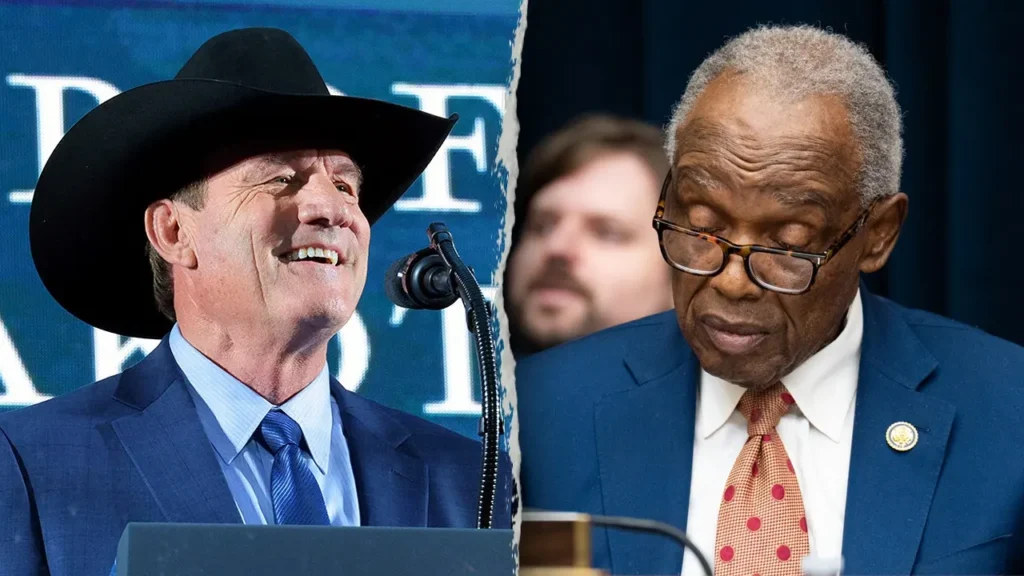
Polling locations across Georgia and South Dakota closed Tuesday evening as voters participated in two consequential races that highlighted the nation’s sharp political divisions. The contests came in response to separate vacancies and primary outcomes in the two states, creating what observers described as an unusually fragmented election day across vastly different regions.
Georgia’s special election was triggered by the April death of Rep. David Scott, an 80-year-old who represented a solidly Democratic district spanning Atlanta’s southern and eastern suburbs including Stockbridge, Conyers and Snellville. Scott’s passing created an open seat in what electoral analysts expect Democrats will retain comfortably through the general election in November. The late congressman, who served 12 terms, maintained a family connection to sports history through his marriage to a relative of Braves legend Hank Aaron.
Three Democrats competed in Tuesday’s primary to complete Scott’s term through January, including his daughter and former Mississippi judge Carlos Moore. Everton Blair, a millennial candidate, criticized Scott’s legislative approach and constituent service record following a confrontational 2025 encounter at a Gwinnett County town hall. That incident mirrored Scott’s late-year clash with a Capitol photographer, in which he directed expletives toward the journalist.
Scott’s daughter emphasized continuity if elected, pledging to secure federal funding for district projects and maintain her father’s constituent services infrastructure. Blair positioned himself as representing a new generation of Democratic leadership, while Moore, who faced a one-year suspension from the bench in 2024 over a settlement dispute, framed his candidacy around constitutional defense. State Rep. Jasmine Clark won the Democratic nomination for the full two-year term and faces Republican Air Force veteran Jonathan Chavez in November, with Trump having lost the district by approximately 43 percentage points in 2024.
In South Dakota, Republicans advanced to a rare gubernatorial runoff after incumbent Gov. Larry Rhoden fell short of securing the nomination outright during the June primary. Rhoden assumed office after President Donald Trump selected former Gov. Kristi Noem to lead the Department of Homeland Security in his second administration. The governor faces self-made bitcoin millionaire Toby Doeden in Tuesday’s runoff, with political observers characterizing the contest as a classic establishment-versus-outsider battle.
Polling data favored Rhoden entering the runoff, though Doeden sought to capitalize on momentum from his June primary victory. Minnehaha County, encompassing Sioux Falls, emerged as critical territory after helping propel Doeden to a first-place finish in the primary contest. Pennington County in the state’s western region represented another key battleground given its support for Doeden previously.
South Dakota has not elected a Democratic governor since the 1970s, when Richard Kneip served nearly two terms before accepting President Jimmy Carter’s appointment as ambassador to Singapore. Harvey Wollman, the state’s last Democratic chief executive, completed Kneip’s remaining six months in office. That electoral history suggested Republicans would maintain the governorship despite the runoff format.

More Stories
Federal voting arrest in New Jersey adds new pressure point in Sherrill-Trump standoff
Colombia backs Trump security push while limiting U.S. role in anti-gang operations
Former NFL cheerleader and ex-aide face off in close Rhode Island GOP primary