

💛 A quick favor, if you've got a second.
We're really happy that you chose to read one of our stories and sincerely hope you'll stick around to read more. We took our paywall down — for now — but that won't last forever, and when the gate goes back up, we'd love for you to already be on the inside.
It's free. So please enter your email here and don't forget to like and follow us on all of your favorite Social Media platforms!
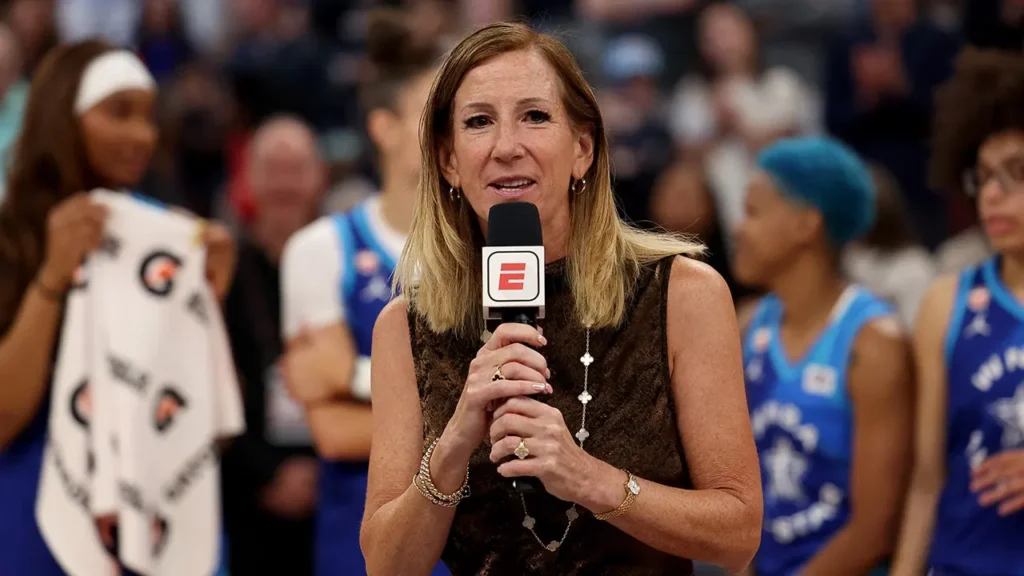
The WNBA media possessed unprecedented access to the league’s top athletes and Commissioner Cathy Engelbert during All-Star Weekend in Chicago, yet failed to press either group on comments made by player Sophie Cunningham regarding biological males competing in girls’ and women’s sports. Despite the prominence of the issue and Cunningham’s willingness to defend her position publicly, no recorded questions or published responses emerged from the weekend’s press conferences, interviews or scrums addressing the controversy.
Cunningham made her stance clear in an ESPN profile published before the All-Star break, stating she wanted to protect young girls in locker rooms and sports competition against biological men. The comments sparked responses from Las Vegas Aces forward Brianna Turner, who publicly backed transgender participation in women’s sports, and drew attention from the White House. The Associated Press identified the transgender-athlete debate as a major cultural issue surrounding the event.
An examination of publicly available press conferences, video interviews and coverage from All-Star Weekend revealed no instance of a WNBA All-Star or Commissioner Engelbert being asked directly about Cunningham’s statement. The 22 All-Stars present in Chicago included Caitlin Clark, A’ja Wilson, Breanna Stewart, Paige Bueckers and Cunningham’s Indiana Fever teammates Kelsey Mitchell and Aliyah Boston, all available for multiple media interactions throughout the event.
Commissioner Engelbert’s All-Star press conference provided a natural opening when she discussed the league’s commitment to inclusion, respect and player safety. However, no reporter connected this discussion to Cunningham’s arguments about protecting female athletes. Instead, questions focused on replay centers, international games, the Las Vegas Aces investigation, officiating and coaching diversity, among other operational matters.
Some outlets acknowledged the controversy in preview coverage. The Guardian characterized Cunningham’s comments as transphobic language and published interviews with multiple All-Stars on other topics, yet included no responses from those players about the actual controversy. The Associated Press similarly included the issue in scene-setting stories but relied on existing quotes rather than seeking fresh reporting from attending players.
The credentialing process complicated independent coverage of the event. OutKick and Fox News Digital, which had covered the previous year’s All-Star Game, applied for credentials through the NBA/WNBA portal but were denied after missing the June 16 deadline, despite submitting their application four weeks in advance. The organizations had not received the original credential advisory or reminder emails, and their request for reconsideration was rejected by the league.
This pattern reflects broader issues in WNBA media coverage, according to observers. During Caitlin Clark’s extensive media tour before joining the league, no reporter asked the most influential young woman in American sports about her views on transgender athletes competing against females. In another instance, USA Today reporter Christine Brennan faced calls for discipline from the WNBA Players’ Association after asking a reasonable question about an on-court incident.
The failure to address Cunningham’s comments stands in contrast to how WNBA media handled the Brittney Griner controversy last season. When a viral video suggested Griner made a racially charged remark, no WNBA reporter asked her about it for nearly three weeks. OutKick eventually obtained access and posed the direct question, leading Griner to deny the attribution and effectively ending the story.
The league and its players have stated they want the attention, revenue and status afforded to major professional sports. That aspiration requires serious media coverage, which sometimes involves asking athletes uncomfortable questions. The All-Star Weekend demonstrated that the WNBA media environment remains reluctant to engage in such fundamental reporting, even when presented with clear opportunities and legitimate news angles.
More Stories
Trump Threatens FCC Action Against NBC’s Welker Over Endorsement Coverage
Packers Running Back Josh Jacobs Placed on Commissioner Exempt List Pending Misdemeanor Charges
Denver Broncos Linebacker Jonathon Cooper Placed on Commissioner’s Exempt List Amid Domestic Violence Charges