



💛 A quick favor, if you've got a second.
We're really happy that you chose to read one of our stories and sincerely hope you'll stick around to read more. We took our paywall down — for now — but that won't last forever, and when the gate goes back up, we'd love for you to already be on the inside.
It's free. So please enter your email here and don't forget to like and follow us on all of your favorite Social Media platforms!
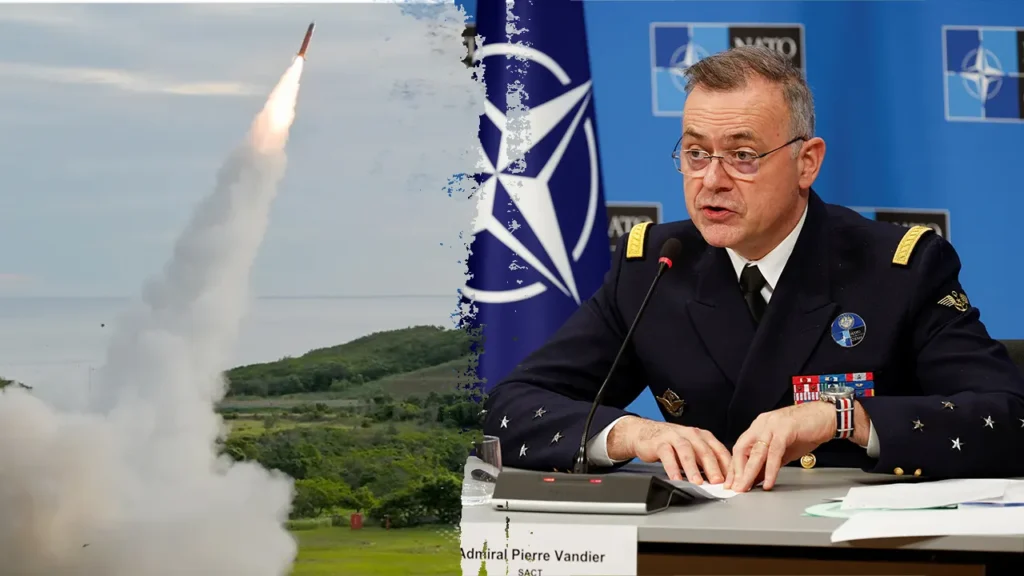
NATO’s supreme transformation commander has raised alarm about fundamental deficiencies in Western weapons production and design, warning that the alliance faces an uphill battle against the scale of threats demonstrated across Ukraine and the Middle East. Admiral Pierre Vandier delivered the stark assessment during an exclusive interview with Fox News Digital following NATO’s early July summit in Ankara, Turkey, underscoring that current military capabilities fall short of operational demands.
While NATO members recently pledged tens of billions of dollars in new air and missile defense investments—including commitments for 900 Patriot missiles and over $40 billion in counter-drone systems over five years—Vandier contended that incremental weapons purchases cannot address deeper structural problems. The alliance must undertake comprehensive redesign of both weapon systems and the industrial infrastructure supporting them, he argued.
Russia’s sustained nightly bombardment of Ukraine has exposed critical vulnerabilities in air-defense architectures originally conceived for smaller, more limited attacks. Simultaneously, regional tensions with Iran have driven competition for advanced interceptor systems including Patriots and Terminal High Altitude Area Defense platforms, which cannot be rapidly replenished given production constraints.
Vandier rejected the notion that scaling up existing systems offers a viable solution, noting that manufacturing 50,000 Patriot missiles annually remains impossible within current industrial frameworks and would prove economically unfeasible regardless. Instead, NATO requires a layered defensive strategy combining mass-produced, inexpensive systems for countering drone swarms with preserved high-end interceptors reserved for sophisticated threats like ballistic missiles.
President Trump announced at the summit that the United States would authorize Ukraine to manufacture Patriot interceptors domestically, potentially accelerating weapons availability for Kyiv’s defense against Russian missiles. Vandier, however, maintained this licensing decision does not resolve his core assessment that Patriot systems alone cannot safeguard European territory over the coming five years.
The fundamental challenge extends beyond procurement quantities, Vandier emphasized, rooted instead in weapons architecture built around industrial bases that no longer function as originally designed. Pressure from battlefield realities now forces redesign of systems intended for mass production, he said, marking a transformative moment for Western military development.
Russia has demonstrated remarkable capacity to absorb combat lessons and implement operational adjustments on a weekly basis, Vandier warned, citing a recent Russian military exercise on Lake Peipus between Estonia and Russia as probable preparation against Ukrainian naval drone tactics. The speed at which adversaries adapt now determines military viability, he stressed.
Ukraine’s defense industry has emerged as an unexpected catalyst, establishing production pace expectations that now influence major European and Western manufacturers who historically dominated weapons supply to Kyiv. Ukrainian firms have proven capable of developing, fielding and modifying systems with agility that outpaces traditional Western industrial timelines.
Beyond air defense competition, Vandier warned that the collapsed Intermediate-Range Nuclear Forces Treaty has unleashed a broader strategic race for long-range missiles capable of striking targets deeper into enemy territory. The 1987 agreement had prohibited both the United States and Russia from deploying ground-launched missiles with ranges between 500 and 5,500 kilometers until the first Trump administration withdrew in 2019, citing alleged Russian violations that Moscow denied.
The absence of these constraints has created what Vandier termed “complete strategic instability,” with both NATO and Russia compelled to develop new capabilities to maintain deterrence credibility. This geopolitical competition represents an opening of Pandora’s box that NATO will eventually seek to close, he concluded.


More Stories
Chicago Mayor Issues Executive Order Requiring Contractor Diversity Disclosures and ICE Ties Reporting
Federal Prosecutors Convene Special Grand Jury to Investigate D.C. Schools’ Attendance and Graduation Practices
University of Pennsylvania Climate Scientist Demands Supreme Court Packing Pledge From Democratic Candidates