



💛 A quick favor, if you've got a second.
We're really happy that you chose to read one of our stories and sincerely hope you'll stick around to read more. We took our paywall down — for now — but that won't last forever, and when the gate goes back up, we'd love for you to already be on the inside.
It's free. So please enter your email here and don't forget to like and follow us on all of your favorite Social Media platforms!
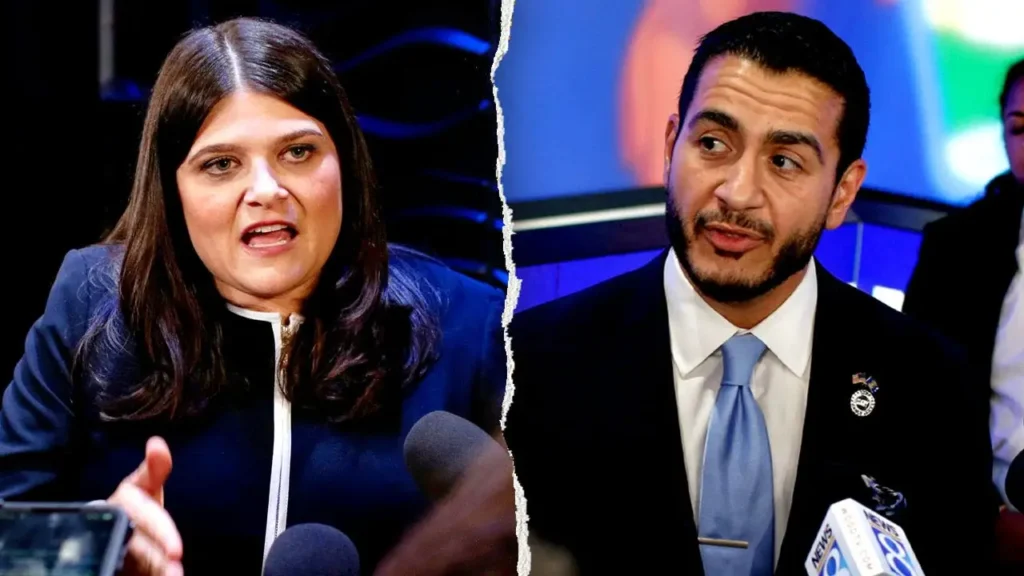
Two leading Democratic candidates for Michigan’s U.S. Senate seat faced off Monday night in a heated debate that highlighted deepening rifts within the party over foreign policy, campaign finance and political ideology. The clash occurred just seven days before the Aug. 4 primary vote that will determine which candidate advances to challenge Republican former Rep. Mike Rogers in the November general election.
The exchange centered heavily on millions in spending from pro-Israel groups supporting one candidate. When pressed about more than $46 million in AIPAC-related expenditures, one candidate flatly rejected the notion that such support would influence her positions, stating she remained committed to a two-state solution and long-term peace efforts. Her rival countered that the spending differential illustrated fundamental disagreements between them on foreign policy and budgetary priorities.
The candidate opposing the pro-Israel spending argued that resources should remain domestic. “I want your tax dollars spent in Michigan to provide schools in Michigan, to build health care in Michigan, to build roads in Michigan,” he stated, adding that funds sent abroad represented wasteful use of American resources.
A contentious earlier remark about putting an “ogre on a pike” resurfaced during the debate. The candidate who made the comment defended its substance while clarifying it referenced a Democratic U.S. Senator from Pennsylvania, not his female opponent. His rival offered a pointed response: “Thank you for clarifying that you didn’t call me an ogre.”
Financial transparency emerged as a secondary battleground. One candidate accused her opponent of withholding full tax returns while earning approximately $300,000 in outside income, including work on a podcast involving health-related ventures. She positioned herself as the sole non-millionaire in the race and warned Republicans would weaponize undisclosed financial details in the general election.
The candidate defended his disclosure of required financial filings, distinguishing them from comprehensive tax returns and characterizing the line of questioning as a distraction from substantive policy differences.
The pair also sparred over the future of Immigration and Customs Enforcement. One candidate called for abolishing the agency entirely and building replacement mechanisms for border enforcement, describing ICE as “tyrannical” and a normalization of paramilitary forces. The other termed ICE a “rogue agency” but promoted a congressional effort to redirect $70 billion allocated to the agency toward health care and community services instead.
The candidate backing structural elimination faced questions about whether abolishing ICE carried similar political liabilities as the “defund the police” messaging that Democrats have grappled with in recent elections. He maintained the government could enforce immigration law effectively through alternative agencies.
On broader Senate priorities, one candidate identified the filibuster and campaign money as democracy’s greatest threats. He advocated eliminating the 60-vote threshold to enable passage of union protections, antitrust reforms, wealth taxes and Medicare for All.


More Stories
Former NFL cheerleader and ex-aide face off in close Rhode Island GOP primary
Chicago Mayor Issues Executive Order Requiring Contractor Diversity Disclosures and ICE Ties Reporting
University of Pennsylvania Climate Scientist Demands Supreme Court Packing Pledge From Democratic Candidates