


💛 A quick favor, if you've got a second.
We're really happy that you chose to read one of our stories and sincerely hope you'll stick around to read more. We took our paywall down — for now — but that won't last forever, and when the gate goes back up, we'd love for you to already be on the inside.
It's free. So please enter your email here and don't forget to like and follow us on all of your favorite Social Media platforms!
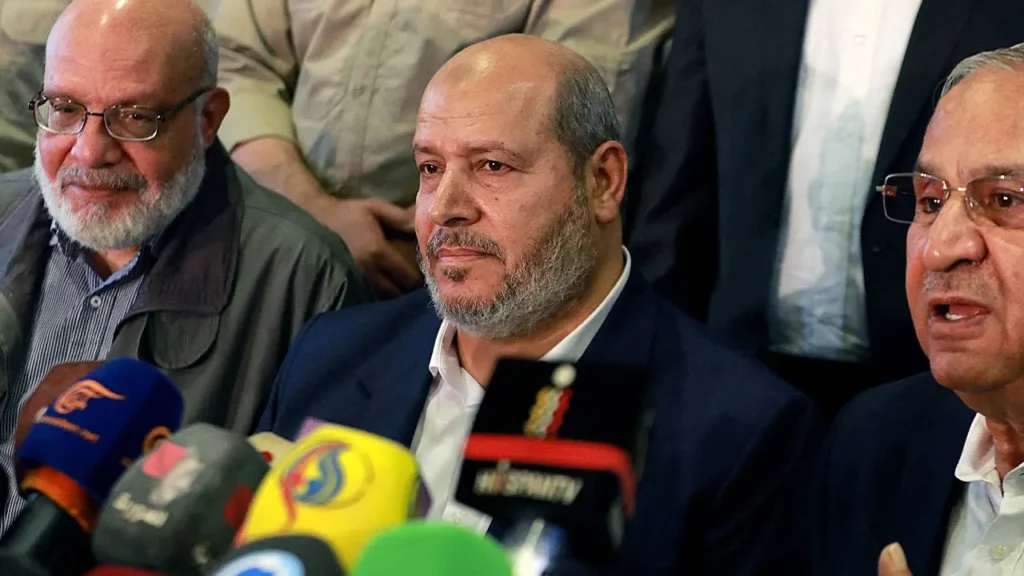
Khalil al-Hayya, a seasoned Hamas diplomat who has survived multiple purported Israeli assassination attempts, has ascended to leadership of the group’s political bureau through a protracted secret electoral process. The appointment represents continuity rather than a strategic shift for the organization, according to Middle East Institute Senior Fellow Jaser AbuMousa, who cautioned against misinterpreting engagement in negotiations as evidence of moderation.
AbuMousa characterized al-Hayya’s selection as an act of institutional preservation by a decimated organization choosing its most experienced operative. He predicted the group would maintain its established patterns: continued participation in ceasefire discussions and prisoner exchanges while preserving its military capabilities, Iranian alignment, and organizational structure. The expert emphasized that al-Hayya’s survival credentials—including enduring an Israeli strike on a Hamas delegation compound in Doha in September 2025—paradoxically enhanced rather than diminished his candidacy within the organization’s leadership framework.
Al-Hayya replaces Yahya Sinwar, who was killed by Israeli forces in October 2024, following an election process that consumed several months. Multiple family members, including four of his sons, have been killed in Israeli operations. His ascension reflects Hamas’s prioritization of armed continuity and organizational cohesion over substantive political reassessment after the extensive destruction in Gaza since October 7, 2023.
AbuMousa cautioned that the leadership vote involved only the organization’s internal council rather than Gaza’s approximately 2 million residents, who have not participated in elections since 2006 and many of whom attribute the territory’s devastation to Hamas’s decisions. The expert projected a governance model modeled on Hezbollah’s structure, in which Hamas would shed visible administrative responsibility while retaining its weaponry, security apparatus, and decision-making authority over political negotiations.

More Stories
Federal voting arrest in New Jersey adds new pressure point in Sherrill-Trump standoff
Colombia backs Trump security push while limiting U.S. role in anti-gang operations
Former NFL cheerleader and ex-aide face off in close Rhode Island GOP primary