


💛 A quick favor, if you've got a second.
We're really happy that you chose to read one of our stories and sincerely hope you'll stick around to read more. We took our paywall down — for now — but that won't last forever, and when the gate goes back up, we'd love for you to already be on the inside.
It's free. So please enter your email here and don't forget to like and follow us on all of your favorite Social Media platforms!
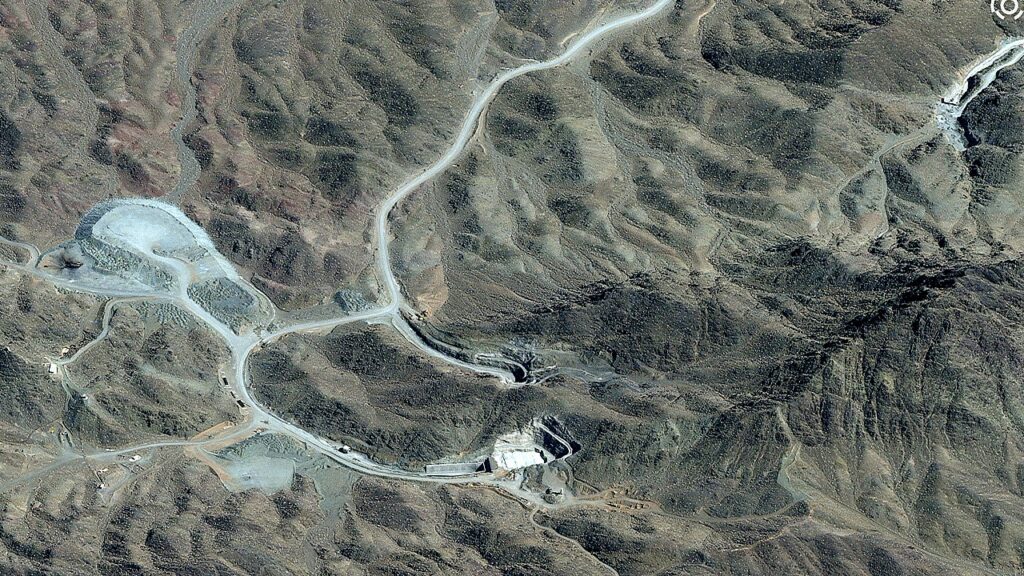
The Pentagon has reportedly dusted off a controversial proposal that would direct thousands of American military personnel into Iran to retrieve enriched uranium from nuclear facilities damaged in previous strikes, according to recent reporting. While defense officials have characterized the operation as a raid, experts argue such a characterization fundamentally misrepresents the scope and danger of the mission. The reality would amount to a temporary occupation of hostile Iranian territory without tactical surprise against an adversary that has had months to prepare defensive positions at known target sites.
The proposed operation draws uncomfortable parallels to Operation Eagle Claw, the disastrous 1980 rescue attempt authorized by President Jimmy Carter to free American hostages held in Tehran. That mission ended in catastrophic failure at Desert One when a helicopter collided with a transport aircraft, killing eight American servicemen before the rescue force could advance toward its objective. President Trump has acknowledged concern about this historical precedent, stating in June that he rejected an earlier iteration of the uranium-seizure plan because he did not want to repeat Carter’s failure.
The current Pentagon proposal would dwarf Eagle Claw in complexity and logistical demands. Intelligence agencies remain uncertain about the precise location of Iran’s enriched uranium stockpile, which may have been distributed across multiple facilities or relocated entirely. International inspectors have not verified the uranium’s location for approximately nine months, creating significant operational uncertainty for any military planners.
The reported mission targets Iran’s Fordow and Isfahan nuclear complexes alongside the heavily fortified Pickaxe Mountain installation near Natanz, where analysts believe Iran relocated uranium enrichment centrifuges. Military planners estimate that thousands of troops would be required, including Army Rangers, special operations forces and combat engineers equipped with excavation machinery. One operational version calls for constructing a runway capable of airlifting approximately 450 kilograms of highly enriched uranium, with some material enriched to 60 percent concentration.
Pickaxe Mountain alone illustrates the enormous obstacles facing any assault force. Located more than 300 feet underground—deeper than the Fordow facility struck by U.S. forces previously—the facility may house centrifuges rather than uranium. American forces could breach the mountain’s defenses only to discover their primary objective had already vanished. At Isfahan, tunnel entrances reportedly remain sealed with dirt, reinforced with mines and defensive positions designed to impede ground-based approaches.
Iran has spent months preparing its defensive strategy, fortifying known target sites and organizing countermeasures. The Islamic Revolutionary Guard Corps could respond across multiple fronts, striking American military bases in the region, disrupting maritime traffic through the Strait of Hormuz and mobilizing proxy forces throughout Iraq, Syria and Yemen. Tehran would not need to defeat American forces decisively; merely denying the objective through tunnel collapses, site contamination or personnel entrapment would constitute a strategic victory.
As the mission duration extends, risks multiply exponentially. What begins as a limited raid transforms into a sustained American military presence deep within Iranian territory. The moment American engineers commence runway construction on Iranian soil, the operation becomes an invasion in all but name. Extended occupation requirements would expose personnel to increasing danger from Iranian counterattacks, confined-space hazards and potential tunnel collapses.
Military experts suggest alternative approaches might achieve identical strategic objectives with substantially reduced risk. Rather than attempting to occupy and extract uranium from fortified underground facilities, American forces could systematically collapse known tunnel entrances and access routes while maintaining surveillance and striking any reopening efforts. This strategy would render uranium retrieval time-consuming, visible and vulnerable to additional strikes without requiring sustained ground occupation.
The Trump administration faces mounting pressure to convert tactical military successes into visible strategic victories, creating temptation to pursue operationally ambitious missions that offer dramatic symbolic value. However, military history demonstrates that confusing powerful imagery with durable strategic outcomes leads to catastrophic consequences. Wars succeed through producing sustainable political results, not through destroying targets or acquiring symbolic trophies.
Before committing American forces to Iranian soil, defense officials and political leaders must answer critical operational questions: Can intelligence confirm the uranium’s precise location? Do military planners possess reliable methods to reach buried facilities? How many troops would be required to establish and maintain a defensive perimeter? What contingencies exist for Iranian counterattacks? Has the administration secured legal authorization and public support for a ground war inside Iran?
Most crucially, planners must address the fundamental challenge illustrated by Operation Eagle Claw’s failure: how American forces would successfully withdraw from Iranian territory. Reaching the objective differs fundamentally from escaping it. The genuine strategic test involves determining whether the objective’s value justifies the considerable costs and risks when less dangerous alternatives might produce identical strategic outcomes.

More Stories
Federal voting arrest in New Jersey adds new pressure point in Sherrill-Trump standoff
Colombia backs Trump security push while limiting U.S. role in anti-gang operations
Former NFL cheerleader and ex-aide face off in close Rhode Island GOP primary