


💛 A quick favor, if you've got a second.
We're really happy that you chose to read one of our stories and sincerely hope you'll stick around to read more. We took our paywall down — for now — but that won't last forever, and when the gate goes back up, we'd love for you to already be on the inside.
It's free. So please enter your email here and don't forget to like and follow us on all of your favorite Social Media platforms!
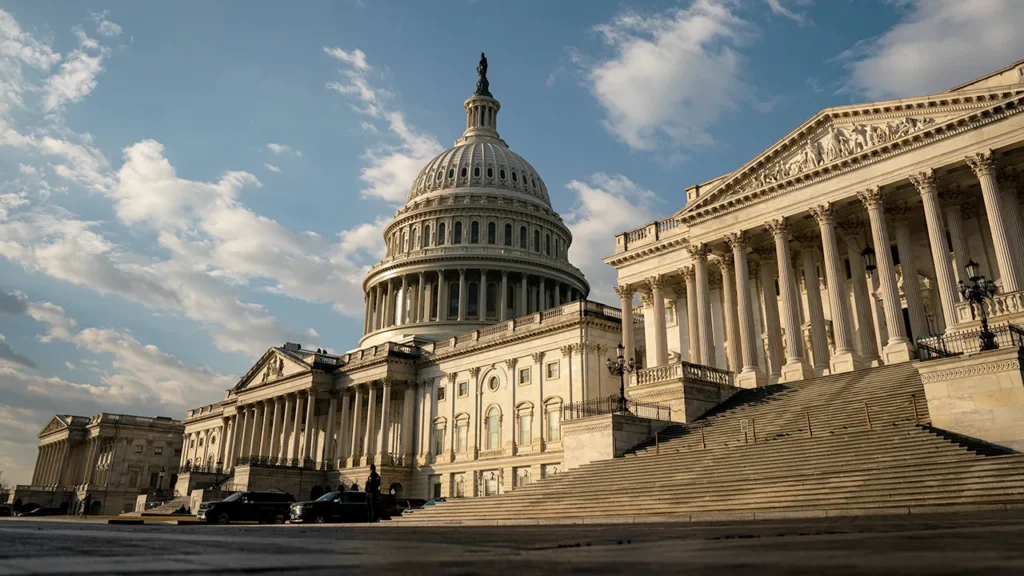
The 2026 midterm elections arrive in roughly 100 days as the nation’s two major parties prepare for a costly, high-stakes battle to determine which will control Congress and statehouses from coast to coast. Republicans currently maintain narrow leads in both chambers—holding 218 House seats to Democrats’ 212, plus one independent and four vacancies, and commanding the Senate with a 53-47 advantage that includes two independents aligned with Democrats. The math favors Democratic gains, as they need only six additional House seats to capture the speaker’s gavel and four Senate seats to reclaim the upper chamber.
Recent Fox News polling demonstrates a competitive landscape for Republicans despite historical patterns favoring the party out of power during midterm elections. The survey shows 53 percent of voters backing Democratic House candidates compared to 46 percent supporting Republicans, marking the highest percentage either party has received on the generic House ballot since 1996. Democrats have gained ground since April, when they led by five points, suggesting momentum heading into November’s contests.
Republican National Committee Chair Joe Gruters told Fox News this week that his party is “in a prime position to win” the midterms, citing economic accomplishments under the current administration and border security efforts. The RNC enters the final stretch with approximately $125.5 million in cash reserves, substantially outpacing the Democratic National Committee’s $14.9 million on hand, though Democrats point to strategic spending investments made earlier in the cycle.
Senate Republicans face defending competitive seats in Alaska, North Carolina, Ohio, and Maine as record spending floods those battlegrounds. Meanwhile, Democratic officials worry about a rising tide of Democratic Socialist candidates winning races nationwide, complicating messaging efforts for establishment party leaders including Senate Minority Leader Chuck Schumer and House Minority Leader Hakeem Jeffries.
Polling data reveals shifting voter attitudes toward economic systems, with just 50 percent holding favorable views of capitalism—down from 57 percent in 2019—while 30 percent view socialism favorably, up from 27 percent the previous year. Among Democrats specifically, 52 percent hold positive views of socialism versus 41 percent for capitalism, a stark contrast to Republicans’ 61 percent favorability toward capitalism and 11 percent for socialism.
Beyond Congress, control of governors’ mansions carries enormous implications for redistricting and state policy for years to come. Republicans currently hold 26 governorships to Democrats’ 24, with 36 states electing governors in November, including numerous swing states that will determine whether President Donald Trump governs with a Republican trifecta or faces divided government that could derail his legislative agenda.
Voter sentiment suggests Democrats have structural advantages entering the final 100 days. The Fox News polling indicates 68 percent of Democrats express extreme motivation to vote compared to 57 percent of Republicans, an 11-point gap favoring the minority party. Trump’s job approval hovers near record lows, and majorities of voters—spanning Democrats, Republicans, and independents—rate the economy negatively, potentially benefiting candidates challenging the status quo.
On specific policy areas, voters tell pollsters they trust Democrats more on income inequality by 22 points, healthcare by 21 points, and inflation by 10 points. Republicans maintain a seven-point edge on crime, while views split more evenly on government spending and national security. Immigration presents a dramatic shift from earlier in the cycle, with Democrats now preferred by one point after trailing by eight points in April.

More Stories
Federal voting arrest in New Jersey adds new pressure point in Sherrill-Trump standoff
Colombia backs Trump security push while limiting U.S. role in anti-gang operations
Former NFL cheerleader and ex-aide face off in close Rhode Island GOP primary