

💛 A quick favor, if you've got a second.
We're really happy that you chose to read one of our stories and sincerely hope you'll stick around to read more. We took our paywall down — for now — but that won't last forever, and when the gate goes back up, we'd love for you to already be on the inside.
It's free. So please enter your email here and don't forget to like and follow us on all of your favorite Social Media platforms!
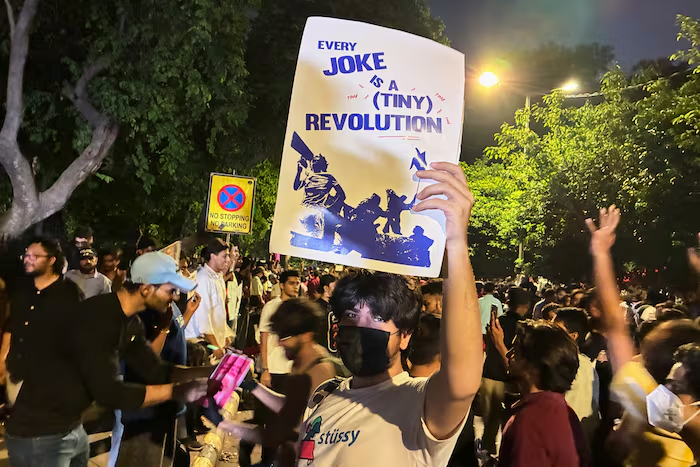
Thousands of young demonstrators flooding the streets of New Delhi have launched a coordinated digital offensive against the Indian government, wielding humor, viral videos and internet memes as their primary weapons. The strategy has proven remarkably effective in amplifying their core demands for education reforms and government accountability while simultaneously outmaneuvering Prime Minister Narendra Modi on the very platform he leveraged to build his political power.
The protest movement, which originated nearly two months ago with the satirical Cockroach Janta Party, erupted across India following a series of exam security breaches involving the illegal distribution of entrance exams for the national medical program. Young people have framed these scandals as threats to their futures and evidence of systemic corruption, with demonstrators specifically calling for the resignation of Education Minister Dharmendra Pradhan while broadening their critique to encompass wider governance failures.
Protesters have transformed confrontations with police into shareable online content, with videos showing demonstrators joking about maintaining fitness app streaks while evading baton charges and mimicking the mobile game Subway Surfers as they navigate police barricades. Other participants have adopted influencer aesthetics, posting “get ready with me” videos showcasing homemade protest gear and creating parody broadcasts that mock the dramatic delivery of pro-government television anchors who have labeled activists as “anti-national” and “foreign-funded.”
The movement has achieved a historically significant breakthrough by directly targeting Modi himself through viral edits that repurpose his statements and mannerisms into political satire. When the prime minister released a late-night video Thursday promising swift action against exam leak perpetrators, internet users quickly circulated parody versions with alternative voiceovers, while one particularly viral edit featured his greeting of “friends” followed by young girls on screen rejecting the characterization.
A 21-year-old participant captured the strategy’s underlying logic, stating that protesters are simply responding to Modi using the communication channels he originally mastered. Young activists interviewed anonymously described humor as both coping mechanism and generational expression, with one 25-year-old noting that her generation lacks patience for passive acceptance of hardship and institutional failure.
For Modi, entering his 13th year in office, the protests present a delicate political calculation given that nearly half of India’s population is under 25 years old, making youth voters an essential electoral constituency. The prime minister risks significant backlash if he responds with excessive force while simultaneously facing unprecedented ridicule that challenges the carefully cultivated image of strength and decisiveness that has defined his political brand.

More Stories
Federal voting arrest in New Jersey adds new pressure point in Sherrill-Trump standoff
Colombia backs Trump security push while limiting U.S. role in anti-gang operations
Former NFL cheerleader and ex-aide face off in close Rhode Island GOP primary