


💛 A quick favor, if you've got a second.
We're really happy that you chose to read one of our stories and sincerely hope you'll stick around to read more. We took our paywall down — for now — but that won't last forever, and when the gate goes back up, we'd love for you to already be on the inside.
It's free. So please enter your email here and don't forget to like and follow us on all of your favorite Social Media platforms!
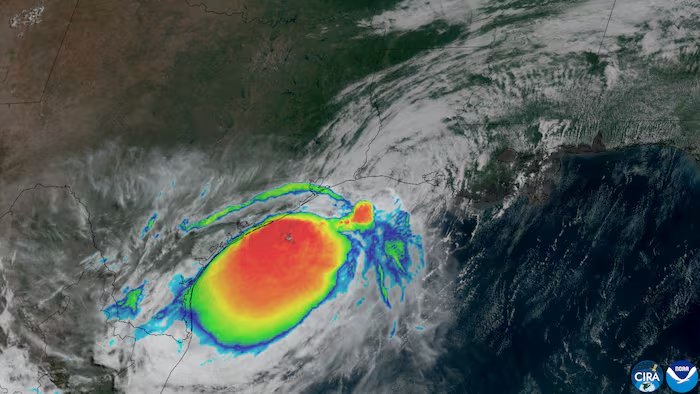
Tropical Storm Bertha’s brief existence as a tropical system ended late Thursday as its circulation deteriorated over eastern Texas. The storm made landfall along the Texas-Louisiana border Thursday afternoon, tracking considerably farther north than the National Hurricane Center had predicted in its early morning forecast, and ultimately stayed outside the projected path issued that morning.
The system produced elevated coastal tides and scattered heavy rainfall across parts of eastern Texas, though overall impacts remained limited. Fort Bend County southwest of Houston recorded the heaviest precipitation, reaching 5.7 inches and prompting a flash flood warning around 9 p.m. local time Thursday. Wind speeds along the upper Texas coast remained below the 39 mph tropical storm threshold, according to the National Weather Service in Houston.
Beyond the Houston metropolitan area, most of eastern Texas received only 1 to 3 inches of rain or less. Remnants of Bertha continued producing light precipitation across South Texas west of San Antonio Friday morning, but the system was expected to weaken further as it moved into northern Mexico with no significant impacts anticipated.
The Atlantic basin faces an extended period of minimal tropical development prospects through the first week of August, with unfavorable atmospheric conditions prevailing from Africa through the Caribbean. Any potential tropical systems during this window would likely emerge from subtropical regions in the eastern Gulf of Mexico or east of Florida. Forecasters expect relatively quiet conditions to persist as the season approaches its peak activity in late August.

More Stories
New York’s Colombian Community Mobilizes Relief Efforts Following Recent Earthquakes
Nepal Buries Hundreds of Flood Victims in Mass Graves as Identification Efforts Lag
Hurricane Karina Intensifies Over Pacific, Potential Major Storm Looms This Week