


💛 A quick favor, if you've got a second.
We're really happy that you chose to read one of our stories and sincerely hope you'll stick around to read more. We took our paywall down — for now — but that won't last forever, and when the gate goes back up, we'd love for you to already be on the inside.
It's free. So please enter your email here and don't forget to like and follow us on all of your favorite Social Media platforms!
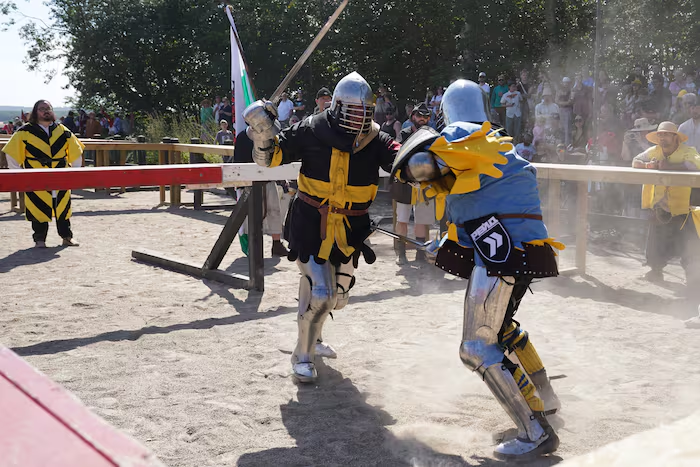
The International Medieval Combat Federation held its annual world championship this week at Spøttrup Castle in northern Denmark, drawing approximately 600 armor-clad fighters from 30 countries to compete in a modern adaptation of 14th-century battle. The event, which opened Thursday, marks the continuation of a competition that began in Spain in 2014 and has evolved into a structured sporting discipline blending historical technique with contemporary safety protocols and athletic conventions.
Competitors wielded blunted swords, axes, and shields while adhering to strict rules enforced by trained marshals. Federation spokesperson Kamila Studencka described the sport as “historically inspired” but distinctly modern in its approach, incorporating both period-accurate fighting methods and contemporary martial arts techniques. Participants cited varying motivations for involvement, from the physicality of combat to the technical precision required in face-to-face engagements and the appeal of team participation.
The four-day championship featured one-on-one duels consisting of two one-minute rounds, with competitors eliminated after three ground impacts or submission. Mass-team events called “Buhurt” allowed up to 10 fighters per side to engage simultaneously. The International Medieval Combat Federation reports that injury rates among participants remain comparable to those in mainstream full-contact martial arts, attributing this to shock-absorbing padded garments worn beneath historically accurate armor.
Fighters from the United States, Canada, China, and Brazil participated in the Denmark event, with some citing growth in the sport’s popularity within their home countries. American competitor Alex King noted his local Minnesota team expanded from approximately 10 members to over 50 in three years, while Finnish competitor Miisa Kaivos highlighted rapid expansion among women competitors globally.

More Stories
Christa Pike Survives Botched Double Execution Attempt; Tennessee Halts Remaining 2026 Executions
Tennessee’s Lone Death Row Female is Scheduled for Execution Wednesday for 1995 Torture/Murder
Indiana coach Curt Cignetti tells restless Hoosiers fans not to gripe over 38-0 win