

💛 A quick favor, if you've got a second.
We're really happy that you chose to read one of our stories and sincerely hope you'll stick around to read more. We took our paywall down — for now — but that won't last forever, and when the gate goes back up, we'd love for you to already be on the inside.
It's free. So please enter your email here and don't forget to like and follow us on all of your favorite Social Media platforms!
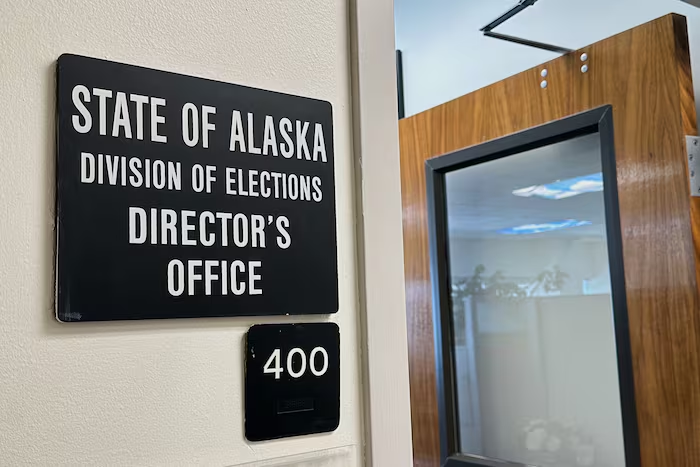
Alaska’s elections division has distributed approximately 3,048 letters instructing voters to confirm their citizenship status in advance of the August 18 primary election. State officials characterized the volume as significantly higher than typical, acknowledging that the review process ordinarily produces roughly 200 names for scrutiny rather than thousands.
Carol Beecher, director of the Alaska Division of Elections, attributed the surge to outdated information retrieved during routine maintenance comparing voter registration data against records maintained by the Division of Motor Vehicles. She told state legislators that “a lot of old data was picked up somehow” during the cross-referencing effort, though the exact cause remains undetermined.
Recipients may affirm their citizenship through written correspondence, telephone contact or email without submitting documentation, according to Beecher. Voters who receive letters are placed on an inactive status but retain the ability to cast provisional ballots that require them to attest to their voting eligibility if they do not respond.
The initiative arrives amid intensified national scrutiny regarding non-citizen voting, despite extensive research demonstrating the practice occurs with extreme rarity. President Donald Trump and administration officials have repeatedly claimed widespread non-citizen voting and promoted federal voting restrictions requiring citizenship documentation and centralized voter verification lists.
Democratic state representatives indicated that constituents contacting their offices about the letters were uniformly U.S. citizens. State Rep. Ashley Carrick questioned whether the action related to Alaska’s late-2024 decision to transfer detailed voter information, including dates of birth and partial Social Security numbers, to the U.S. Department of Justice.
The Motor Vehicles Division released a memo clarifying that the Elections Division requested citizenship information for approximately 15,200 applicants in March, describing the inquiry as “non-routine.” The DMV responded with records where citizenship status was flagged as something other than “Citizen.”
Officials noted that citizenship status discrepancies may stem from timing gaps between DMV licensing and voter registration. A person who obtained a driver’s license before naturalization but registered to vote afterward could remain flagged in DMV databases as a non-citizen, division officials explained.

More Stories
Colombia backs Trump security push while limiting U.S. role in anti-gang operations
Former NFL cheerleader and ex-aide face off in close Rhode Island GOP primary
Chicago Mayor Issues Executive Order Requiring Contractor Diversity Disclosures and ICE Ties Reporting