


💛 A quick favor, if you've got a second.
We're really happy that you chose to read one of our stories and sincerely hope you'll stick around to read more. We took our paywall down — for now — but that won't last forever, and when the gate goes back up, we'd love for you to already be on the inside.
It's free. So please enter your email here and don't forget to like and follow us on all of your favorite Social Media platforms!
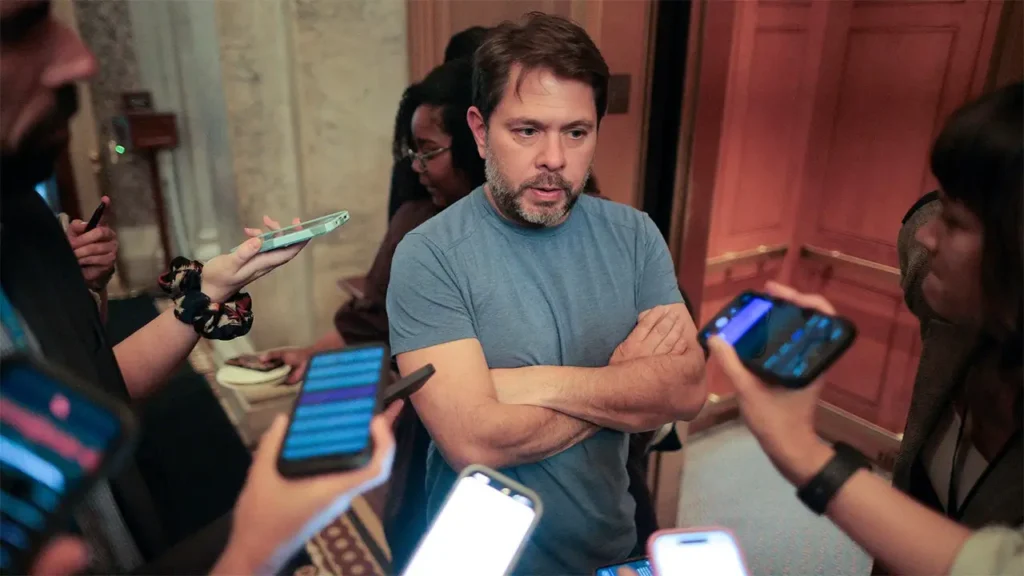
Momentum is building on Capitol Hill to implement stricter rules governing romantic relationships between lawmakers and their congressional staff. Rep. Jeff Crank, R-Colo., introduced a bill Tuesday that would prohibit House members from engaging in sexual relationships with any congressional staff member absent explicit clearance from the House Ethics Committee. The measure represents an escalation of existing restrictions that currently apply only to personal employees and committee staff.
The legislative effort follows a series of high-profile scandals involving former Rep. Eric Swalwell, D-Calif.; former Rep. Tony Gonzales, R-Texas; Rep. Jimmy Gomez, D-Calif.; and Sen. Ruben Gallego, D-Ariz. A spokesperson for Gallego indicated the senator backs Crank’s House proposal and seeks accountability for Republicans involved in such relationships. The New York Post reported that Gallego had consensual sexual relationships with at least two House staffers employed by other Democratic lawmakers while serving in the chamber, though such conduct occurred before his marriage.
Speaker Mike Johnson, R-La., signaled support for the initiative, stating that Congress should adopt workplace standards comparable to corporate America. Rep. Lisa McClain, R-Mich., separately proposed a rule banning all sexual relationships between members and congressional staffers, arguing that inherent power imbalances create impropriety regardless of consent.
The scandals intensified in April when multiple women accused Swalwell of unwanted sexual contact and rape. Swalwell, who apologized for “mistakes in judgment” while maintaining innocence, suspended his gubernatorial campaign and resigned from Congress. Gonzales resigned the same month after acknowledging an affair with a staffer who subsequently died by suicide, which he denied contributed to her death.

More Stories
Federal voting arrest in New Jersey adds new pressure point in Sherrill-Trump standoff
Colombia backs Trump security push while limiting U.S. role in anti-gang operations
Former NFL cheerleader and ex-aide face off in close Rhode Island GOP primary