


💛 A quick favor, if you've got a second.
We're really happy that you chose to read one of our stories and sincerely hope you'll stick around to read more. We took our paywall down — for now — but that won't last forever, and when the gate goes back up, we'd love for you to already be on the inside.
It's free. So please enter your email here and don't forget to like and follow us on all of your favorite Social Media platforms!
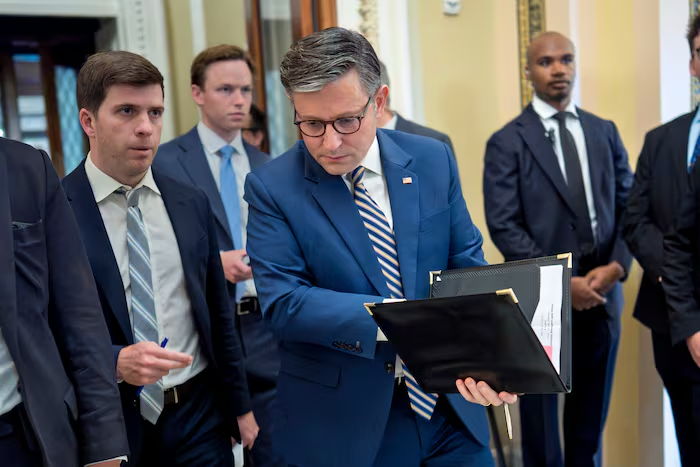
The House of Representatives approved a sweeping defense policy measure Wednesday that would authorize $1.15 trillion in national security spending as requested by President Donald Trump and formally rename the Department of Defense as the Department of War. The legislation passed on a narrow 216-212 vote, marking a departure from the typically bipartisan nature of annual defense authorization bills. The measure also would grant service members pay increases ranging from 5 percent to 7 percent depending on rank.
Democrats objected to the substantial Pentagon funding expansion, arguing that Republicans were simultaneously pushing to slash non-defense programs through separate legislation. Opposition also centered on controversial social policy provisions attached to the bill, including a ban on gender-related medical care within the military health program TRICARE and measures easing restrictions on privately owned firearms at military bases, aligned with Defense Secretary Pete Hegseth’s priorities.
Republican House Speaker Mike Johnson’s decision to couple Trump’s elections overhaul legislation with the defense measure widened the partisan split, as GOP lawmakers insisted on including the SAVE America Act in must-pass bills to pressure the Senate into passage. Rep. Mike Rogers, the Republican chairman of the House Armed Services Committee, acknowledged disagreements but framed the vote as part of a longer process toward a bipartisan final product addressing what he characterized as decades of military underinvestment.
Rep. Adam Smith, the ranking Democrat on the Armed Services Committee, contended that total defense-related spending approached $1.6 trillion when accounting for separate appropriations for operations in Iran and weapons stockpile enhancement. Smith urged Republican colleagues to resist what he described as a blank check for an uncontrolled military engagement, emphasizing the strain on Americans’ household budgets.
The White House praised the spending levels and the Department of War redesignation, stating it demonstrates commitment to military readiness. President Trump had previously issued an executive order renaming the agency, but congressional action is required to make the change permanent. The Congressional Budget Office estimates the renaming could cost taxpayers up to $125 million.
White House officials indicated concerns about certain bill provisions, particularly language they said would restrict presidential authority over military installation naming and property designation. The issue carries historical significance following 2023 efforts to rename seven Army bases honoring Confederate figures, changes that were reversed last year with substitute namesakes sharing Confederate surnames.
Actual spending authorized by the bill remains contingent on Congress passing a separate defense appropriations measure. The Senate has not yet acted on its version of the defense authorization legislation, and a final bill could remain under negotiation well beyond the midterm election period.

More Stories
Colombia backs Trump security push while limiting U.S. role in anti-gang operations
Chicago Mayor Issues Executive Order Requiring Contractor Diversity Disclosures and ICE Ties Reporting
University of Pennsylvania Climate Scientist Demands Supreme Court Packing Pledge From Democratic Candidates