


💛 A quick favor, if you've got a second.
We're really happy that you chose to read one of our stories and sincerely hope you'll stick around to read more. We took our paywall down — for now — but that won't last forever, and when the gate goes back up, we'd love for you to already be on the inside.
It's free. So please enter your email here and don't forget to like and follow us on all of your favorite Social Media platforms!
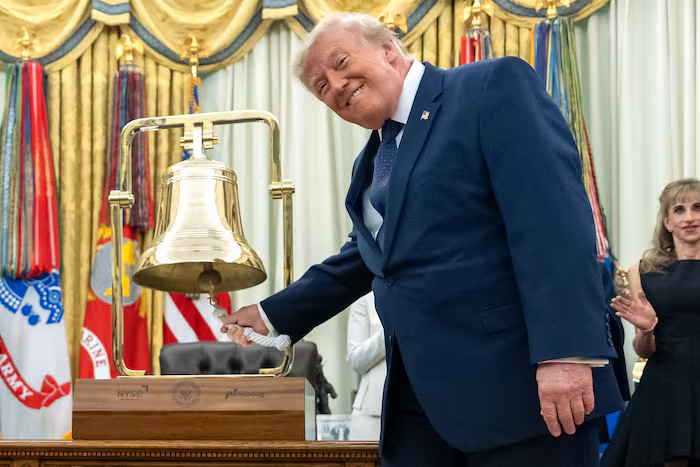
President Donald Trump is set to visit a Georgia high school Wednesday to champion Trump Accounts, a new investment program that deposits $1,000 in seed money into accounts for every child born during his second term. The initiative, established through legislation Trump signed last year, launched July 4 and has already drawn substantial interest from American families seeking to build wealth for their children.
The Treasury Department reports 6.5 million enrollments in Trump Accounts since launch, with approximately 1.5 million children eligible to receive the $1,000 federal contribution reserved for those born between 2025 and 2028. The tax-advantaged accounts are available to any child under 18 and allow contributions from parents, relatives, employers and philanthropic donors, with funds invested in index funds and accessible only at age 18 for education, business creation or home purchases.
Despite the program’s rollout, numerous parents have reported extended waits for the promised seed funding to appear in their accounts. Masaki McLellan of Bergen County, New Jersey, applied for an account for his daughter Maya born in late March on July 6, initially facing a rejection before activation. Though initially told funds would arrive in 10 days, he was subsequently informed the process could take up to four weeks.
The Treasury Department characterizes the funding delays as routine processing time comparable to tax refund disbursements, claiming the vast majority of parents experience waits of just one to two days. Officials attributed longer estimates, such as the four-week timeframe given to some applicants, to conservative projections designed to manage parent expectations.
Trump’s promotional tour occurs amid sagging approval ratings for his economic stewardship, with only 33 percent of American adults approving of his handling of the economy according to June polling by the Associated Press-NORC Center for Public Affairs Research. Administration tariffs and international tensions have contributed to rising consumer prices despite Trump’s campaign pledge to reduce costs.
The program draws comparisons to baby bond initiatives championed by Democratic-led jurisdictions aimed at narrowing wealth disparities between affluent and low-income children. Trump Accounts, however, extend eligibility across all income levels rather than targeting disadvantaged populations exclusively, marking a departure from traditional baby bond structures.
Critics contend the accounts offer limited assistance to struggling families during a child’s earliest years, when poverty, homelessness and food insecurity pose the greatest risks. They also point to funding reductions in Medicaid and food assistance programs included in the legislation that created Trump Accounts, arguing these cuts disproportionately affect vulnerable children.

More Stories
Federal voting arrest in New Jersey adds new pressure point in Sherrill-Trump standoff
Colombia backs Trump security push while limiting U.S. role in anti-gang operations
Former NFL cheerleader and ex-aide face off in close Rhode Island GOP primary