


💛 A quick favor, if you've got a second.
We're really happy that you chose to read one of our stories and sincerely hope you'll stick around to read more. We took our paywall down — for now — but that won't last forever, and when the gate goes back up, we'd love for you to already be on the inside.
It's free. So please enter your email here and don't forget to like and follow us on all of your favorite Social Media platforms!
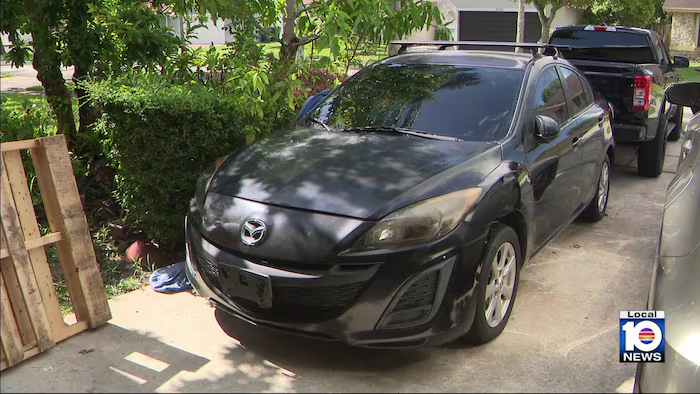
A South Florida woman’s struggle to obtain a vehicle title and an insurance company lawsuit involving 11 consumers competing for a single $25,000 bond are sparking debate over whether Florida’s automotive consumer protections have fallen behind real-world market conditions. The state has mandated that independent licensed motor vehicle dealers maintain a $25,000 surety bond since 1970 to compensate buyers harmed by dealership violations, including failure to transfer ownership properly.
Pamela Wright, a 74-year-old retired realtor, purchased a used Mazda for approximately $6,000 in June 2024 as a high school graduation gift for her grandson. Nearly two years later, the vehicle remains unusable in her driveway because Superior Car Sales never transferred the title, preventing her from registering, insuring, or legally driving the automobile. Wright reports that dealership staff repeatedly promised to correct the paperwork before the business ultimately closed.
Court records reveal Wright is far from alone. Hudson Insurance Company filed suit showing 11 consumers making competing claims against the same $25,000 bond from Superior Car Sales. If divided equally, each claimant would receive approximately $2,270—a fraction of what many claim they lost. Attorney Josh Feygin, who represents consumers in dealership disputes, described the bond requirement as severely outdated given that average vehicle prices now far exceed $25,000.
The bond amount, established during Richard Nixon’s presidency when gasoline cost roughly 36 cents per gallon and new cars were substantially cheaper, has remained frozen for 56 years despite decades of inflation and skyrocketing vehicle costs. Feygin stated he has frequently seen clients obtain judgments against dealerships only to discover the bond funds were exhausted by earlier claimants, leaving subsequent plaintiffs with no recovery.
Only the Florida Legislature can modify the statute. When contacted, most South Florida lawmakers either declined to comment or did not respond. State Rep. Dan Daley indicated his office is reviewing the adequacy of current protections ahead of the next legislative session, while Rep. Daryl Campbell said he lacked sufficient knowledge to address the issue. The Florida Department of Highway Safety and Motor Vehicles, which oversees dealer licensing, did not respond to four separate information requests about whether it supports increasing the bond amount.
Wright expressed frustration with state agencies and called on elected officials to reassess the law. The core question facing legislators remains whether a consumer protection statute drafted in 1970 and left unchanged for more than half a century can adequately shield Florida car buyers in today’s market.

More Stories
Federal voting arrest in New Jersey adds new pressure point in Sherrill-Trump standoff
Packers Running Back Josh Jacobs Placed on NFL Commissioner’s Exempt List Following Domestic Arrest
Federal Prosecutors Convene Special Grand Jury to Investigate D.C. Schools’ Attendance and Graduation Practices