


💛 A quick favor, if you've got a second.
We're really happy that you chose to read one of our stories and sincerely hope you'll stick around to read more. We took our paywall down — for now — but that won't last forever, and when the gate goes back up, we'd love for you to already be on the inside.
It's free. So please enter your email here and don't forget to like and follow us on all of your favorite Social Media platforms!
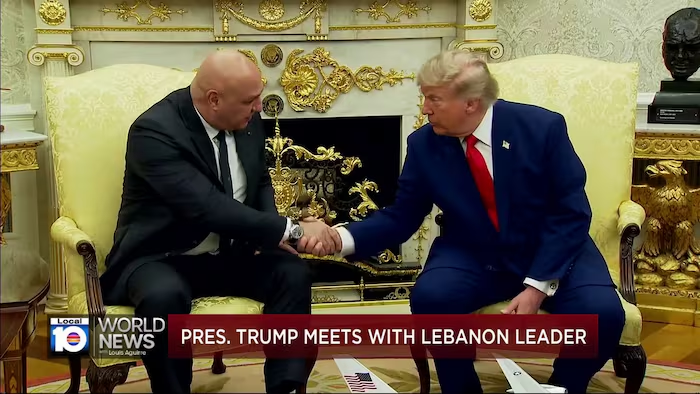
During a Tuesday White House meeting, President Donald Trump committed to providing substantial assistance to Lebanon while meeting with the country’s leader, Joseph Aoun. Aoun traveled to Washington seeking long-term stability following months of conflict between Israel and the Iranian-backed Hezbollah organization. Trump stated that Lebanon has been “very badly treated” and deserved proper respect and support.
In a subsequent announcement posted on social media, Trump directed U.S. airline carriers to resume direct flights to Lebanon for the first time in more than four decades. The Reagan administration had halted such routes in 1985 following the hijacking of TWA Flight 847. Trump emphasized the decision would enable Americans to visit Lebanon more easily.
Industry observers noted that commercial carriers are unlikely to resume service to Lebanon in the near term, given ongoing instability in Iran and persistent uncertainty regarding Hezbollah’s operational presence throughout the country. Secretary of State Marco Rubio indicated Washington would continue supporting a framework agreement established between Lebanon and Israel on June 26 aimed at Israeli troop withdrawal and Hezbollah disarmament.
The June 26 accord established a plan for phased Israeli military withdrawal and outlined steps toward eventual formal peace negotiations between the two nations, which have technically remained at war for nearly 80 years. Implementation began in designated pilot zones, though confusion persisted regarding whether Israeli forces had actually vacated any territory or merely adjusted positions.
Tensions flared when Lebanese troops deployed to Zawtar al-Gharbieh, one of the pilot zones, prompting Israeli forces to fire warning shots. Lebanese military officials disputed Israeli characterizations of the incident, asserting their soldiers operated within authorized areas and calling for resolution through established diplomatic channels rather than military action.
Lebanon’s government, which assumed office in early 2025 on a reform platform, faces significant challenges implementing the agreement while managing internal political opposition from Hezbollah and allied factions. The country has suffered over 4,000 casualties and 1.2 million displaced persons from the conflict. Lebanese officials stressed that Israeli withdrawal coupled with international financial support for the military remained essential for achieving sustainable security.

More Stories
Federal voting arrest in New Jersey adds new pressure point in Sherrill-Trump standoff
Colombia backs Trump security push while limiting U.S. role in anti-gang operations
Former NFL cheerleader and ex-aide face off in close Rhode Island GOP primary