

💛 A quick favor, if you've got a second.
We're really happy that you chose to read one of our stories and sincerely hope you'll stick around to read more. We took our paywall down — for now — but that won't last forever, and when the gate goes back up, we'd love for you to already be on the inside.
It's free. So please enter your email here and don't forget to like and follow us on all of your favorite Social Media platforms!
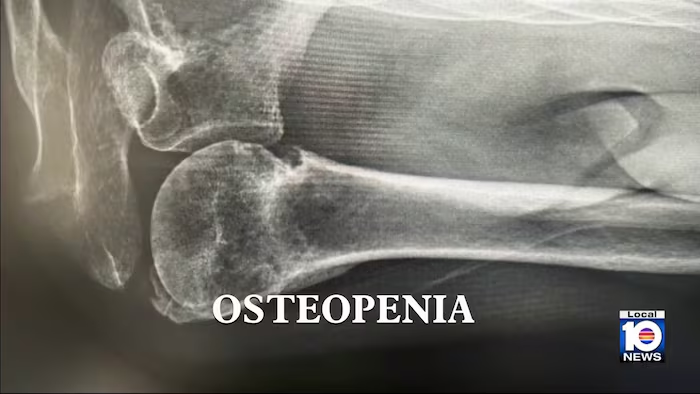
Two years ago, a bone density test resulted in a diagnosis: Osteopenia, bone density loss that can become osteoporosis, a disease that makes bones weak, brittle, and more likely to break.First, a broken wrist prompted surgery that involved pins and rods and physical therapy. A broken shoulder followed. Imaging tests resulted in the diagnosis. “The bone has become demineralized because of certain medical conditions. The most common would be postmenopausal women,” said April Tschumy, an orthopedic nurse practitioner who specializes in trauma and general orthopedic conditions at Baptist Health Orthopedic Care. Tschumy provides individualized plans to orthopedic patients and focuses on preventive medicine and improving patient outcomes. Most plans include weight training to help stimulate bone growth. “You want to try to build what’s called peak skeletal mass,” Tschumy said. Bone density gains decline over time, but Tschumy said calcium consumption can make a difference. Milk, yogurt, cheese, eggs, canned salmon, kale, collard greens, almonds, figs, prunes, and dates are all good sources. Tschumy also prescribes bone-building medications such as TYMLOS, or generic abaloparatide, an anabolic bone-growing therapy that slows down bone loss. “There are cells that break down bone, and then there are cells that build bone, so some of the medications can actually target the cells that build that bone, so that you are able to reverse loss and improve the bone quality as well,” Tschumy said. The plan worked. A recent bone density scan showed improvements. I had a 7% increase in the left hip and a 6% increase in my spine. The hard work paid off. Tips to rememberResistance training and balance exercisesCalcium and vitamin D-rich foodsAvoid smoking tobaccoAvoid soda, especially dark-colored ones, which can block calcium absorptionExperts recommend bone density screening for all postmenopausal patients who are 65 or olderA walking regimen may be helpful


More Stories
Josh Allen opens the Bills’ new stadium with a 5-TD outing in a 41-31 win over the Lions
Record diesel prices in Washington state drive up costs from delivery trucks to grocery aisles
Lady Gaga and Michael Polansky welcome baby girl with meaningful name