

💛 A quick favor, if you've got a second.
We're really happy that you chose to read one of our stories and sincerely hope you'll stick around to read more. We took our paywall down — for now — but that won't last forever, and when the gate goes back up, we'd love for you to already be on the inside.
It's free. So please enter your email here and don't forget to like and follow us on all of your favorite Social Media platforms!
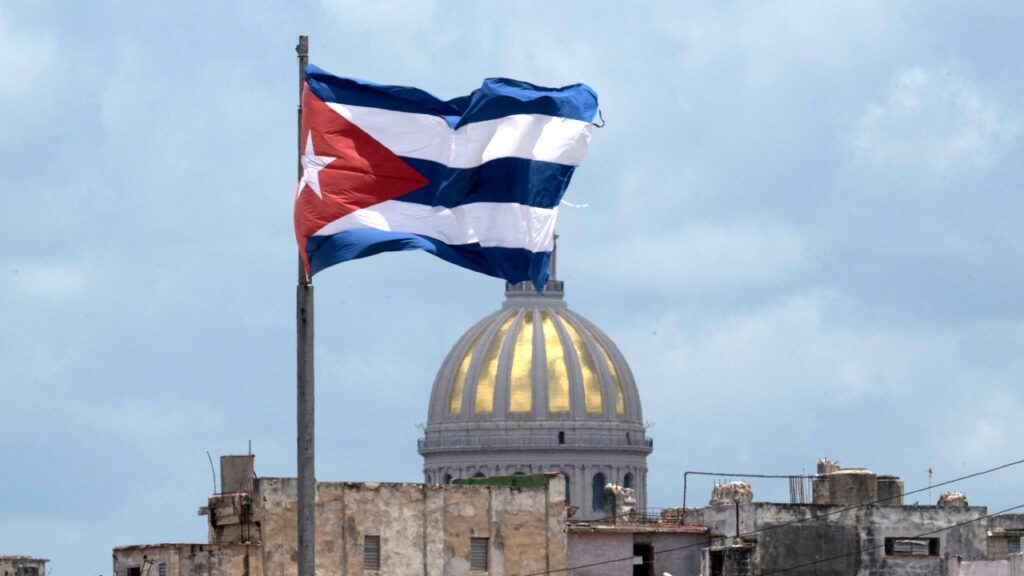
A newly released State Department report contends that Cuba orchestrated an extensive covert operation targeting the United States through espionage networks, ideological recruitment and infiltration of government agencies. Secretary of State Marco Rubio unveiled the findings, characterizing Havana as the “capital of 21st century communism” and stating the report aims to document the regime’s systematic efforts to undermine American interests since the Cold War era.
The 100-page document alleges that Cuban intelligence services penetrated high levels of the State Department, National Security Council and Pentagon while simultaneously building relationships with American universities, activist groups and advocacy organizations. According to the report, this multifaceted campaign extended beyond traditional spying to include cultivation of left-wing political movements, revolutionary organizations and networks designed to spread communist ideology across generations.
Cuban officials swiftly rejected the allegations as political propaganda. Foreign Minister Bruno Rodríguez Parrilla dismissed the report as the Trump administration’s latest attempt to justify what he characterized as an economic blockade against the island, accusing U.S. officials of manufacturing pretexts for continued sanctions.
The report identifies numerous espionage cases, including convicted spies Victor Manuel Rocha, Ana Belén Montes and Walter Kendall Myers, alongside the Wasp Network. Former CIA counterintelligence chief James Olson is cited as describing Cuba’s intelligence service as “probably the most aggravating intelligence service I’ve ever worked against,” warning that deeper penetration of American government likely remains undetected.
Cuban officials allegedly identified American colleges and universities as recruitment grounds for politically sympathetic students positioned for future government or private sector influence. The report argues that partnerships between Cuban and U.S. academic institutions represent long-term influence efforts, while naming organizations including the Venceremos Brigade, Code Pink and the Democratic Socialists of America as vehicles for sustained pro-Cuba activism domestically.
U.N. Ambassador Mike Waltz characterized Cuba as an ongoing national security threat, warning that China and Russia have collected intelligence around U.S. military installations on the island. The administration’s findings suggest Cuba transformed from a Soviet satellite into an ideological leader of the modern radical left, relying increasingly on political organizing and espionage rather than military power.

More Stories
Colombia backs Trump security push while limiting U.S. role in anti-gang operations
Chicago Mayor Issues Executive Order Requiring Contractor Diversity Disclosures and ICE Ties Reporting
Federal Prosecutors Convene Special Grand Jury to Investigate D.C. Schools’ Attendance and Graduation Practices