


💛 A quick favor, if you've got a second.
We're really happy that you chose to read one of our stories and sincerely hope you'll stick around to read more. We took our paywall down — for now — but that won't last forever, and when the gate goes back up, we'd love for you to already be on the inside.
It's free. So please enter your email here and don't forget to like and follow us on all of your favorite Social Media platforms!
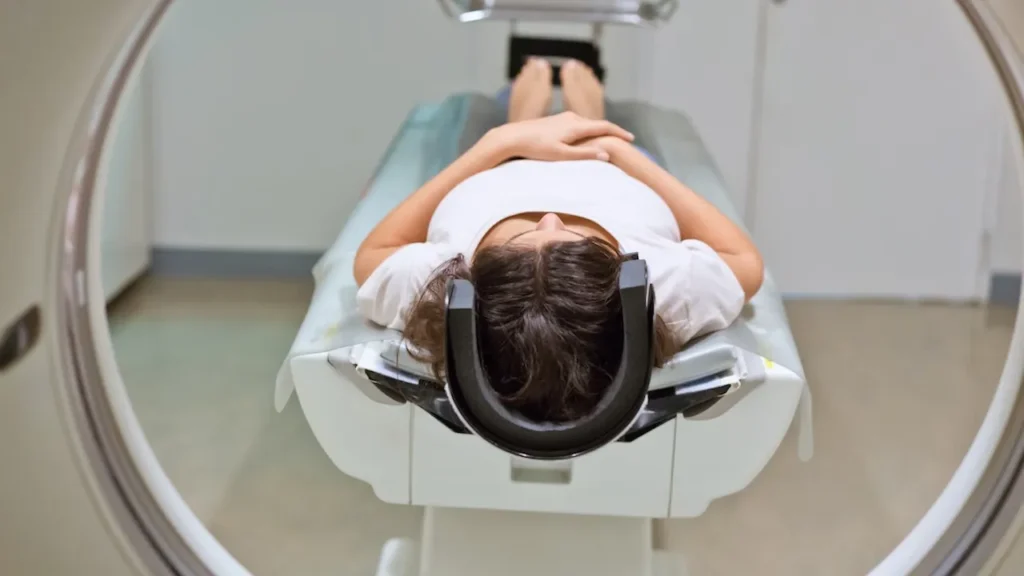
A former television personality’s recent discovery of a brain tumor through preventive imaging has reignited debate within the medical community about the effectiveness of comprehensive body scans for asymptomatic individuals. The case has coincided with increased public interest driven by celebrity endorsements from figures including Kim Kardashian and Paris Hilton, though healthcare professionals remain divided on whether such screenings benefit healthy people.
Full-body scanning employs various imaging technologies—magnetic resonance imaging, computed tomography, and positron emission tomography—with the stated goal of identifying early-stage diseases including cancer, cardiovascular conditions, and other abnormalities. Prenuvo and Ezra represent the two largest providers of these services in the United States, with scan costs reaching up to $2,500 depending on the provider and options selected.
Dr. Daniel Durand, chief medical officer at California-based Prenuvo, characterizes the procedure as a “virtual physical” that collects extensive health data analyzed by licensed providers who offer guidance on subsequent health optimization steps. The Maryland-based doctor told Fox News Digital that the approach identifies disease indicators before symptoms emerge or physical examination findings appear.
Insurance coverage remains inconsistent for these screenings. While certain high-risk genetic conditions may qualify for reimbursement, most plans do not cover whole-body scans for general screening purposes due to insufficient clinical evidence supporting their benefits for asymptomatic populations.
Critics, including Dr. Mikhail Varshavski, commonly known as “Dr. Mike,” argue that the procedures carry substantial risks despite their appeal. False positives, overdiagnosis, and subsequent overtreatment represent primary concerns, along with psychological effects including claustrophobia-related anxiety and stress from incidental findings unrelated to the patient’s health status.
Research from 2020 documented that approximately 95 percent of screened subjects displayed imaging abnormalities, meaning most patients receive findings requiring further evaluation. Dr. Varshavski expressed skepticism about claims that clear scans provide lasting peace of mind, noting his clinical experience suggests such reassurance proves temporary.
Dr. Marc Siegel, clinical professor of medicine at NYU Langone Health and Fox News senior medical analyst, opposes routine full-body screening in favor of targeted evaluations directed by physicians with specific diagnostic concerns. He cautioned that comprehensive scans may encourage pursuit of every identified abnormality regardless of clinical significance and often replace more accurate, directed diagnostic studies.
Prenuvo cited a study following over 1,000 patients during a one-year period, identifying pathologically-proven cancer in 2.2 percent of participants, with most cases detected at early stages representing cancer types lacking widely accepted screening protocols. However, long-term data regarding whether early detection through these scans improves outcomes remains unavailable.
Federal regulators have aligned with physician skeptics. The Food and Drug Administration stated on its website that no scientific evidence currently demonstrates that whole-body scanning of asymptomatic individuals provides greater benefit than harm. The agency warned specifically about radiation exposure risks associated with CT scans, noting that while such exposure may be justified for diagnostic and therapeutic purposes, whole-body screening of healthy patients presents questionable benefits.
The American Academy of Family Physicians similarly recommends against full-body scans for early tumor detection in patients without symptoms. Medical experts increasingly advocate for personalized healthcare approaches augmented by genetic analysis and artificial intelligence to guide more targeted diagnostic workups tailored to individual patient histories and risk profiles.

More Stories
New York Health Officials Sound Alarm Over Rising Measles Cases as School Year Approaches
CareCloud Breach Compromises 3.75 Million Patient Records, Among Largest Healthcare Data Thefts of 2026
Month-Long HEPA Use Linked to Faster Cognitive Processing in Middle-Aged Adults