


💛 A quick favor, if you've got a second.
We're really happy that you chose to read one of our stories and sincerely hope you'll stick around to read more. We took our paywall down — for now — but that won't last forever, and when the gate goes back up, we'd love for you to already be on the inside.
It's free. So please enter your email here and don't forget to like and follow us on all of your favorite Social Media platforms!
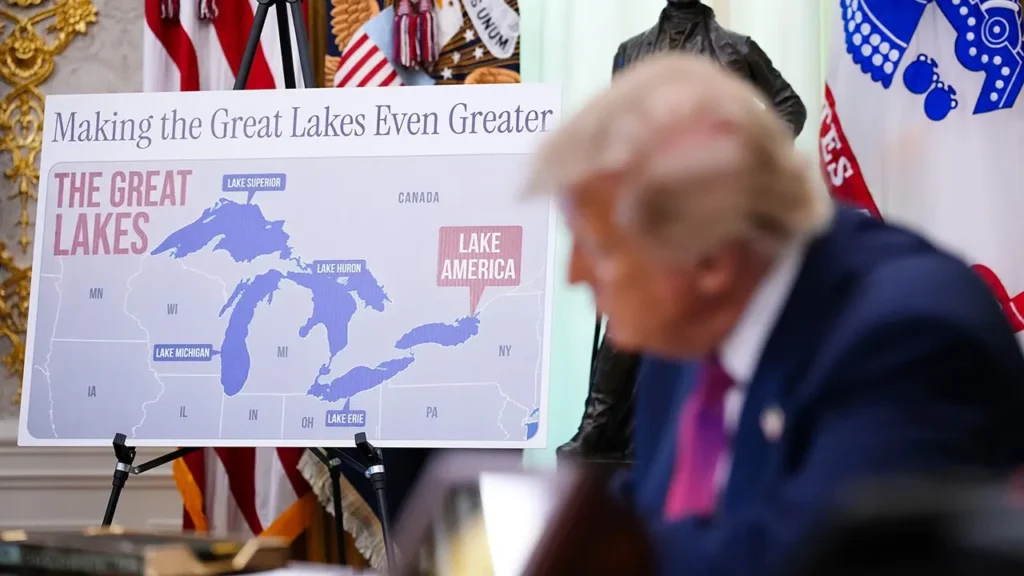
The leader of Seneca Nation of Indians criticized President Donald Trump’s executive order renaming Lake Ontario to “Lake America,” demanding the decision be reversed. J. Conrad Seneca characterized the action as “unpresidential” and asserted that Trump cannot unilaterally erase Indigenous cultural heritage through political maneuvering. The rebuke came one day after Trump signed the directive amid escalating trade tensions with Canada.
Seneca outlined the lake’s deep historical significance to his people, explaining that in the Seneca language the body of water is called “sga:nyodai:yoh,” meaning “beautiful lake.” He emphasized that Indigenous ancestors navigated these waters for centuries before the nation’s founding, using the lake for diplomacy and trade among Haudenosaunee nations. The renaming, Seneca argued, represents a fundamental betrayal of these ancestral legacies.
The tribal leader invoked the 1794 Canandaigua treaty signed between President George Washington and multiple Indigenous nations, including the Seneca. He stressed that the agreement promised perpetual peace, friendship and Indigenous peoples’ unrestricted use of their lands—commitments he said Trump’s action directly violated. Seneca further noted that Article 6 of the U.S. Constitution establishes treaties as “the supreme Law of the Land.”
Trump announced the name change Thursday while signing the executive order in the Oval Office, directing Interior Secretary Doug Burgum to update the Geographic Names Information System. The president noted he had previously changed the Gulf of Mexico to the Gulf of America and jokingly suggested potentially renaming the Atlantic and Pacific oceans. Trump justified the move by accusing Canada of unfair trade practices and insufficient defense spending contributions.
Canadian Prime Minister Mark Carney rejected the renaming, emphasizing the name predates both Canadian Confederation and American independence by over 400 years. The lake sits on the U.S.-Canada border and remains central to bilateral relations as tariff disputes intensify between the nations. Multiple U.S. governors and congressional representatives have also opposed the change.

More Stories
Federal voting arrest in New Jersey adds new pressure point in Sherrill-Trump standoff
Colombia backs Trump security push while limiting U.S. role in anti-gang operations
Former NFL cheerleader and ex-aide face off in close Rhode Island GOP primary