


💛 A quick favor, if you've got a second.
We're really happy that you chose to read one of our stories and sincerely hope you'll stick around to read more. We took our paywall down — for now — but that won't last forever, and when the gate goes back up, we'd love for you to already be on the inside.
It's free. So please enter your email here and don't forget to like and follow us on all of your favorite Social Media platforms!
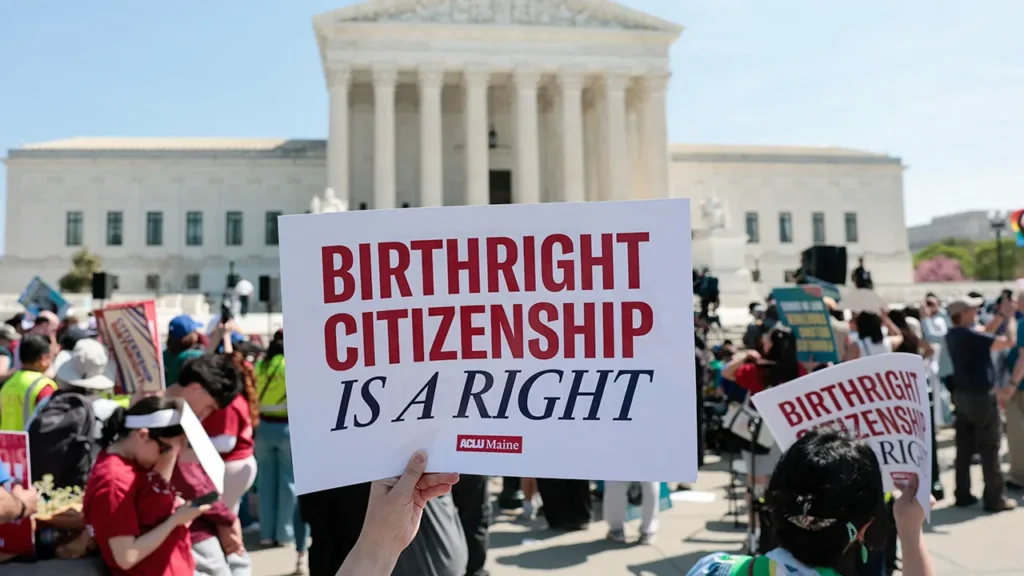
President Donald Trump’s fresh executive orders targeting birthright citizenship and birth tourism operate on a more restrictive legal framework than his first attempt, according to conservative legal scholars. Following a June Supreme Court decision rejecting Trump’s broader approach by a 6-3 margin, the administration signed two new orders in August that adopt narrower targeting mechanisms. Legal experts from right-leaning think tanks contend these revised strategies rest on established constitutional exceptions that courts have recognized for nearly 130 years.
Trump’s August 6 executive order instructs federal agencies to deny citizenship documents to children born to parents lacking U.S. citizenship status in specific circumstances. These circumstances include situations where parents belong to designated foreign terrorist organizations, work for foreign governments, or engage in transactions designed to fraudulently obtain birthright citizenship. Conservative analysts argue this approach differs fundamentally from the initial executive order by anchoring itself to longstanding Supreme Court precedent rather than attempting wholesale restrictions on the 14th Amendment.
Conservative legal scholars point to the 1898 Supreme Court decision United States v. Wong Kim Ark as establishing recognized exceptions to birthright citizenship. That ruling carved out protections for children of diplomats and children of hostile foreign military forces occupying U.S. territory. Trump’s order contends that members of foreign terrorist organizations qualify as “alien enemies” under this historical exception, thereby falling outside birthright citizenship protections.
Chad Mizelle, a senior fellow at the America First Policy Institute and former Justice Department official, characterized the legal theory as rooted in established constitutional doctrine. He argued that the Supreme Court has long acknowledged exceptions for children of invading forces and diplomatic personnel, and that members of terrorist organizations hostile to the United States should receive similar treatment under historical precedent.
Ilya Shapiro, constitutional studies director at the Manhattan Institute, similarly contended the new order targets “classic exceptions” to birthright citizenship. He identified two primary categories: individuals owing allegiance to foreign governments through employment as diplomats or officials, and members of hostile foreign military or terrorist organizations. Shapiro suggested this framing provided stronger legal footing than the administration’s initial strategy.
However, legal skeptics challenge the administration’s unilateral redefinition of constitutional terms. David Bier, immigration studies director at the libertarian Cato Institute, argued that Congress, not the president, possesses constitutional authority to determine who qualifies as “subject to U.S. jurisdiction.” He characterized the executive order as an unprecedented expansion of presidential power that contradicts established legal doctrine.
Amanda Frost, a University of Virginia law professor, highlighted additional constitutional constraints embedded in Wong Kim Ark. She noted the Supreme Court specified that enemy status applies only to forces actively occupying U.S. territory, not individuals simply residing within the country. She also warned that expanding diplomatic definitions could create practical complications for criminal prosecutions.
Legal standing presents a procedural obstacle for challengers seeking to block the order. Gene Hamilton, America First Legal co-founder, acknowledged uncertainty regarding who might possess standing to sue, questioning whether individuals could prove concrete injury from the order’s provisions. The order takes effect September 6, with a Maryland federal judge scheduled to hear injunction arguments August 28.
Trump’s second August 6 order directed the State Department and Department of Homeland Security to deny visas to and pursue removal of individuals engaged in birth tourism. The practice involves pregnant foreign nationals entering the United States to give birth and secure citizenship for their children. Hamilton characterized this order as resting on established legal authority under federal immigration statutes regarding visa issuance discretion.
Critics contend the administration possessed existing tools to combat birth tourism without new executive orders. State Department regulations implemented in 2020 already authorized consular officers to deny visitor visas when evidence suggests an applicant’s primary purpose involves traveling to give birth. Debu Gandhi, a senior immigration policy official at the Center for American Progress, argued the new orders represent constitutional overreach rather than necessary policy innovation.
Conservative legal analysts acknowledge that pursuing broader birthright citizenship restrictions through Congress or constitutional amendment remains possible if courts strike down the executive orders. Shapiro suggested the administration might have succeeded with its current narrower approach from the outset, potentially avoiding the Supreme Court’s June rejection of its initial effort.

More Stories
Federal voting arrest in New Jersey adds new pressure point in Sherrill-Trump standoff
Colombia backs Trump security push while limiting U.S. role in anti-gang operations
Former NFL cheerleader and ex-aide face off in close Rhode Island GOP primary