

💛 A quick favor, if you've got a second.
We're really happy that you chose to read one of our stories and sincerely hope you'll stick around to read more. We took our paywall down — for now — but that won't last forever, and when the gate goes back up, we'd love for you to already be on the inside.
It's free. So please enter your email here and don't forget to like and follow us on all of your favorite Social Media platforms!
The Seventh Circuit Court of Appeals has upheld the dismissal of a possession charge involving artificially generated child sexual abuse material, determining that a Supreme Court decision from 2002 constrains its ability to criminalize such conduct. The ruling underscores a fundamental tension between established First Amendment protections and the rapid evolution of image-generation technology that has made synthetic depictions nearly impossible to distinguish from authentic abuse material.
In their decision, two appellate judges expressed serious reservations about the legal framework governing the case. Judge John Lee and Judge Joshua Kolar acknowledged that while the Supreme Court addressed virtual child sexual abuse material nearly 25 years ago in Free Speech Coalition, the AI capabilities available today would have been unimaginable at that time. The judges noted they remain bound by existing precedent despite harboring concerns about where current legal lines are drawn.
The case centers on Steven Anderegg, a Wisconsin resident from whom investigators seized hundreds of AI-generated sexually explicit images depicting children. Anderegg faced four charges: producing and distributing the material, transferring it to a minor under 16, and possessing it. A federal district court dismissed only the possession charge on constitutional grounds, allowing the other three charges to proceed.
The Justice Department challenged the lower court’s dismissal, arguing the government should have authority to prohibit possession of obscene virtual child sexual abuse material even absent involvement of actual children. The Seventh Circuit rejected this argument, adhering to the Supreme Court’s 2002 precedent that declined to restrict sexually explicit depictions of fictional children created without using real minors.
Legal analysts and commentators have suggested the appeals court had limited discretion in its decision. Hans von Spakovsky, a senior fellow with Advancing American Freedom, told Fox News Digital that the court “had no choice but to uphold the dismissal under the First Amendment” given existing Supreme Court doctrine. However, he acknowledged the validity of concerns raised by Lee and Kolar regarding whether rapid technological advancement might necessitate Supreme Court reconsideration.
Justice Department prosecutors have expressed concern that proliferating AI-generated abuse material could significantly hamper investigations into real victims. As synthetic images become increasingly realistic and difficult to differentiate from authentic abuse depictions, law enforcement’s ability to prioritize genuine exploitation cases may be compromised.
The appellate judges raised an additional concern in their written concurrence, citing research documenting hundreds of child sexual abuse images within major datasets used to train image-generating systems. This overlap potentially creates connections between AI-generated material and actual child exploitation, though the judges emphasized the government did not litigate this issue and existing case records were insufficient to resolve it conclusively.
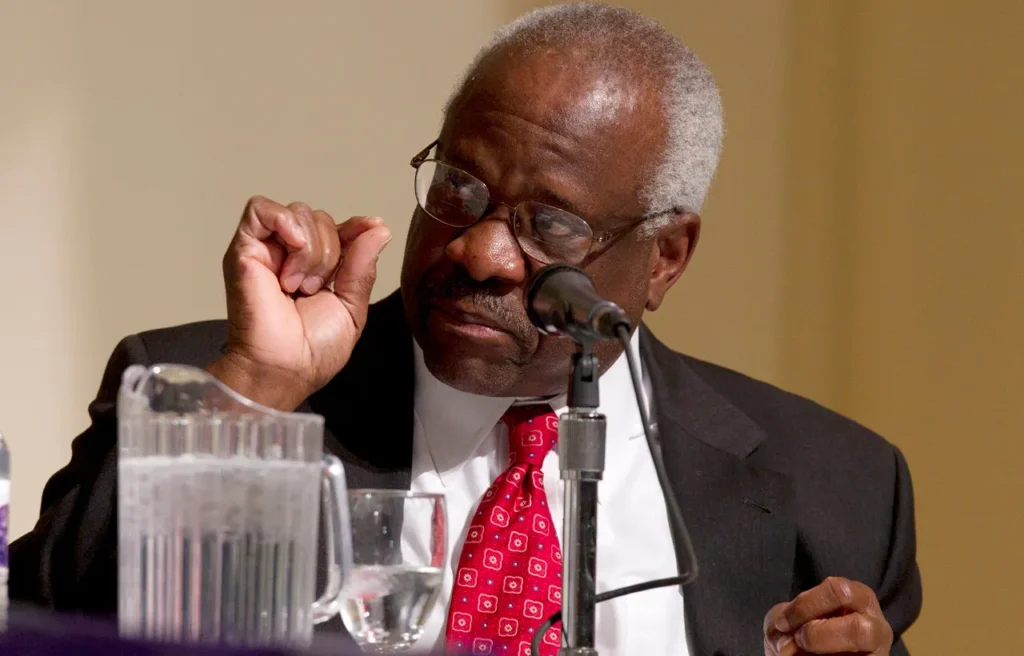
Justice Clarence Thomas had foreshadowed this legal predicament more than two decades ago in the original 2002 Supreme Court decision. Thomas warned that advancing technology could eventually render virtual depictions indistinguishable from authentic child sexual abuse material, potentially justifying government restrictions on certain speech categories to enforce laws protecting real victims.

More Stories
Federal voting arrest in New Jersey adds new pressure point in Sherrill-Trump standoff
Colombia backs Trump security push while limiting U.S. role in anti-gang operations
Former NFL cheerleader and ex-aide face off in close Rhode Island GOP primary