


💛 A quick favor, if you've got a second.
We're really happy that you chose to read one of our stories and sincerely hope you'll stick around to read more. We took our paywall down — for now — but that won't last forever, and when the gate goes back up, we'd love for you to already be on the inside.
It's free. So please enter your email here and don't forget to like and follow us on all of your favorite Social Media platforms!
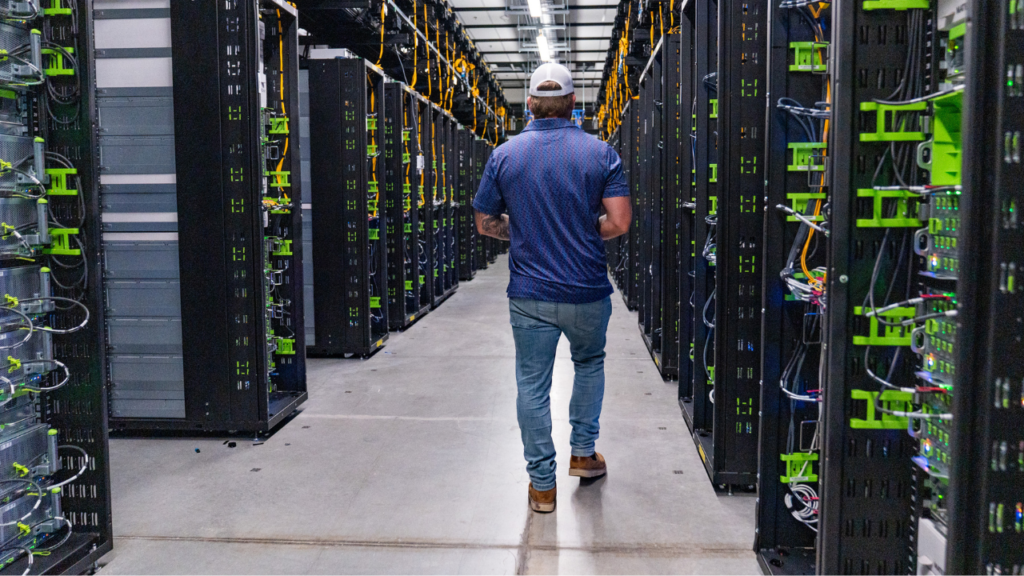
State and local efforts to restrict artificial intelligence data center development could inadvertently force American companies to process sensitive data in foreign countries, according to industry leaders and privacy advocates. The potential shift overseas would occur as demand for computing power surges alongside rapid AI expansion, creating vulnerabilities for U.S. national security and intellectual property protection.
Brittany Kaiser, CEO of Alpha Compute, cautioned that moratoriums and restrictions now being considered across multiple states may compel American firms to seek computing capacity internationally rather than domestically. “American companies are going to still run their AI,” Kaiser told Fox News Digital. “They’re still going to be purchasing data center space in other countries, and it means our sensitive information will be sent abroad and shared with companies and organizations that might not have America’s best interests at heart.”
Data centers function as the backbone of modern digital infrastructure, housing servers and computing equipment that power email, social media, online banking, streaming services and artificial intelligence platforms. The facilities demand enormous quantities of electricity, advanced semiconductor chips and high-speed network connections to operate effectively.
Growing opposition to data center expansion has emerged in communities concerned about rising electricity costs, grid strain, water consumption and environmental damage. Kaiser acknowledged these concerns are valid but argued that properly regulated facilities can minimize negative impacts through technologies such as closed-loop water cooling systems and independent power generation.
Alpha Compute is developing a Pennsylvania project designed to operate independently from the local electrical grid, generating its own power to avoid straining community infrastructure or raising electricity rates for residents. Gov. Josh Shapiro recently implemented new requirements for large data center developments in the state, which Kaiser said her company plans to meet while supporting cleaner energy standards.
Other states have taken varying regulatory approaches. Texas Gov. Greg Abbott has required data centers to provide more self-generated power and cover infrastructure costs as development accelerates. New York Gov. Kathy Hochul imposed a one-year moratorium on new hyperscale data centers, citing concerns over electricity demand and development speed.
Kaiser warned that overly restrictive policies could undermine America’s competitive position in the global artificial intelligence race and national security interests. “Compute power has now become nearly a utility,” she said, comparing domestic computing capacity to energy independence. “We want to be able to process data within our own borders as a national security priority, but also for our own intellectual property to make sure we’re not sending our data abroad.”
Kaiser has launched a campaign called “Right to Compute” to advocate for balanced policies that support domestic data center development while establishing sustainability standards and regulatory safeguards. The initiative aims to ensure American companies and citizens can maintain control over sensitive information processing within U.S. borders.

More Stories
Federal voting arrest in New Jersey adds new pressure point in Sherrill-Trump standoff
Colombia backs Trump security push while limiting U.S. role in anti-gang operations
Former NFL cheerleader and ex-aide face off in close Rhode Island GOP primary