

💛 A quick favor, if you've got a second.
We're really happy that you chose to read one of our stories and sincerely hope you'll stick around to read more. We took our paywall down — for now — but that won't last forever, and when the gate goes back up, we'd love for you to already be on the inside.
It's free. So please enter your email here and don't forget to like and follow us on all of your favorite Social Media platforms!
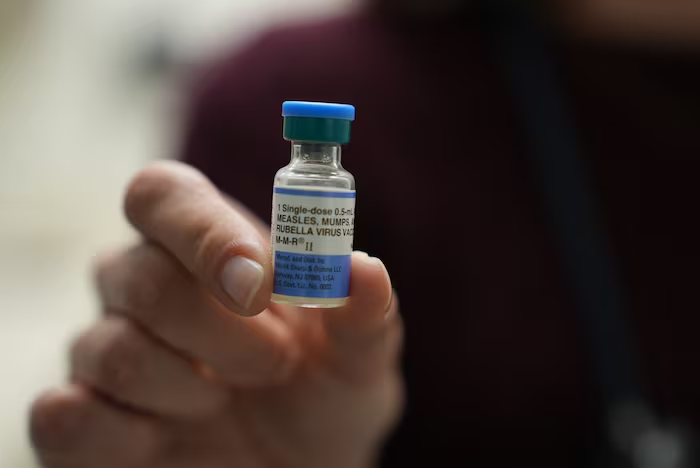
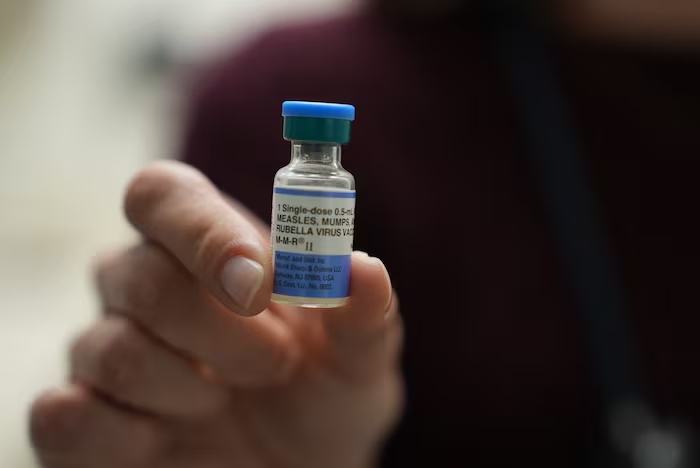
Two deaths linked to measles in Pennsylvania have triggered a bitter dispute between state officials and the Trump administration’s health chief, centering on whether vaccinations could have prevented the fatalities. The disagreement has exposed deeper tensions about how the nation responds to a measles resurgence not seen in more than 30 years, with medical experts warning the political clash is distracting from urgent public health concerns.
Governor Josh Shapiro, a Democrat, emphasized that vaccination could have averted the deaths when Pennsylvania announced the cases this week. However, U.S. Health Secretary Robert F. Kennedy Jr., a vaccine skeptic, swiftly challenged the announcement, suggesting on social media that the deaths “may even have been altogether fabricated.” Kennedy’s criticism echoed similar claims he made last year regarding three other measles-related deaths.
The dispute underscores a fundamental challenge: determining what constitutes a measles death. The World Health Organization defines one as occurring when a person tests positive for measles and dies within a month of rash onset, provided another obvious cause like trauma is not responsible. State health officials typically make these determinations, though such definitions have rarely been debated in recent decades when vaccination rates were high.
In Lancaster County, where the deaths occurred, the coroner’s office has clarified one case: a newborn who died August 14 tested positive for measles but officials determined the virus did not cause death. The boy, too young for vaccination, died from a spleen tear, with no evidence that measles contributed to the fatal condition. Details about the second death remain undisclosed as investigations continue.
The measles situation reflects broader concerns among epidemiologists about resurging cases following declining vaccination rates. The U.S. eliminated domestic measles transmission in 2000 by maintaining vaccination coverage above 95 percent, but rates have since fallen below that threshold. International health officials plan to meet in November to determine whether the U.S. and Mexico retain their measles-free status.
Medical experts worry the political infighting obscures critical public health messaging. Dr. Amesh Adalja, an infectious disease specialist at Johns Hopkins Center for Health Security, criticized the politicization of the announcement, stating the focus should remain on understanding the outbreak rather than assigning blame. Dr. Paul Offit, a vaccine researcher at Children’s Hospital of Philadelphia, expressed concern about an apparent death rate in Lancaster County exceeding expected levels, suggesting numerous unreported infections may be circulating ahead of the school year.
The Centers for Disease Control and Prevention has not yet updated national measles case and death statistics, citing a delayed scheduled update without explanation. As measles infections accelerate, health officials increasingly acknowledge the need for better tracking systems to monitor deaths, hospitalizations, and neurological complications from a disease largely controlled for decades.

More Stories
Colombia backs Trump security push while limiting U.S. role in anti-gang operations
Chicago Mayor Issues Executive Order Requiring Contractor Diversity Disclosures and ICE Ties Reporting
University of Pennsylvania Climate Scientist Demands Supreme Court Packing Pledge From Democratic Candidates