


💛 A quick favor, if you've got a second.
We're really happy that you chose to read one of our stories and sincerely hope you'll stick around to read more. We took our paywall down — for now — but that won't last forever, and when the gate goes back up, we'd love for you to already be on the inside.
It's free. So please enter your email here and don't forget to like and follow us on all of your favorite Social Media platforms!
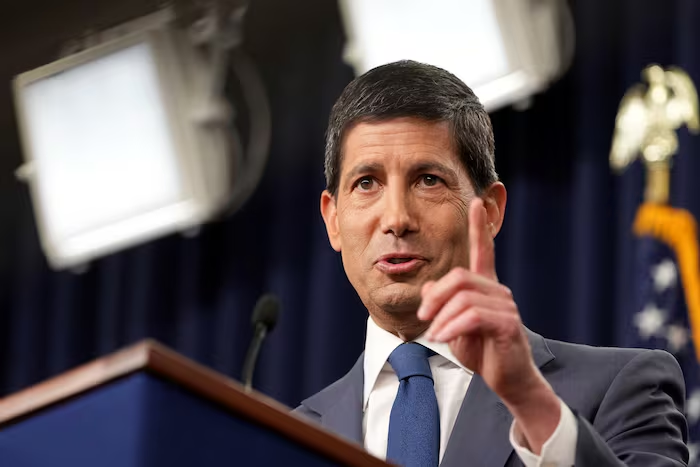
Federal Reserve Chair Kevin Warsh will take the stage Friday at the central bank’s prestigious Jackson Hole Economic Symposium in Wyoming, with investors and economists eagerly awaiting his remarks on the nation’s interest rate trajectory. Warsh, who assumed the Fed chairmanship on May 22 following Jerome Powell’s departure, has cultivated a more reserved public presence than his recent predecessors, making his speech among the most anticipated in years.
The spotlight on Warsh intensified after his late July press conference, during which his ambiguous comments about the Fed’s inflation-fighting stance unsettled markets and triggered a rise in longer-term borrowing costs. Economists and Wall Street professionals are hoping the Wyoming address will provide unambiguous direction regarding the central bank’s approach to price increases that continue to weigh heavily on American households and businesses.
Warsh has resisted offering what the financial industry terms “forward guidance,” arguing that explicit commitments about future rate decisions constrain the Fed’s operational flexibility and have made markets overly reliant on such signals. However, some analysts believe he could articulate his philosophical position on monetary policy without committing to specific actions at upcoming meetings.
Historically, Jackson Hole speeches have served as platforms for Fed leadership to telegraph major policy shifts or address fundamental questions about interest rates and economic growth. Powell’s 2022 address foreshadowed aggressive rate increases to combat pandemic-driven inflation that had climbed to 9.1%, warning of resulting “pain” for consumers and businesses.
Inflation has decelerated since May’s spike but remains elevated at 3.7% in July by the Fed’s preferred gauge, exceeding the institution’s 2% target. Most market watchers anticipate rates will hold steady at the Fed’s mid-September meeting, though CME futures data suggests investors expect a rate increase by year-end.
Warsh’s messaging carries additional weight given President Donald Trump’s repeated calls for lower rates and his ongoing efforts to reshape the Fed’s leadership. Trump appointed Warsh and has defended him publicly, though he continues criticizing other Fed officials who support maintaining higher rates and is pursuing the removal of Fed Governor Lisa Cook to secure board control.
Any reassurance Warsh provides could modestly reduce long-term borrowing costs, which have climbed in recent weeks due to expanding federal deficits and substantial technology sector borrowing for artificial intelligence development. The 30-year Treasury yield recently hit its highest level in 19 years, prompting Treasury Secretary Scott Bessent to launch an unusual bond-buyback initiative aimed at moderating yields.

More Stories
Colombia backs Trump security push while limiting U.S. role in anti-gang operations
Chicago Mayor Issues Executive Order Requiring Contractor Diversity Disclosures and ICE Ties Reporting
University of Pennsylvania Climate Scientist Demands Supreme Court Packing Pledge From Democratic Candidates