


💛 A quick favor, if you've got a second.
We're really happy that you chose to read one of our stories and sincerely hope you'll stick around to read more. We took our paywall down — for now — but that won't last forever, and when the gate goes back up, we'd love for you to already be on the inside.
It's free. So please enter your email here and don't forget to like and follow us on all of your favorite Social Media platforms!
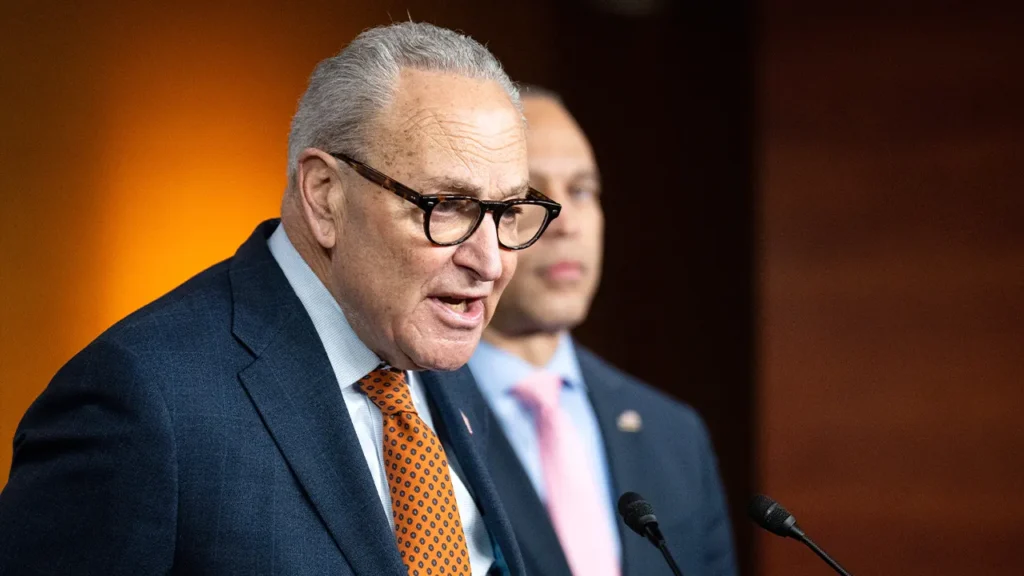
Establishment Democrats entering the 2026 midterm cycle confront a significant political liability as the party’s far-left faction maintains control over transgender-related policy positions. Primary election victories by progressive and Democratic Socialists of America-backed candidates have solidified this influence, leaving mainstream party leadership unable or unwilling to challenge positions that polling consistently shows lack majority support among Americans and even rank-and-file Democrats.
The party’s stance on transgender athletes competing in women’s sports has become particularly problematic, with Democratic leadership declining to support legislative efforts to restrict such participation. Senate Minority Leader Chuck Schumer has explicitly opposed bans, calling them “despicable,” while House Minority Leader Hakeem Jeffries has avoided taking a clear position, citing general concerns about fairness without endorsing specific prohibitions.
Recent campaign developments illustrate the pressure Democrats face. In Florida’s 2026 gubernatorial race, Republican Byron Donalds has made transgender issues central to attacks on Democrat David Jolly, particularly regarding gender-affirming care for minors. In Massachusetts, Sen. Ed Markey’s primary challenger Rep. Seth Moulton reversed course on previous statements about transgender athletes, apologizing to the trans community for language he used just two years earlier.
Public opinion data reveal a substantial disconnect between Democratic leadership and their constituents. A Gallup survey from May 2025 found 69 percent of Americans, including 72 percent of independents and a plurality of Democrats, support allowing transgender athletes only on teams matching their sex at birth. Among Democrats specifically, support for allowing transgender athletes to compete according to gender identity has declined 10 points since 2021, now standing at 45 percent.
The political impact of this issue became apparent during the 2024 presidential election. The Democratic National Committee’s post-election analysis concluded that Kamala Harris had no adequate response to Republican advertisements highlighting her transgender policy positions. A political action committee analysis determined that Donald Trump’s campaign advertisement stating “Kamala is for they/them, President Trump is for you” shifted the race nearly 3 points in Trump’s favor, exceeding his final popular vote margin of 1.5 percentage points.
When Congress voted on a 2025 bill restricting transgender athletes from competing in K-12 girls’ sports, no Democratic senators and only two Democratic House members supported the measure. Maine Gov. Janet Mills has publicly disputed Trump administration actions related to her state’s policy allowing transgender students to participate in school sports according to their gender identity.
Democratic Party elites continue supporting policies allowing transgender athletes to compete according to gender identity despite facing a sharply divided electorate and overwhelming public opposition. This impasse leaves the party confronting a fundamental strategic choice: maintain alignment with the far-left faction or risk continued electoral damage over an issue increasingly resonating with voters across demographic groups and party affiliation.

More Stories
Colombia backs Trump security push while limiting U.S. role in anti-gang operations
Former NFL cheerleader and ex-aide face off in close Rhode Island GOP primary
Chicago Mayor Issues Executive Order Requiring Contractor Diversity Disclosures and ICE Ties Reporting