

💛 A quick favor, if you've got a second.
We're really happy that you chose to read one of our stories and sincerely hope you'll stick around to read more. We took our paywall down — for now — but that won't last forever, and when the gate goes back up, we'd love for you to already be on the inside.
It's free. So please enter your email here and don't forget to like and follow us on all of your favorite Social Media platforms!
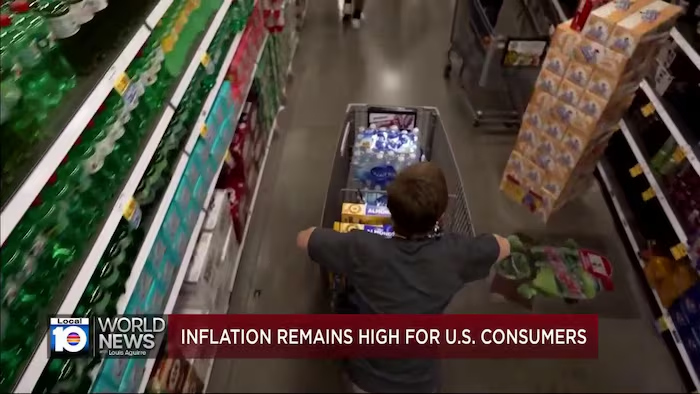
Price increases continue to outpace the Federal Reserve’s 2% target, with the personal consumption expenditures index showing no improvement from June’s reading of 3.7% in July. The stalled progress underscores persistent affordability challenges for American households entering the final weeks before midterm elections. Geopolitical instability, including conflict in Iran, combined with threatened tariffs on major trading partners, has complicated efforts to bring inflation down to target levels.
Services drove much of the inflationary pressure last month as gas prices declined, with healthcare, utilities, and financial services all posting significant cost increases. Core inflation, which excludes volatile food and energy sectors, remained flat at 3.3% for the month. The Commerce Department indicated it will implement measurement adjustments beginning with next month’s report that economists expect could trim annual PCE inflation by approximately 0.2 percentage points.
Real wage growth remains minimal, with inflation-adjusted incomes rising just 0.2% annually, a factor likely explaining persistent consumer pessimism despite easing inflation from 2022 peaks. Real consumer spending held flat in July after seasonal adjustments, suggesting households may be moderating their purchasing behavior. Gasoline prices have already begun climbing again this month, currently averaging $4.10 per gallon nationally, positioning inflation to potentially accelerate in August data.
Fed Chair Kevin Warsh will address markets Friday in Jackson Hole, Wyoming, where investors will seek clarity on the central bank’s stance as officials remain divided on whether current rate policies sufficiently combat lingering price pressures. Long-term borrowing costs have climbed substantially, prompting Treasury Secretary Scott Bessent to announce doubled buybacks of 10- to 30-year bonds beginning next month in an effort to stabilize rates.

More Stories
Federal voting arrest in New Jersey adds new pressure point in Sherrill-Trump standoff
Colombia backs Trump security push while limiting U.S. role in anti-gang operations
Former NFL cheerleader and ex-aide face off in close Rhode Island GOP primary