


💛 A quick favor, if you've got a second.
We're really happy that you chose to read one of our stories and sincerely hope you'll stick around to read more. We took our paywall down — for now — but that won't last forever, and when the gate goes back up, we'd love for you to already be on the inside.
It's free. So please enter your email here and don't forget to like and follow us on all of your favorite Social Media platforms!
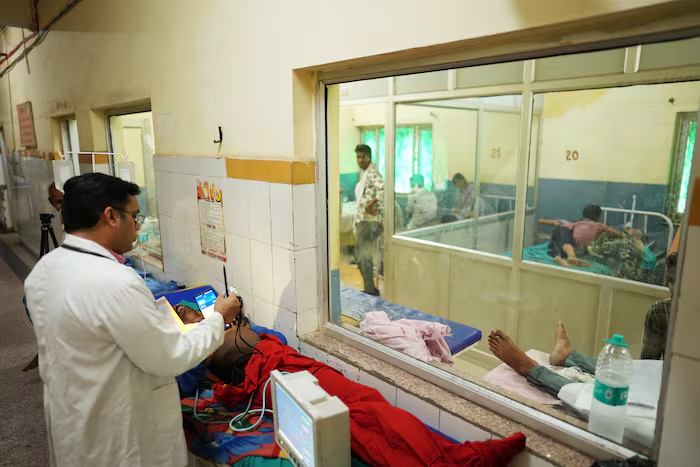
A comprehensive analysis of nearly 916,000 emergency room and urgent care visits in Chicago between 2011 and 2023 reveals that extreme heat drives substantial increases in a range of medical conditions, from kidney disorders to mental health complications associated with marijuana use. Researchers at Northwestern University medical school examined patient records from days when temperatures reached 92.6 degrees Fahrenheit or higher, identifying more than a dozen categories of illness and injury that became significantly more prevalent during heat events.
The findings, published Wednesday in Science Advances, showed some conditions experienced dramatic spikes in frequency during hot days. Accidental gunshot wounds increased more than 30-fold compared to cooler days, while unspecified assault-related injuries showed even larger proportional increases. Kidney complaints, skin problems, varicose veins and other conditions also displayed marked upward trends during heat waves, the study found.
Dr. Abel Kho, senior author and an internal medicine professor at Northwestern, emphasized that heat exposure compounds existing medical vulnerabilities. “When there’s heat, there’s a much higher likelihood of people having external injuries, as well as complications of certain conditions, specifically those related to kidney disorders or things like exacerbations of drug effects, like cannabinoids,” Kho explained.
Outside researchers praised the study for addressing a critical gap in public health understanding. Dr. Jonathan Patz of the University of Wisconsin noted that the analysis “helps confirm that we’ve been underestimating health risks from heat exposures,” while Dr. Courtney Howard, a Canadian emergency physician and incoming president of the Canadian Medical Association, called it “a reminder that the price of climate change is increased illness, strain on our health care system and health care costs.”
The research methodology differed from previous heat-related health studies by examining all medical records without limiting the search to explicit heat-related diagnosis codes. Dr. Nicholas Cozzi, incoming president of the Illinois College of Emergency Physicians, noted that traditional approaches “undercounts heat-related illness when studies only search for explicit heat codes like heat stroke.”
While the study identified associations between high temperatures and specific medical conditions, researchers cautioned against drawing direct cause-and-effect conclusions. The data also included higher representation of Black patients and women compared to the general population—a characteristic researchers view as strengthening the study’s applicability to underrepresented groups in medical research.
Climate scientist Daniel Horton, a Northwestern co-author, warned of escalating threats as heat patterns intensify. “We know that heat waves are becoming more frequent, more intense, and lasting longer,” Horton said, noting that such events trigger “real effects on people, not only on the likelihood of mortality, but of morbidity as well.”
Experts urged the public to treat extreme heat as a serious health trigger rather than merely an outdoor activity consideration. Those managing chronic kidney disease, multiple sclerosis, venous disorders and other conditions should exercise heightened caution during heat spells, Cozzi advised, emphasizing the need for preventive action before heat-related emergencies develop.

More Stories
New York Health Officials Sound Alarm Over Rising Measles Cases as School Year Approaches
CareCloud Breach Compromises 3.75 Million Patient Records, Among Largest Healthcare Data Thefts of 2026
Month-Long HEPA Use Linked to Faster Cognitive Processing in Middle-Aged Adults