


💛 A quick favor, if you've got a second.
We're really happy that you chose to read one of our stories and sincerely hope you'll stick around to read more. We took our paywall down — for now — but that won't last forever, and when the gate goes back up, we'd love for you to already be on the inside.
It's free. So please enter your email here and don't forget to like and follow us on all of your favorite Social Media platforms!
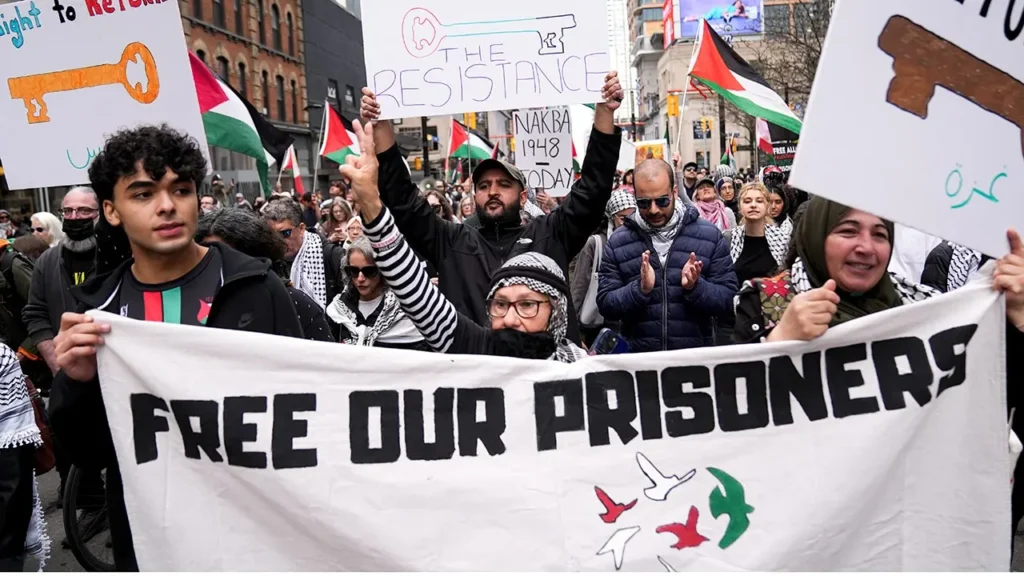
A newly released report has raised alarms about the extent to which Muslim Brotherhood-aligned networks have established themselves within Canada’s institutions, with researchers suggesting the development could signal broader risks to the United States and other Western democracies. The Institute for the Study of Global Antisemitism and Policy detailed connections between groups supporting the Muslim Brotherhood and Canadian government bodies, educational systems, political campaigns and nonprofit organizations, according to findings released this week.
Charles Asher Small, the institute’s executive director, emphasized that Canada faces more than scattered extremist voices or isolated institutional problems. He told Fox News Digital that the report demonstrates how interconnected ideological networks gain credibility, secure institutional positions, obtain public resources, wield political power and evade accountability measures.
The 200-page study, titled “Assault on Democratic Values and Principles: How Islamist Entryism Weakens Civil Society and Higher Education in Canada,” identified alleged connections between the Muslim Association of Canada, a Mississauga-based nonprofit, and the Muslim Brotherhood—a group founded in Egypt in 1928 by Hasan al-Banna with the stated objective of establishing a global Islamic caliphate governed by strict interpretations of Sunni Islamic law.
The report asserted that leaders of the Muslim Association of Canada, one of the nation’s largest Muslim charitable organizations operating mosques, community centers, schools and educational programs, maintained “direct or indirect” relationships with the Muslim Brotherhood that could shape the organization’s activities. Canadian tax authorities audited the group in 2023 over suspected Muslim Brotherhood ties, though the Canada Revenue Agency ultimately declined to strip the organization of its tax-exempt status.
The Muslim Association of Canada responded by characterizing the report as “recycled Islamophobic tropes” and an “unsubstantiated hit piece.” The organization stated that the Canada Revenue Agency had dismissed preliminary questions about Muslim Brotherhood connections in its final audit conclusions and emphasized that it operates independently within Canada.
The report highlighted a coordinated “Vote Palestine” campaign that secured endorsements from 344 candidates across four Canadian political parties during the 2025 election cycle, suggesting coordinated efforts to influence electoral outcomes. Small cautioned that these developments represent a warning signal for potential interference within the United States.
Small drew parallels between current activity and historical precedent, citing the 1979 Iranian Revolution as an example of radical leftist and Islamist groups joining forces to counter American and European influence. He characterized the phenomenon as a continuation of similar strategies now being deployed in Europe and Canada.
Dalia Ziada, a Muslim scholar who fled Egypt after criticizing Hamas’s October 7, 2023 attacks on Israel, described the coalition between the radical left and radical Islamism as posing a direct threat to American politics and Western liberal democracy. She told Fox News Digital that this alignment has persisted for five to seven years.
Trump administration officials have maintained a firm stance against the Muslim Brotherhood. In January, the Treasury Department designated the Egyptian and Jordanian branches as Specially Designated Global Terrorists. The following month, the administration sanctioned a senior Egyptian Muslim Brotherhood official for allegedly financing Hamas’s military operations.
The ISGAP report urged Canadian policymakers to implement reforms designed to diminish the political and institutional influence of Muslim Brotherhood-aligned groups. Canada’s embassy in Washington did not provide a response to requests for comment regarding the report’s conclusions.

More Stories
Federal voting arrest in New Jersey adds new pressure point in Sherrill-Trump standoff
Colombia backs Trump security push while limiting U.S. role in anti-gang operations
Former NFL cheerleader and ex-aide face off in close Rhode Island GOP primary