


💛 A quick favor, if you've got a second.
We're really happy that you chose to read one of our stories and sincerely hope you'll stick around to read more. We took our paywall down — for now — but that won't last forever, and when the gate goes back up, we'd love for you to already be on the inside.
It's free. So please enter your email here and don't forget to like and follow us on all of your favorite Social Media platforms!
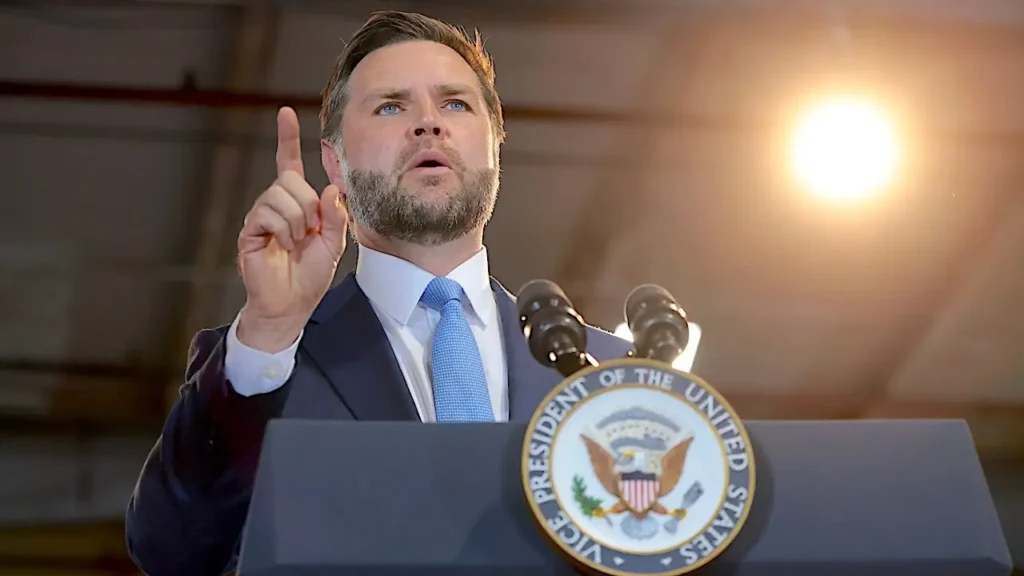
Vice President JD Vance attacked Canada’s trade policies during an appearance in Brewer, Maine, on Monday, arguing that Ottawa extends more favorable treatment to Chinese imports than to American goods. Vance made the comments while fielding questions at Compotech, a defense technology manufacturer, as trade negotiations between the Trump administration and Canada have broken down and tariff threats have intensified.
Vance characterized Canada’s approach as fundamentally unfair, particularly toward Maine farmers and agricultural producers. He singled out dairy tariffs as an example, noting that American farmers exporting dairy products to Canada face potential duties as high as 250 percent when shipments exceed quota limits, while Canadian dairy products enter Maine without comparable restrictions.
The vice president said the administration had believed a trade agreement was within reach before negotiations collapsed. He blamed Canadian leadership for introducing what he described as unreasonable last-minute demands that derailed talks, calling on Prime Minister Mark Carney to cease what he characterized as exploitation of American interests.
President Trump announced Monday on Truth Social his intention to impose 50 percent tariffs on Canadian vehicles, auto parts, and steel beginning in January 2027. Trump cited what he called decades of unfair treatment, alleging Canada maintains excessively high tariffs on American agricultural products and has generated a $60 billion trade deficit with the United States.
Vance drew a distinction between expectations for trade conduct with economic competitors like China and longstanding allies like Canada. He argued that Canada’s underinvestment in military defense has made it reliant on American security protection, making its protectionist trade barriers particularly objectionable.
The vice president also raised concerns about Canada’s role in facilitating Chinese market access to North America. Vance suggested this issue had become central to recent negotiation discussions, describing Canada as providing a “back door” for Chinese goods into the continental market.
Despite the hardened rhetoric, Vance left the door open for future negotiations, stating the administration would pursue an agreement if Canada demonstrated willingness to offer fair trade terms. He reiterated that the administration remains prepared to maintain tariff measures without concessions from Ottawa.

More Stories
Federal voting arrest in New Jersey adds new pressure point in Sherrill-Trump standoff
Colombia backs Trump security push while limiting U.S. role in anti-gang operations
Former NFL cheerleader and ex-aide face off in close Rhode Island GOP primary