


💛 A quick favor, if you've got a second.
We're really happy that you chose to read one of our stories and sincerely hope you'll stick around to read more. We took our paywall down — for now — but that won't last forever, and when the gate goes back up, we'd love for you to already be on the inside.
It's free. So please enter your email here and don't forget to like and follow us on all of your favorite Social Media platforms!
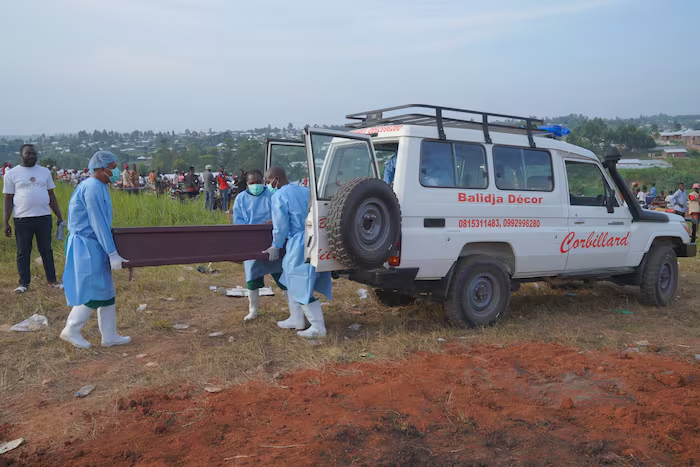
Eastern Congo is grappling with a severe Ebola outbreak that claimed 317 lives in the past week alone, marking one of the deadliest seven-day periods on record for the disease. Government health ministry data released Monday documented 5,514 confirmed cases and 2,642 deaths as of Saturday, though Congolese health experts believe the true scale may be triple the official count due to detection delays and cases occurring before formal confirmation.
The current epidemic is advancing faster than any Ebola outbreak in history, with the death toll at this stage already seven times higher than the 2014-2016 West African crisis that ultimately killed more than 11,000 people. In Ituri province, the outbreak’s current center, most new infections continue to originate from people with no known contact to monitored cases, complicating containment efforts.
Fatality rates remain grimly elevated, with approximately 48 percent of infected individuals dying overall. North Kivu province reports an even starker fatality rate of 68.6 percent, reflecting the particular vulnerability of remote, hard-to-reach communities with limited access to medical care.
Congo received over 16,000 doses of the Ervebo vaccine on Friday, a shot that proved effective against previous Ebola strains caused by different virus types. The World Health Organization plans to evaluate the vaccine’s potential effectiveness against the Bundibugyo virus strain driving the current outbreak, though early laboratory and animal studies suggest it may provide partial protection.
Frontline health workers face extraordinary obstacles including unpaid wages, community mistrust, deteriorating infrastructure and security threats from armed groups. Experts believe the virus was circulating in the mining town of Mongbwalu since February, months before authorities formally declared the outbreak on May 15.

More Stories
Colombia backs Trump security push while limiting U.S. role in anti-gang operations
Federal Prosecutors Convene Special Grand Jury to Investigate D.C. Schools’ Attendance and Graduation Practices
State Department Reissues Level 3 Travel Advisory for Israel Amid Terrorism and Armed Conflict Concerns