


💛 A quick favor, if you've got a second.
We're really happy that you chose to read one of our stories and sincerely hope you'll stick around to read more. We took our paywall down — for now — but that won't last forever, and when the gate goes back up, we'd love for you to already be on the inside.
It's free. So please enter your email here and don't forget to like and follow us on all of your favorite Social Media platforms!
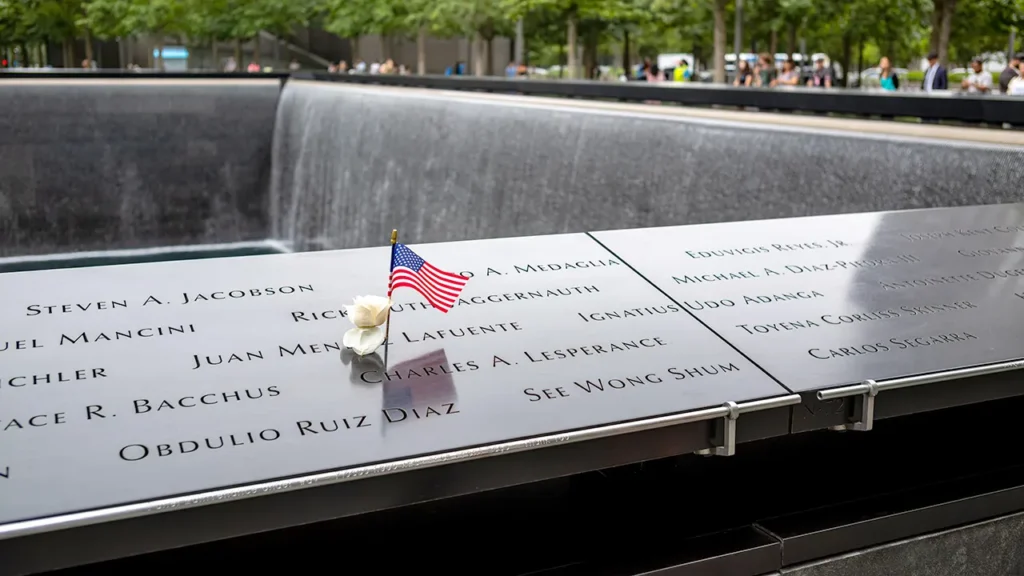
The author was a second-week middle school student, approximately 25 miles from lower Manhattan on September 11, 2001, when a principal’s aide handed a note to the homeroom teacher describing a plane crash. Within minutes, the school would learn that the aircraft had flown just miles away along the Hudson River moments before, marking the beginning of an attack that would reshape American life.
For those of millennial age, September 11 represented a watershed moment dividing childhood into distinct periods: everything before and everything after. Young enough to recognize something catastrophic was unfolding yet too inexperienced to fully grasp the implications, an entire generation witnessed the collapse of the towers and the subsequent transformation of American society through airport security, anthrax scares, and pervasive fear.
Yet amid the trauma emerged something equally powerful: a unified national response. From the vantage point of the New York suburbs, the wave of patriotism and collective resolve appeared unshakeable. President George W. Bush’s first pitch at Yankee Stadium’s World Series in October 2001, delivered in a bulletproof vest, symbolized American resilience during a city’s darkest chapter.
Nearly 3,000 people perished on that day—office workers, flight attendants, security personnel, and passengers. Their stories ranged from Betty Ong’s heroic communications as a hijacked flight attendant to Rick Rescorla’s evacuation of thousands from the South Tower before sacrificing his own life returning to help others. Flight 93 passengers fought back against their captors, preventing further tragedy in Washington.
Twenty-five years onward, September 11 transitions from memory to history textbook entry. For younger generations without personal recollection, the attacks risk becoming cultural fodder for internet conspiracy theories rather than a sobering reminder of American vulnerability and collective strength. The three memorial sites—New York’s National September 11 Memorial & Museum, the Pentagon Memorial, and Pennsylvania’s Flight 93 National Memorial—stand as essential reminders of what was lost.
The consequences persisted for decades beyond the initial tragedy. First responders and workers exposed to toxic Ground Zero air have battled cancer, respiratory illness, and other conditions tied directly to the attacks’ aftermath. As the final generation carrying firsthand memories, millennials bear responsibility for ensuring younger Americans understand the heroism of ordinary citizens confronting the unimaginable and the first responders who ran toward danger.

More Stories
Christa Pike Survives Botched Double Execution Attempt; Tennessee Halts Remaining 2026 Executions
Tennessee’s Lone Death Row Female is Scheduled for Execution Wednesday for 1995 Torture/Murder
Colombia backs Trump security push while limiting U.S. role in anti-gang operations