


💛 A quick favor, if you've got a second.
We're really happy that you chose to read one of our stories and sincerely hope you'll stick around to read more. We took our paywall down — for now — but that won't last forever, and when the gate goes back up, we'd love for you to already be on the inside.
It's free. So please enter your email here and don't forget to like and follow us on all of your favorite Social Media platforms!
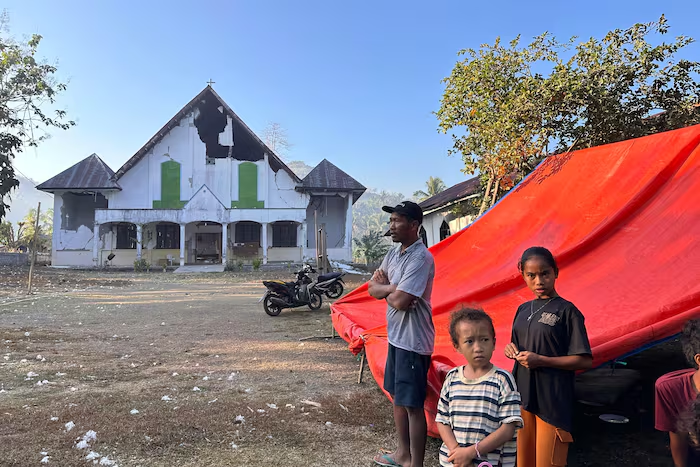
Three days after a magnitude earthquake struck the Indonesian island of Flores early Saturday, more than 19,000 people remained in temporary shelters Tuesday as authorities continued recovery efforts. The temblor killed at least 68 people, injured more than 200 others and destroyed approximately 4,500 homes across the island, according to the National Disaster Management Agency.
The quake originated at a depth of 10 kilometers shortly before 6 a.m. Saturday, triggering initial tsunami warnings that were later rescinded, the U.S. Geological Survey reported. Residents evacuated in panic as the ground shifted, with authorities documenting more than 2,100 aftershocks by Tuesday, though only 70 were strong enough for people to feel.
Extensive infrastructure damage compounded the disaster, with authorities reporting 122 health facilities, 252 schools and 84 places of worship destroyed or severely damaged across Flores. The hardest-hit communities, including the village of Lamba Leda in East Manggarai regency, saw dozens of homes flattened and vegetation uprooted.
Vincentius Rano, a Lamba Leda resident, recounted how the quake struck as he and his wife awakened Saturday. Rushing to protect their 5-year-old daughter, the couple could not escape before their timber house partially collapsed, injuring Rano’s back and shoulder as he shielded his family from falling debris.
Mental health professionals have focused on children’s psychological wellbeing, with local police organizing trauma-healing sessions in evacuation camps. In Ende’s Lokoboko village, 17 children participated in counseling activities designed to address anxiety and fear that has persisted long after the initial shaking subsided.
Police Chief Yudhi Franata noted that many children remain afraid to sleep indoors and experience renewed fright with each aftershock. “Children are among the groups that need special attention after experiencing a disaster,” Franata said, highlighting the importance of psychosocial support alongside food and medical aid.
Flores sits within Indonesia’s Pacific Ring of Fire, making the archipelago nation highly vulnerable to seismic activity. In 1992, an earthquake and tsunami in Flores killed approximately 2,500 people, marking one of the deadliest disasters in Indonesian history.

More Stories
Colombia backs Trump security push while limiting U.S. role in anti-gang operations
Federal Prosecutors Convene Special Grand Jury to Investigate D.C. Schools’ Attendance and Graduation Practices
State Department Reissues Level 3 Travel Advisory for Israel Amid Terrorism and Armed Conflict Concerns