


💛 A quick favor, if you've got a second.
We're really happy that you chose to read one of our stories and sincerely hope you'll stick around to read more. We took our paywall down — for now — but that won't last forever, and when the gate goes back up, we'd love for you to already be on the inside.
It's free. So please enter your email here and don't forget to like and follow us on all of your favorite Social Media platforms!
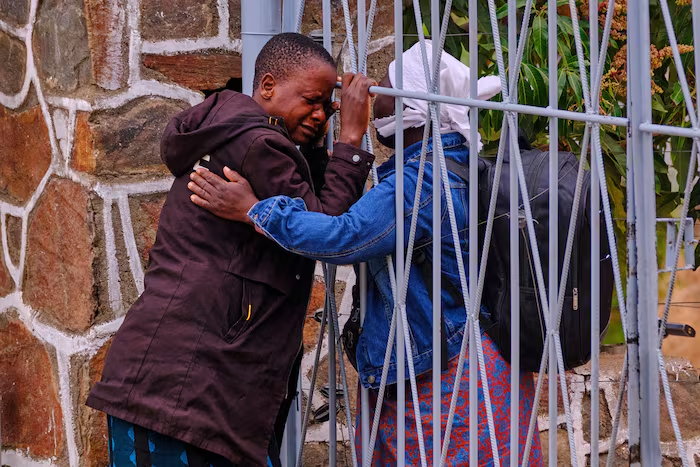
Search operations continued Sunday in Zimbabwe following the capsizing of an overloaded ferry on Lake Kariba last Tuesday, with authorities recovering additional victims as the confirmed death toll climbed to 84. The vessel went down in rough water conditions, prompting a massive recovery effort across the massive reservoir that straddles the Zimbabwe-Zambia border. Police confirmed the increase from 72 fatalities reported the previous day as more bodies were pulled from the water.
The ferry was authorized to carry a maximum of 90 passengers but officials believe it carried significantly more people at the time of the disaster. Initial estimates suggested as many as 153 individuals were aboard, though the latest official counts indicate the actual number of passengers may have been even higher. Rescue officials stated that 77 people were successfully pulled from the water in the immediate aftermath of the incident.
Among those who perished were 18 children, including a 1-year-old, with 16 of the victims under age 10. Authorities indicated that continued search operations were underway to locate remaining missing persons believed to still be unaccounted for.
The aging vessel was en route from the town of Kariba to remote fishing and farming communities in northwestern Zimbabwe, areas where damaged infrastructure and limited transportation options make water routes essential for residents. Lake Kariba, formed in the late 1950s and early 1960s by damming the Zambezi River, covers more than 200 kilometers in length and reaches widths of up to 40 kilometers in certain sections, making it the world’s largest human-made lake by volume.


More Stories
Colombia backs Trump security push while limiting U.S. role in anti-gang operations
Federal Prosecutors Convene Special Grand Jury to Investigate D.C. Schools’ Attendance and Graduation Practices
State Department Reissues Level 3 Travel Advisory for Israel Amid Terrorism and Armed Conflict Concerns