

💛 A quick favor, if you've got a second.
We're really happy that you chose to read one of our stories and sincerely hope you'll stick around to read more. We took our paywall down — for now — but that won't last forever, and when the gate goes back up, we'd love for you to already be on the inside.
It's free. So please enter your email here and don't forget to like and follow us on all of your favorite Social Media platforms!
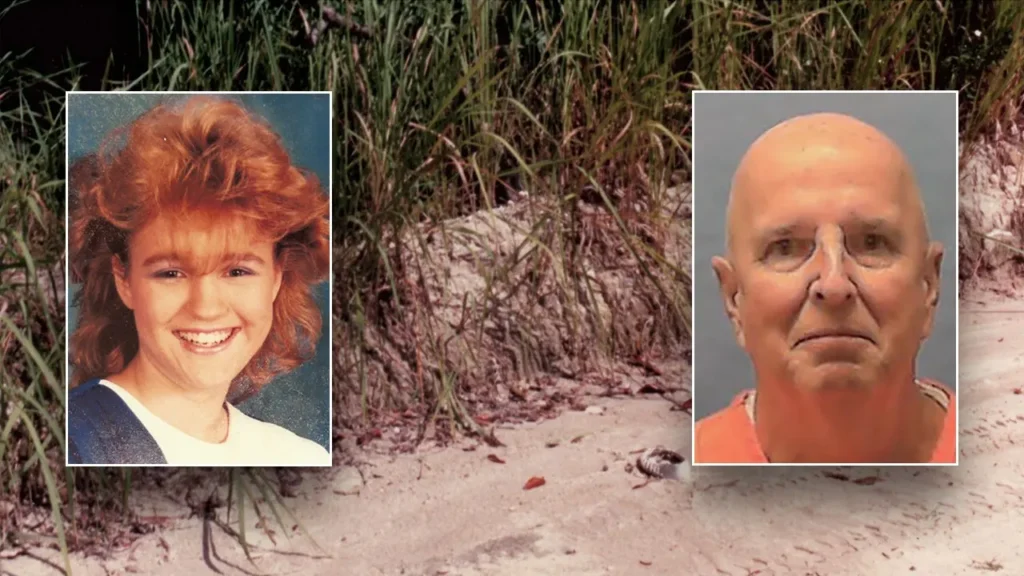
James Duckett, 68, was put to death by lethal injection on July 28 at Florida State Prison in Raiford for the rape and murder of 11-year-old Teresa McAbee while serving as a Mascotte Police Department officer. The execution concluded nearly four decades of legal proceedings and provided a measure of closure for McAbee’s family members, who witnessed the capital punishment alongside supporters of another victim authorities believe Duckett also killed.
McAbee disappeared in May 1987 after being last seen with Duckett in his patrol car during an evening when he was the only officer on duty. Her body was discovered showing evidence of sexual assault, strangulation, and drowning. Duckett was identified as a suspect within a month and fired from his position, with forensic evidence including fingerprints and DNA linking him conclusively to the crime.
Three months after McAbee’s death, 14-year-old Jeanifer Weldon vanished on September 19, 1987, in Polk County while walking home from a Tampa shopping trip where she had purchased a stuffed kitten. Her remains, found two weeks later by a phosphate miner in a wooded area near Fort Meade, showed signs of strangulation. Authorities believe Duckett used his former law enforcement uniform to gain Weldon’s trust and lure her into his vehicle.
Evidence in the Weldon case proved more circumstantial than in McAbee’s murder. On the night of Weldon’s disappearance, Duckett left for his mining job five hours early and traveled directly past where she would have been walking, arriving at work sweaty and two hours late with claims of car trouble. The following day, he brought his children a stuffed kitten in a green plastic bag matching Weldon’s purchase, and investigators noted scratches on his back that he attributed to climbing under a barbed wire fence.
Polk County Sheriff Grady Judd revealed that law enforcement deliberately halted pursuit of a conviction in the Weldon case after Duckett’s death sentence for McAbee’s murder. Officials feared that continuing legal proceedings could delay his execution through additional defense arguments and appeals. Despite decades of investigative work, Duckett never confessed and was never formally convicted in connection with Weldon’s death.
Jeanifer Weldon’s sister Amy said the execution provided reassurance that justice had been served, though she expressed frustration with the lengthy timeline. Sheriff Judd criticized the extended appeals process that kept Duckett alive for 38 years, stating that execution should have occurred sooner for someone he characterized as a “psychopathic, child predator.”
Judd also suggested that modern surveillance cameras monitoring public roadways could have prevented Weldon’s death by identifying Duckett’s vehicle within hours. He defended the use of such technology for locating missing children and crime suspects while maintaining that privacy protections would remain intact through monitoring only vehicle license plates and colors.

More Stories
Federal voting arrest in New Jersey adds new pressure point in Sherrill-Trump standoff
Colombia backs Trump security push while limiting U.S. role in anti-gang operations
Packers Running Back Josh Jacobs Placed on NFL Commissioner’s Exempt List Following Domestic Arrest