


💛 A quick favor, if you've got a second.
We're really happy that you chose to read one of our stories and sincerely hope you'll stick around to read more. We took our paywall down — for now — but that won't last forever, and when the gate goes back up, we'd love for you to already be on the inside.
It's free. So please enter your email here and don't forget to like and follow us on all of your favorite Social Media platforms!
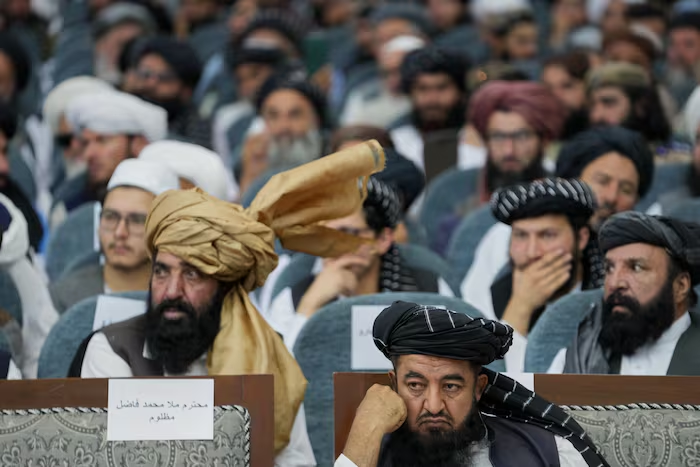
Afghan Taliban leadership gathered at the nation’s Loya Jirga assembly on Saturday to commemorate five years since assuming control, claiming they have restored stability following decades of turmoil. The milestone celebration, however, coincided with a stark warning from United Nations representatives about the country’s deteriorating human rights record, particularly regarding educational access for females over age 12.
The Taliban’s August 15, 2021 takeover followed the withdrawal of U.S. and NATO forces after twenty years of military engagement. The rapid transition triggered scenes of chaos at Kabul’s airport as thousands attempted to flee Afghanistan. Since consolidating power, the Taliban regime has systematically curtailed women’s freedoms through bans on girls’ education past sixth grade, restrictions on female higher education, and prohibitions against women accessing public facilities and traveling without male supervision.
Saturday’s official commemoration featured speeches from high-ranking Taliban officials, foreign dignitaries, and thousands of citizens at the traditional assembly hall. Deputy spokesman Hamdullah Fitrat emphasized prayers for Afghanistan’s protection from occupation and conflict. Notably, no women attended the formal ceremony, and celebrations across provincial areas featured Taliban insignia and promotional materials displayed throughout public spaces.
Richard Bennett, the UN’s special rapporteur investigating Afghanistan’s human rights situation, issued a video statement characterizing the nation as experiencing a profound crisis. He argued the Taliban’s policies constitute crimes against humanity through systematic gender persecution, extending beyond educational exclusions to encompass arbitrary detention, torture, extrajudicial executions, and suppression of press freedom.
UNESCO estimates approximately 2.4 million girls have been barred from secondary schooling under Taliban rule. UN Women cautioned that restrictions imposed on females represent the world’s most severe limitations, jeopardizing Afghanistan’s development through shortages of teachers, medical professionals, and midwives essential for social and economic stability.
Taliban deputy minister Molvi Hayatullah Mahajar Farahi told the Associated Press this week that his government has achieved security improvements and infrastructure development during its tenure. When questioned about female education restrictions, he declined direct response but claimed university investment levels surpass historical precedent.
The Taliban government remains internationally isolated, with Russia as its sole formal diplomatic recognition among nations. UN officials have urged the global community against legitimizing Taliban policies through normalized engagement.

More Stories
Tennessee’s Lone Death Row Female is Scheduled for Execution Wednesday for 1995 Torture/Murder
Federal voting arrest in New Jersey adds new pressure point in Sherrill-Trump standoff
Colombia backs Trump security push while limiting U.S. role in anti-gang operations