


💛 A quick favor, if you've got a second.
We're really happy that you chose to read one of our stories and sincerely hope you'll stick around to read more. We took our paywall down — for now — but that won't last forever, and when the gate goes back up, we'd love for you to already be on the inside.
It's free. So please enter your email here and don't forget to like and follow us on all of your favorite Social Media platforms!
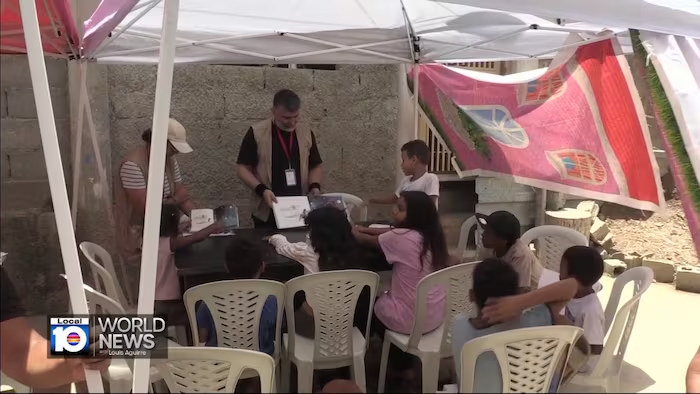
Survivors of two powerful earthquakes that devastated northern Venezuela on June 24 are receiving mental health support from volunteer psychologists working to address widespread trauma in the aftermath. The 7.2 and 7.5-magnitude tremors triggered severe psychological distress among survivors, prompting mental health professionals to mobilize across affected communities including La Guaira. Experts warn that earthquake trauma frequently develops into post-traumatic stress disorder, anxiety disorders, depression, and sleep disturbances among victims.
Children have been particularly vulnerable to the psychological toll, with many experiencing nightmares and panic attacks since the disaster. Young survivors like 12-year-old Sofia Aldara and 11-year-old Miguel Ramos continue to struggle with intense fear stemming from the quakes. Miguel described the harrowing moment, saying in Spanish: “I felt like the buildings near us were going to collapse.” Many affected youth have additionally endured the loss of loved ones and educational facilities, compounding their emotional burdens.
Volunteer psychologist Juan Manuel Maestre emphasized that grief combined with school closures has created compounded trauma for the region’s youngest residents. Mental health interventions have historically taken a back seat to immediate survival needs in disaster zones, according to volunteer Daniel Rocha, who noted that many survivors prioritize basic survival over addressing psychological wounds. Psychologist Andres Muskus outlined a therapeutic approach centered on gradually building trust through play before addressing survivors’ emotional responses to the catastrophe.
Officials reported that the earthquake death toll exceeded 5,300 people, with approximately 16,740 injured and property damage estimated at more than $19.6 billion. Mental health professionals stress that professional support offers survivors hope and the tools necessary to rebuild their lives and futures following the disaster.

More Stories
Tennessee’s Lone Death Row Female is Scheduled for Execution Wednesday for 1995 Torture/Murder
Colombia backs Trump security push while limiting U.S. role in anti-gang operations
Modern Science Finally Supports & Strengthens Biblical Account of the Crucifixion of Jesus Christ