

💛 A quick favor, if you've got a second.
We're really happy that you chose to read one of our stories and sincerely hope you'll stick around to read more. We took our paywall down — for now — but that won't last forever, and when the gate goes back up, we'd love for you to already be on the inside.
It's free. So please enter your email here and don't forget to like and follow us on all of your favorite Social Media platforms!
President Trump signed a fourteen-point memorandum of understanding with Iran on June 17 aimed at halting conflict, reopening the Strait of Hormuz, and establishing an economic framework for Iranian recovery and development. The accord contemplates a reconstruction and economic development initiative for Iran valued at no less than $300 billion, pending completion of final negotiations. While the Trump administration has stated it will not directly fund the effort, officials have pledged to coordinate with regional partners to structure the plan.
The Pentagon’s expenditures on military operations have reached billions of dollars, yet the administration is now positioning itself to mobilize at least $300 billion for Iranian reconstruction. Back in the United States, countless households remain unable to meet basic expenses including housing, food, and medical care. Reports indicate the Iran conflict has cost the government $80 billion, more than double the amount Congress was initially informed of.
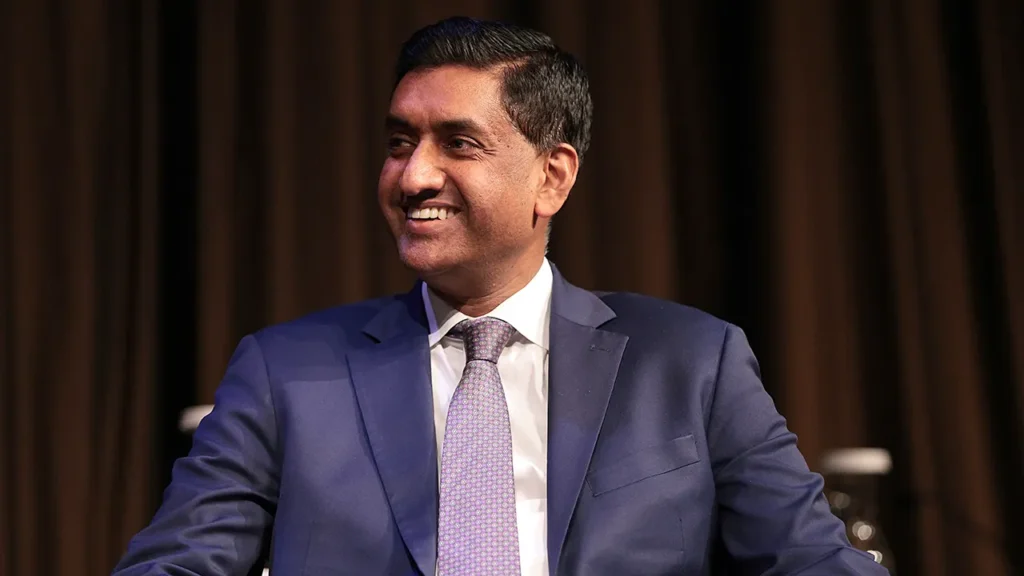
Rep. Ro Khanna responded by introducing his own fourteen-point initiative, styled as a plan for national renewal that prioritizes job creation, cost reduction, and the cessation of foreign military engagements. Khanna argues that if policymakers can craft a comprehensive foreign aid package for Iran, they must simultaneously develop an equivalent strategy to revitalize American communities and prioritize family economic security.
Khanna cited historical precedents including Franklin Roosevelt’s industrial mobilization, Dwight Eisenhower’s interstate highway construction, and John F. Kennedy’s space program as examples of ambitious national initiatives. He described his own family’s immigration experience in the late 1960s and early 1970s as emblematic of an era when the nation possessed forward momentum and collective purpose. The congressman called for restoring that confidence through policies ensuring prosperity reaches every region of the country and strengthening America as a multiracial democracy.

More Stories
Federal voting arrest in New Jersey adds new pressure point in Sherrill-Trump standoff
Colombia backs Trump security push while limiting U.S. role in anti-gang operations
Former NFL cheerleader and ex-aide face off in close Rhode Island GOP primary