


💛 A quick favor, if you've got a second.
We're really happy that you chose to read one of our stories and sincerely hope you'll stick around to read more. We took our paywall down — for now — but that won't last forever, and when the gate goes back up, we'd love for you to already be on the inside.
It's free. So please enter your email here and don't forget to like and follow us on all of your favorite Social Media platforms!
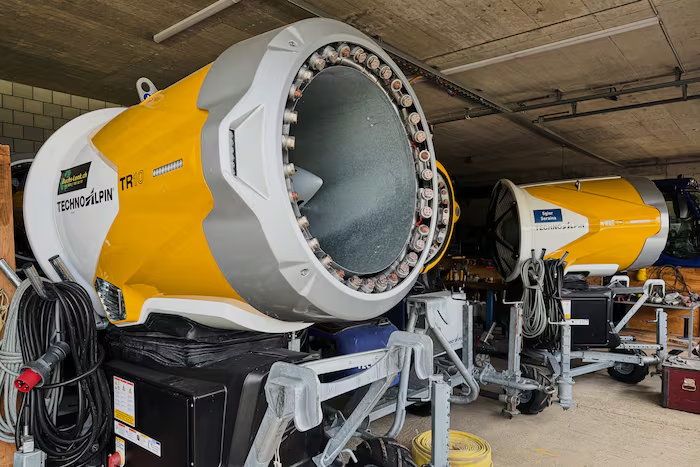
As Switzerland endures scorching summers with little snow, the Adelboden-Lenk ski resort is exploring an unconventional use for its winter snowmaking network: firefighting support. The Alpine facility operates approximately 200 kilometers of slopes between 1,000 and 2,300 meters elevation, where roughly 70% of snow coverage now requires artificial production due to climate-driven changes in regional precipitation patterns.
The resort’s snowmaking infrastructure extends far beyond visible snow cannons and lances, encompassing dozens of kilometers of buried water pipes and storage reservoirs that could serve emergency responders. During winter months, this network supplies water to 210 snow cannons and 50 snow lances across the resort; during summer, the same system could create protective water buffers to slow wildfire advancement while firefighters and air support mobilize.
Jürg Klopfenstein, who oversees the resort’s snowmaking operations, emphasized that the infrastructure’s greatest value lies in its water reserves and pipeline network rather than the cannons themselves. Helicopters fighting fires could refill water tanks from the system’s reservoirs, while ground crews could establish wet perimeters around threatened structures and vegetation.
Switzerland has avoided major wildfires this year, but drought conditions and high-risk assessments across nearly the entire nation—including the Bern region where Adelboden sits—prompted resort officials to develop contingency plans. The country’s mountain regions serve year-round recreational visitors, including hikers, mountain bikers, and paragliders during warmer months.
Stefan Buchs, operations manager at Adelboden-Lenk, acknowledged that Alpine forest fire risks differ from the large-scale blazes afflicting southern Europe due to varying vegetation types and soil moisture levels. However, he cautioned that “widespread wildfires are a likely scenario,” noting that local firefighters have already expressed concern about declining humidity levels even in spring months.
Adelboden Mayor Willy Schranz stated the community must prepare for future fire seasons similar to the current year, reflecting widespread concern about escalating climate impacts. Nathan Solothurnmann, a climate change specialist with Greenpeace, warned against viewing such adaptations as long-term solutions, noting that most Swiss regions lack the buried pipe infrastructure Adelboden possesses.


More Stories
Colombia backs Trump security push while limiting U.S. role in anti-gang operations
Federal Prosecutors Convene Special Grand Jury to Investigate D.C. Schools’ Attendance and Graduation Practices
State Department Reissues Level 3 Travel Advisory for Israel Amid Terrorism and Armed Conflict Concerns