


💛 A quick favor, if you've got a second.
We're really happy that you chose to read one of our stories and sincerely hope you'll stick around to read more. We took our paywall down — for now — but that won't last forever, and when the gate goes back up, we'd love for you to already be on the inside.
It's free. So please enter your email here and don't forget to like and follow us on all of your favorite Social Media platforms!
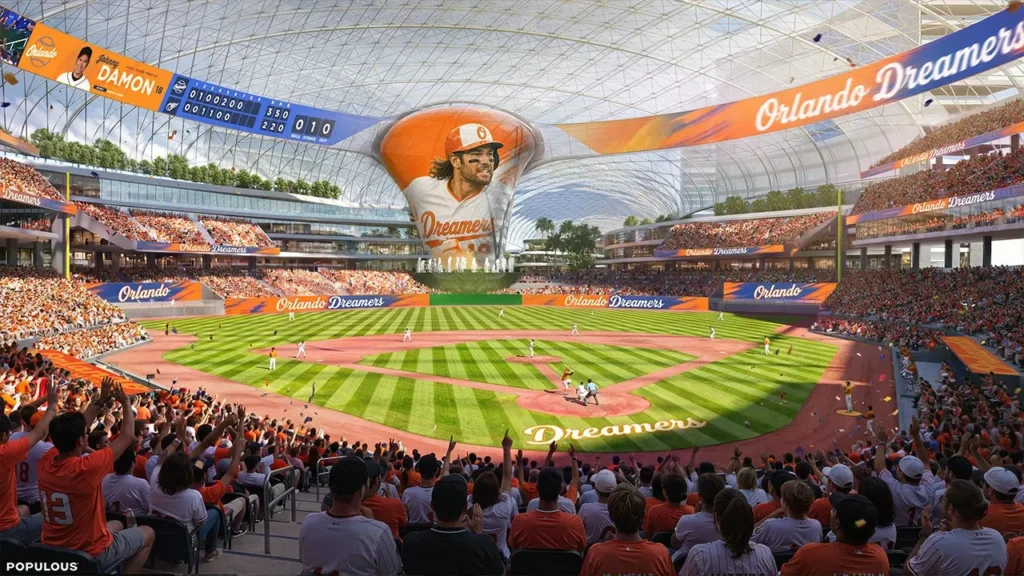
The Orlando Dreamers are mounting an aggressive campaign to bring Major League Baseball to Central Florida, positioning the region as an untapped market ripe for professional sports investment. Co-founder and Chief Operating Officer Jim Schnorf contends that Orlando’s combination of tourism dominance, population growth, and complete absence of MLB presence distinguish it from better-known expansion candidates like Nashville and Charlotte.
Orlando stands as the largest media market in the United States without a Major League Baseball team, a distinction Schnorf describes as an “anomalous absence” of professional baseball. The city currently lacks Triple-A, minor league, and spring training operations—a void that competing markets have already filled, according to Schnorf’s analysis.
Tourism infrastructure forms the cornerstone of the Dreamers’ expansion argument. With over 80 million visitors annually, Orlando generates more tourism resort tax revenue than any other metropolitan area in the country, funds that could support stadium construction and operations. Schnorf cited Las Vegas as a comparable model, where tourism-driven markets successfully attracted multiple major professional franchises within a decade.
The organization unveiled stadium renderings for a facility proposed near SeaWorld off Interstate 4, seeking $975 million in tourism tax funding. Though an Orange County task force declined to recommend the project following a compressed 15-minute presentation during an election cycle, Schnorf revealed the Dreamers have secured commitments exceeding $2 billion toward stadium financing and team acquisition.
Addressing concerns about market saturation, Schnorf noted that California supported five MLB teams in 1969 despite having a smaller population than present-day Florida. Orlando’s status as the fastest-growing metropolitan area in the nation’s fastest-growing state, he argued, provides ample capacity to support a third in-state franchise alongside the Tampa Bay Rays and Miami Marlins.

More Stories
Nurse Killed in Hit-and-Run Collision in Brooklyn
South Florida Political Figures Discuss Statewide Races on Latest Episode
Chourio Reaches Historic Milestone With 20th Home Run as Brewers Dominate MLB