


💛 A quick favor, if you've got a second.
We're really happy that you chose to read one of our stories and sincerely hope you'll stick around to read more. We took our paywall down — for now — but that won't last forever, and when the gate goes back up, we'd love for you to already be on the inside.
It's free. So please enter your email here and don't forget to like and follow us on all of your favorite Social Media platforms!
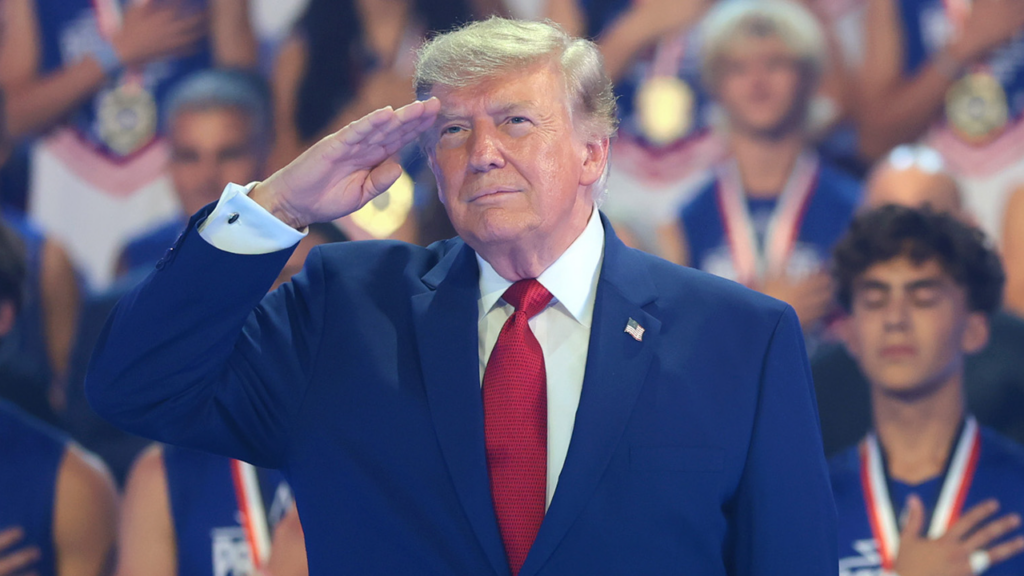
President Donald Trump on Tuesday rebuffed a reporter’s question about pursuing another presidential run in 2028, stating that constitutional restrictions make such a bid impossible. “The law is very strong,” Trump said at Joint Base Andrews in Maryland, acknowledging that citizens frequently ask him about the prospect of a third term.
Trump indicated that while supporters actively encourage him to run again—including attendees at a Patriot Games event he attended earlier that day—the 22nd Amendment of the U.S. Constitution firmly prevents any president from winning election more than twice. The amendment, ratified in February 1951, was enacted roughly six years after Franklin D. Roosevelt’s death, following his unprecedented four consecutive terms in office.
The president has previously straddled the line between jest and seriousness regarding a potential third campaign. During his White House Correspondents’ Dinner speech on July 24, Trump quipped that “the third time will be better yet” before adding “I’m only kidding,” suggesting he was making light of the matter at that moment.
However, in a March 30, 2025 interview with NBC’s Kristen Welker, Trump adopted a more serious tone, claiming he was not “joking” about a third bid. He proposed a theoretical scenario in which Vice President JD Vance could win the presidency with Trump as running mate, then resign to allow Trump to assume the office and potentially circumvent the constitutional restriction.
Constitutional legal experts overwhelmingly reject this strategy as unworkable. Deborah Pearlstein, a Princeton University law professor, told The Washington Post that the 12th Amendment “closes the door” on such an arrangement, specifically noting that no person constitutionally ineligible for the presidency can serve as vice president.

More Stories
Colombia backs Trump security push while limiting U.S. role in anti-gang operations
Former NFL cheerleader and ex-aide face off in close Rhode Island GOP primary
Trump Threatens FCC Action Against NBC’s Welker Over Endorsement Coverage